
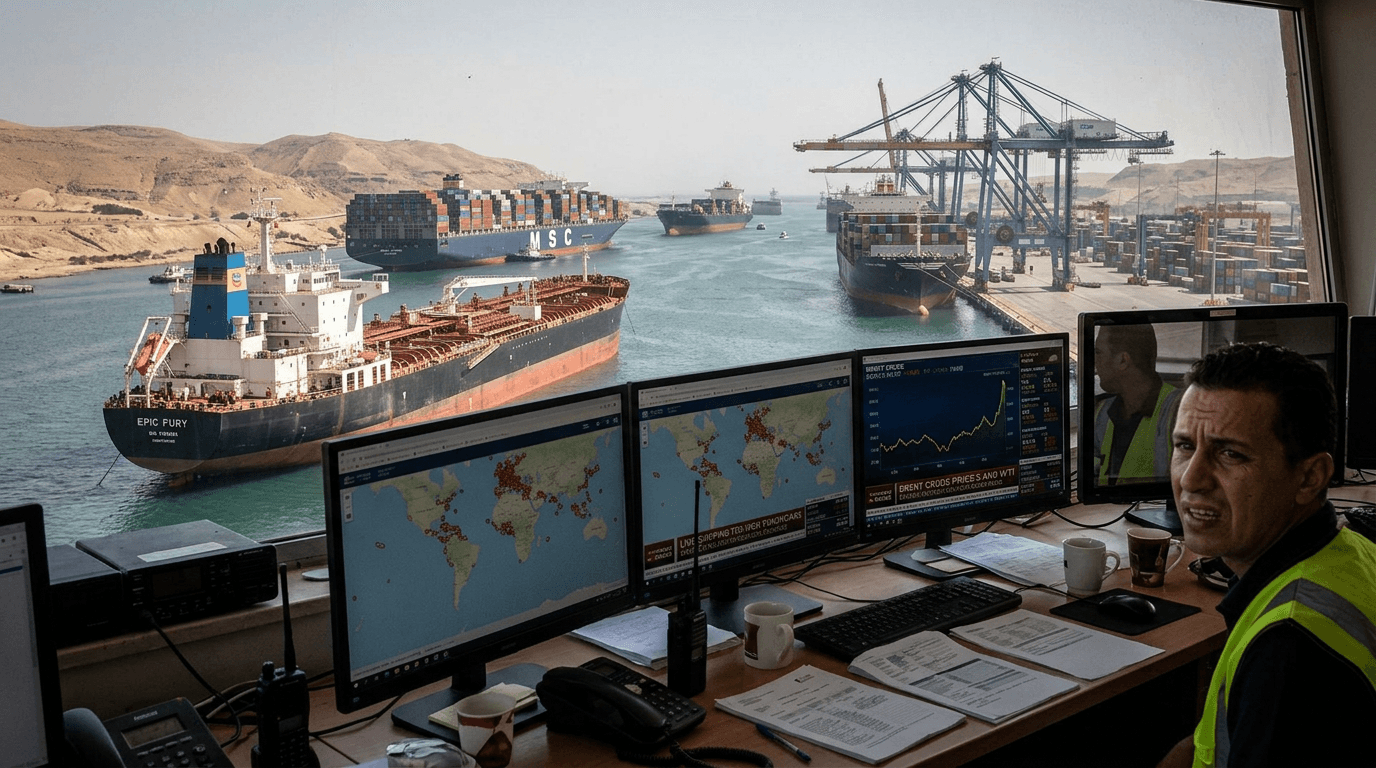
The geopolitical crisis unfolding in the Middle East has reached a critical inflection point. Following the launch of Operation Epic Fury—a coordinated US-Israeli campaign targeting Iranian leadership and nuclear infrastructure—the Strait of Hormuz has effectively become a no-go zone for commercial shipping. This strategic waterway, through which roughly one-fifth of global oil and liquefied natural gas shipments flow, now faces unprecedented disruption, sending shockwaves through energy markets and beyond. For traders and investors monitoring global markets, the implications are profound and immediate.
The Crisis At The Strait
The Strait of Hormuz represents one of the world's most critical economic chokepoints. Bordered by Iran to the north and Oman and the United Arab Emirates to the south, this narrow corridor measures just 33 kilometers at its tightest point. In 2025, approximately 20 million barrels of oil per day passed through the strait, representing nearly $600 billion in annual energy trade. Around 3,000 ships transit the route monthly, making it indispensable to global energy security.
Since coordinated strikes began on February 28, transits through the waterway have fallen sharply. Iran, which controls the narrow channel linking the Persian Gulf to the Gulf of Oman, has threatened to "set fire" to any ships attempting passage and declared it will "not let a single drop of oil leave the region." While a formal blockade may not be in place, the combination of drone and missile threats, along with skyrocketing insurance costs, has created a de facto closure. Tankers are simply unwilling to risk the passage, effectively halting traffic through one of the world's most vital energy routes.
Oil Prices Reach Multi-year Highs
The market response has been swift and dramatic. Brent crude, the global benchmark for oil, briefly touched $119.50 per barrel on Monday—a level not seen since summer 2022 when Russia invaded Ukraine. WTI crude similarly spiked to $119.48 before settling at $94.55, up 4% in a single session. Brent has risen more than 50% since the beginning of 2026, when it started at just over $61 per barrel.
Goldman Sachs responded to the crisis by raising its oil price forecasts significantly. The bank now expects Brent crude to average $76 per barrel in the second quarter of 2026, an increase of $10 from its previous forecast. WTI forecasts were raised by $9 to $71. However, Goldman Sachs issued a stark warning: if disruption from the Strait of Hormuz persists for five weeks rather than five days, oil prices could reach $100 per barrel or higher. Some analysts at Macquarie Research have suggested prices could soar to $150 per barrel if the strait remains closed for several weeks, while extreme scenarios forecast inflation-adjusted prices climbing to $215 per barrel.
This volatility reflects the market's deep uncertainty about the duration of the crisis. Energy traders are pricing in multiple scenarios, and the lack of clarity about when normal shipping might resume has created significant risk premiums throughout the energy complex.
Broader Economic Impacts
The disruption extends far beyond crude oil markets. Gasoline, diesel, jet fuel, and liquefied natural gas prices have all surged in response to the Strait closure. Analysts estimate that Washington drivers could see gasoline price increases of $0.15 to $0.30 per gallon if elevated oil prices persist. The transportation and chemicals sectors face immediate challenges due to supply shortages, while European utilities dependent on LNG transported via the strait face uncertain supply prospects.
This crisis has created strong negative correlations between equity markets and energy prices. As oil prices spike, equity indices decline due to recession fears and inflation concerns. The market has witnessed one of the most volatile trading days on record, with WTI posting its largest daily price swing since the COVID-19 pandemic when crude briefly turned negative.
Implications For Traders And Investors
For those trading on simulated finance platforms like E8 Markets, this crisis presents both significant risks and trading opportunities. The key takeaway is that the Strait of Hormuz closure has eliminated the "normalization discount" that previously existed in energy prices. Any resolution to the Iran crisis now appears weeks away rather than days away, suggesting elevated energy prices may persist through at least the second quarter of 2026.
Safe-haven demand has surged for US dollars and gold as investors seek protection against inflation and geopolitical uncertainty. This flight to safety will likely weigh on growth-oriented assets and emerging markets while supporting defensive positioning.
The duration of this crisis remains the critical unknown variable. Goldman Sachs' scenario analysis suggests every additional week of disruption could add approximately $5-10 to crude prices. Traders should monitor diplomatic developments closely, as any breakthrough in resolving the Iran conflict could trigger a sharp reversal in energy prices and a rotation back into risk assets.
The current energy market dislocation represents a genuine systemic risk to the global economy. For traders and investors, vigilance and flexibility will be essential in navigating the months ahead.