
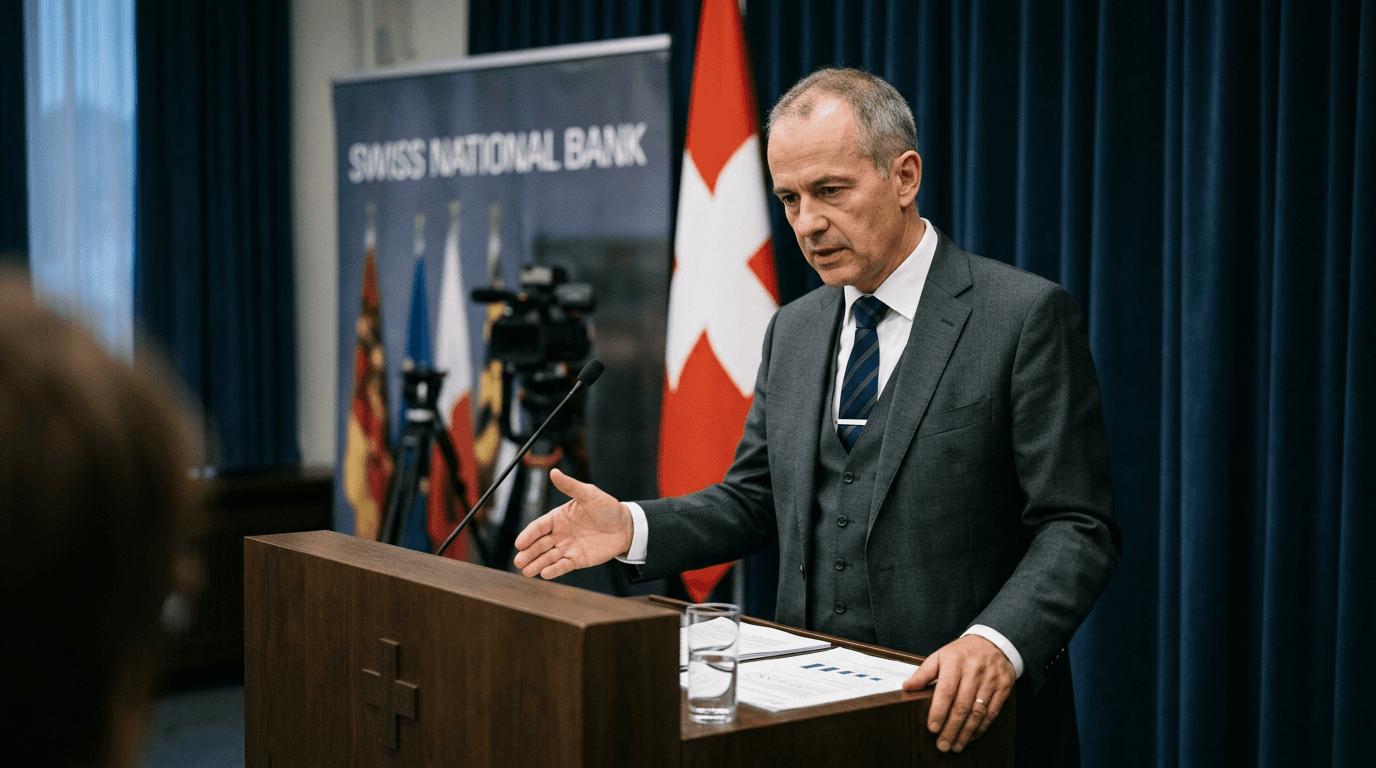
Swiss National Bank's Bold Shift: Tackling Franc Strength and Deflation
The Swiss National Bank (SNB) is grappling with an unexpected challenge, one not rooted in runaway inflation but in the opposite. The Swiss franc's appeal has surged, posing a threat to economic growth by potentially driving prices downward. As the SNB prepares for its March 19 policy meeting, it signals a strategic pivot—prioritizing foreign exchange interventions rather than traditional interest rate adjustments to counteract the franc's persistent strength.
Currency Crisis: A New Market Landscape
The franc's recent appreciation is spectacular, driven by factors beyond the SNB's direct influence. Since late February, following the U.S.-Israeli conflict with Iran, the franc has risen nearly 2% against the euro, capitalizing on its reputation as a safe-haven currency. Over the past year, the franc has gained approximately 12% against major currencies, fueled by geopolitical uncertainties and investor caution. While other central banks might view currency strength as a confidence booster, Switzerland's export-reliant economy cannot sustain such appreciation. A robust franc inflates the cost of Swiss goods internationally, threatening the competitiveness of exporters who are already contending with elevated U.S. tariffs.
For traders, this scenario is paradoxical. A safer global environment drives investors to the franc, strengthening it, yet this very strength destabilizes Switzerland's economy, compelling the SNB to counteract these unwelcome currency flows.
Deflation: A Central Bank's Nightmare
Current inflation figures paint a concerning picture. Annual consumer price growth is stagnant at 0.1% for the third month, with projections indicating only a 0.3% rise by 2026. This low inflation is perilous for monetary policy. The SNB's 0%-2% target range offers theoretical leeway, but the trend is negative. Worse, the threat of negative monthly inflation is real, as explicitly warned by the SNB.
The strengthening franc makes imports cheaper, suppressing price growth and challenging the SNB's inflation management. Unlike the European Central Bank or the Federal Reserve, which can raise rates to curb inflation, the SNB faces the opposite battle while its policy rate remains at 0%, the world's lowest. Further rate cuts into negative territory are largely dismissed by economists as impractical.
From Words To Action: Snb's Intervention Strategy
Acknowledging these limitations, the SNB has shifted its focus. On March 2, it issued an unusual, unsolicited statement, emphasizing its increased readiness to intervene in foreign exchange markets. This verbal intervention serves to both signal intent and manage currency expectations. A Reuters poll shows strong support for this approach, with 14 out of 15 economists backing enhanced currency interventions as the right response to further franc appreciation.
The SNB's intervention toolkit includes direct foreign exchange operations, buying euros and dollars to boost franc supply and weaken the currency. These operations differ from rate policies, allowing the central bank to meet its objectives even with rates at zero. Currently, the market sees a 35% chance of significant intervention in the next quarter, reflecting the SNB's credibility as an active intervenor.
Implications For Investors And The Economy
The broader economic backdrop heightens the urgency. Switzerland's growth forecasts are now slightly lower, at 1.1% for 2026 and 1.5% for 2027, already modest figures further threatened by franc strength and trade tensions. The SNB faces substantial foreign exchange losses due to currency volatility, with estimates nearing 8.8 billion francs from the franc's appreciation. This financial strain underscores the central bank's commitment to managing currency dynamics.
For market participants, the March 19 meeting is a pivotal moment. The consensus is clear: rates will likely remain unchanged through 2026. However, the focus is on whether the SNB will clarify its intervention framework, the extent of its FX operations, and any shifts in its inflation forecasts. Any hints of rate cuts or aggressive interventions could unsettle currency markets and alter euro-franc dynamics.
Trader Takeaways
The SNB is focusing on currency intervention over rate cuts to address franc strength and deflation risks. Pay close attention to the March 19 policy statement for intervention specifics. Monitor EUR/CHF levels and franc weakness as signs of SNB intervention success. Keep an eye on monthly inflation data, as negative readings could prompt a reassessment of the bank's "inaction consensus." Geopolitical tensions remain a major driver of safe-haven flows, influencing franc movements.
The SNB's approach underscores a key reality of modern monetary policy: when traditional tools are exhausted, central banks must innovate or risk losing control over their primary goals. For Switzerland, this innovation is unfolding in the foreign exchange markets rather than interest rate adjustments.