
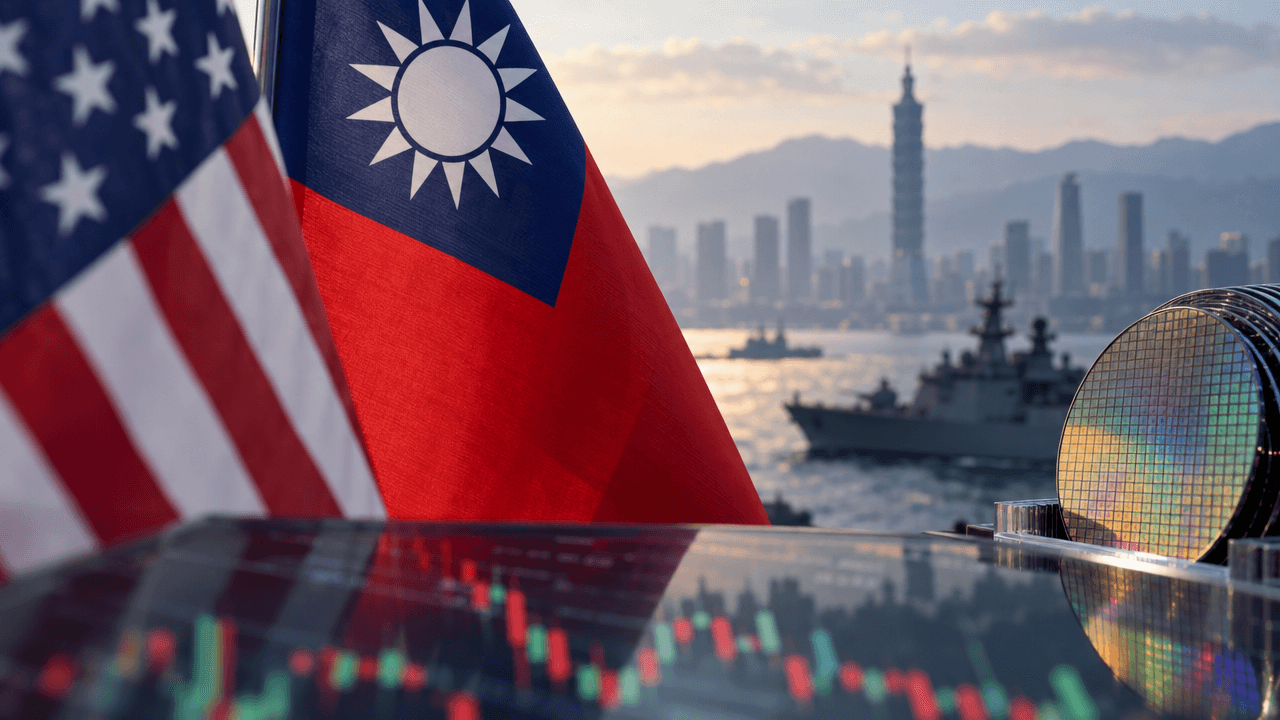
Taiwan’s latest assurance that the United States “very much” understands its defense needs is more than diplomatic rhetoric; it is a signal about how Washington and Taipei intend to manage a persistent security flashpoint in the Taiwan Strait[2]. For traders, this kind of statement subtly adjusts the risk landscape around Asian currencies, equity-index futures, and semiconductor names by reinforcing both deterrence and the reality of ongoing U.S.–China tensions.
Strategic Context In The Taiwan Strait
Taiwanese officials have been explicit that the island faces a “severe situation” in the Taiwan Strait, highlighting that even as China’s economy slows, Beijing continues to allocate more resources to military capacity[2]. That assessment anchors why Taipei is so focused on ensuring the United States remains aligned with its evolving defense priorities.
The legal foundation for Washington’s role is the Taiwan Relations Act (TRA), which states that U.S. policy is to make available to Taiwan defense articles and services in quantities needed to maintain a sufficient self-defense capability[1][6][14]. The TRA also commits the United States to maintain the capacity to resist coercion that would jeopardize the security or economic system of the people on Taiwan, a cornerstone of the region’s security architecture[1][14][15].
More recent legislation has deepened this framework. Statutes such as the Taiwan Enhanced Resilience provisions emphasize modernizing Taiwan’s security capabilities, including asymmetric strategies that prioritize mobile, survivable systems over large, vulnerable platforms[8][11]. These laws support foreign military financing, arms sales, and training aimed at ensuring Taiwan fields capable, ready, and modern defense forces[8][11].
This security posture is intertwined with global economic interests. Taiwan is central to the world’s semiconductor supply chain, and U.S. officials and analysts have repeatedly connected support for Taiwan’s self-defense to safeguarding critical chips production and broader technology ecosystems[5][10]. In that light, U.S. understanding of Taiwan’s defense needs is also understanding of global supply-chain risk.
WHAT “UNDERSTANDING DEFENSE NEEDS” REALLY MEANS
When a senior Taiwanese diplomat says Washington understands both the severity of the threat and Taiwan’s determination to invest in its military, it points to concrete policy areas rather than mere symbolism[2]. The United States has signaled support for accelerating foreign military sales (FMS) deliveries to Taiwan and has debated multi-billion dollar annual arms packages designed to strengthen deterrence in the strait[3][10][14].
At the same time, Taipei is not relying solely on imports. Taiwan has active domestic programs spanning submarines, fighter aircraft, and long-range missiles, intended to make its force structure more resilient and tailored to local geography[9]. U.S. policy documents and congressional discussions encourage this approach and frame assistance as enabling Taiwan to modernize and integrate these capabilities rather than simply buying off-the-shelf platforms[8][11].
Strategists often describe the preferred posture for Taiwan as a “porcupine” strategy: an emphasis on dispersion, mobility, and denial capabilities that make any attack costly and uncertain[4][13]. American reviews of Taiwan’s defense needs include input from U.S. military authorities, helping align arms transfers and training with this asymmetric concept[6][14]. When Taiwan says the United States understands its needs, it signals alignment on both the threat assessment and the shape of the response.
For markets, that alignment matters. Stronger deterrence can reduce the perceived probability of extreme tail-risk events such as a blockade or invasion, even as headlines remind investors that geopolitical risk in the region is structurally elevated.
Market Implications For Forex, Equity Futures And Semiconductors
The immediate market impact of this statement is likely modest but directional. Confidence that Washington grasps Taiwan’s defense requirements can support sentiment toward Taiwan-related assets by reinforcing the narrative of continued U.S. backing and legal commitments. At the same time, reiterating the “severe” nature of the threat and spotlighting ongoing Chinese military investment keeps geopolitical risk firmly in view[2][4].
In foreign exchange, traders typically respond to Taiwan Strait headlines by reassessing regional risk premia rather than rapidly repricing long-term fundamentals. Periods of heightened tension tend to favor safe-haven currencies such as the U.S. dollar and Japanese yen, while adding pressure to more cyclical or China-linked currencies. SimFi traders can use this backdrop to test scenarios for pairs like USD/TWD, USD/JPY, and USD/CNH under different escalation or de-escalation paths.
Equity-index futures across Asia can also react to shifts in perceived geopolitical risk. Taiwan’s equity market and related futures are directly exposed, but sentiment can spill over into Japanese, Korean, and Hong Kong indices, especially when headlines touch on technology supply chains. The key for traders is to watch whether this kind of statement is followed by concrete developments such as arms sales approvals or military exercises, which can trigger more visible moves than rhetoric alone.
Semiconductor stocks and indices sit at the center of this story. Markets understand that security in the Taiwan Strait is deeply linked to the stability of global chip production, from advanced logic chips to critical components used in defense, autos, and consumer electronics[5][10]. Signals that U.S.–Taiwan defense coordination remains strong can provide a floor under risk sentiment in leading semiconductor names, even as valuations stay sensitive to any sign of rising confrontation.
How Simulated Finance Traders Can Respond
For traders using Simulated Finance platforms, this headline is a useful case study in translating geopolitics into structured trade ideas and risk frameworks rather than reacting emotionally to every news flash.
First, build a simple scenario map. One scenario assumes continued strategic ambiguity and steady deterrence; another imagines incremental tension, such as more aggressive military drills or slower arms deliveries; a third explores extreme stress events. Each scenario can be linked to expected behavior in regional FX, equity futures, and semiconductor benchmarks.
Second, track policy follow-through. Statements that the United States understands Taiwan’s defense needs gain significance when paired with concrete arms packages, training initiatives, or legislative moves that strengthen Taiwan’s asymmetric capabilities[3][8][11]. In SimFi, traders can back-test how assets have responded historically to specific policy events versus general diplomatic language.
Third, practice layered risk management. Use simulated portfolios to combine directional views (for example, constructive on semiconductors) with hedges in safe-haven FX or volatility instruments. Test how portfolios behave under shocks such as a surprise announcement about arms delivery delays, an unexpected military exercise near the strait, or new export controls affecting chipmaking tools.
Finally, focus on liquidity and time horizons. Geopolitical headlines can create short bursts of volatility without changing medium-term fundamentals. SimFi environments allow traders to experiment with intraday reaction strategies versus more patient macro positioning, helping clarify which approach fits their risk tolerance.
Conclusion: A Supportive Signal In A Fragile Balance
Taiwan’s message that the United States “very much” understands its defense needs reinforces the continuity of U.S. legal and strategic commitments while underlining how serious Taipei views the threat from China[2][6][14]. It suggests ongoing cooperation on arms deliveries, asymmetric capabilities, and broader deterrence measures that matter for both security and global supply chains[3][8][10].
For markets, this is not a shock event but a recalibration point: it slightly supports Taiwan-linked risk sentiment even as it keeps U.S.–China tensions on the radar. For traders, the real value lies in using headlines like this to refine geopolitical scenarios, stress-test portfolios, and link policy signals to asset behavior in a disciplined way. In a world where the Taiwan Strait is both a security hotspot and a semiconductor hub, understanding the defense narrative is increasingly part of understanding the market narrative.