
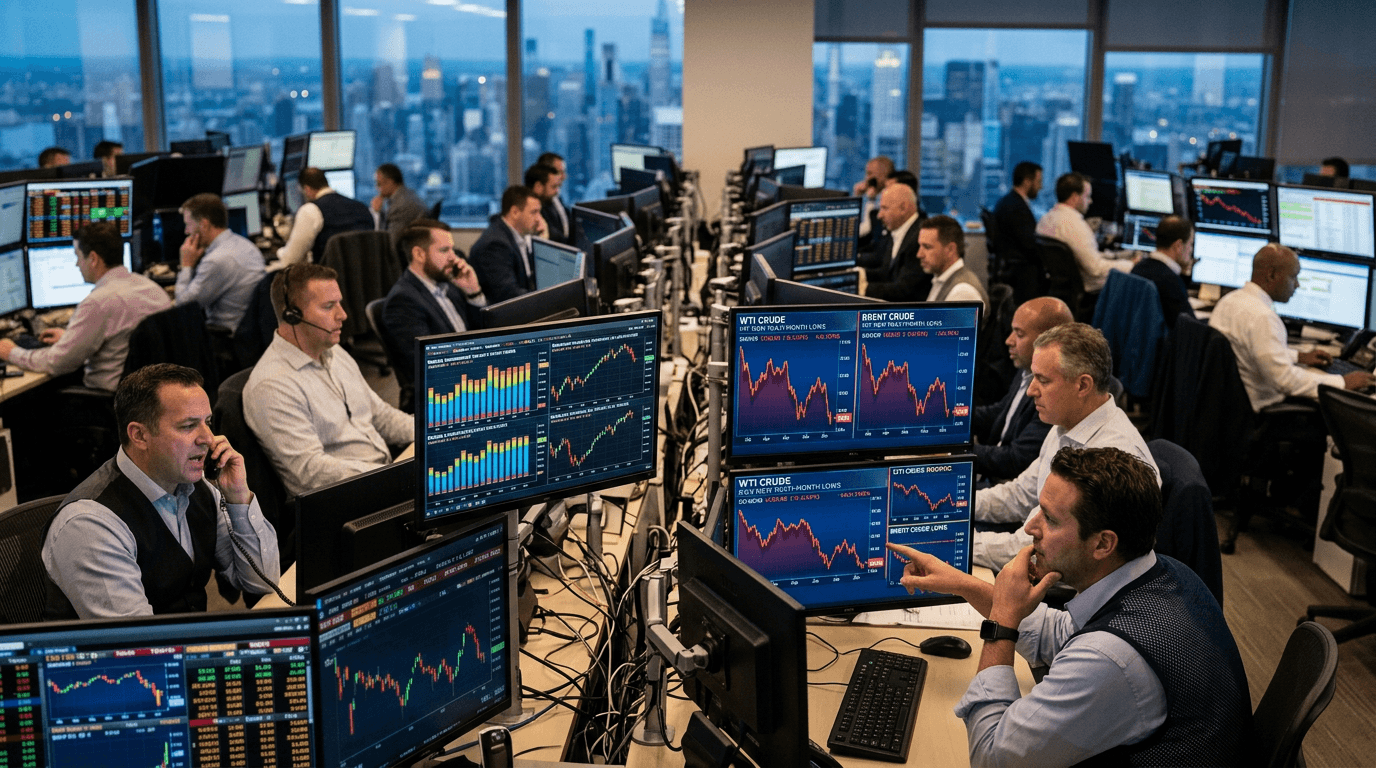
After weeks of heavy selling in technology names and a grinding move lower in crude, markets are finally starting to show signs of stabilization across key risk assets.[3][6][7][10][15] DailyForex points to an emerging bottom in the recent tech sector dump just as crude oil futures slip to a three‑month low, a combination that is subtly but importantly altering the macro risk tone for equity index futures, commodity‑linked currencies, and crypto markets.[10]
Macro Picture: Risk Tone Is Shifting
A sharp technology correction has coincided with a decisive pullback in oil, turning what started as an AI valuation scare into a broader reassessment of global growth and inflation risks.[3][7][11][15] On one side, the tech shakeout has taken froth out of high‑beta growth stocks; on the other, cheaper crude is easing energy‑driven inflation pressures that had constrained central banks and risk assets earlier in the year.[4][9][14][15]
This cross‑asset adjustment is moving markets away from a single‑narrative focus on artificial intelligence and toward a more balanced view of cyclical momentum, policy expectations, and global demand.[3][7][8] For active traders, the shift in tone is less about a dramatic regime change and more about a transition from momentum chasing to selective, risk‑aware positioning across sectors and asset classes.[3][6][11]
TECH SELLOFF: FROM CAPITULATION TO BASE‑BUILDING
The recent tech rout has been most visible in semiconductor and AI‑linked hardware stocks, where benchmark chip indices have fallen more than 20% from their June highs, technically entering bear‑market territory.[3][6][7][10] Hedge funds and other institutional players have aggressively reduced exposure, with prime broker data showing record‑pace selling in US tech hardware and related names over the past several weeks.[5][11]
Yet selling pressure is starting to show signs of fatigue. Declines in the Philadelphia Semiconductor Index have moderated compared with earlier in July, and daily ranges are narrowing as short‑term traders begin to cover positions and selectively add exposure in quality names.[6][7][10] DailyForex notes early bottoming patterns in the broader tech sector dump, with price action shifting from vertical drops to choppy, sideways trading as buyers and sellers begin to re‑equilibrate.[10]
From a trading perspective, this is characteristic of a transition phase: volatility remains elevated, but the market starts to respond more to company‑specific news and earnings than to one‑way macro flows.[2][3][10][11] For SimFi participants, this environment is ideal for testing playbooks around mean‑reversion in oversold leaders, sector rotation from crowded AI trades into more diversified tech exposure, and volatility‑selling strategies calibrated to still‑rich options premiums.
CRUDE OIL AT THREE‑MONTH LOW: IMPLICATIONS FOR INFLATION AND FX
While tech has grabbed the headlines, crude oil’s retreat to a three‑month low is arguably just as important for macro risk sentiment.[4][9][15] Global benchmarks such as Brent and WTI have given back much of their spring rally, pressured by rising supply expectations from the Middle East, easing geopolitical tensions, and lingering concerns over the durability of global demand.[4][9][14][15]
Lower oil prices feed directly into inflation expectations by reducing fuel and transport costs, which had been a persistent source of price pressure for consumers and businesses.[4][14][15] As energy’s contribution to headline inflation moderates, markets can start to price a less restrictive path for central banks, supporting a more constructive backdrop for equities and credit, even as growth worries linger.[14][15]
For commodity‑linked currencies such as CAD, NOK, and AUD, the oil slump can translate into softer performance against the USD and other majors, particularly if the move in crude is seen as demand‑led rather than purely supply‑driven.[9][14][15] SimFi traders can use this backdrop to simulate scenarios where weaker energy prices weigh on commodity FX while simultaneously supporting rate‑sensitive growth sectors, stress‑testing multi‑asset portfolios under alternative inflation paths.
CROSS‑ASSET RIPPLE EFFECTS: INDEX FUTURES AND CRYPTO
The combination of a stabilizing tech tape and cheaper crude is already filtering into index futures pricing, with traders marking down tail‑risk scenarios and rebalancing sector exposures.[3][6][7][10][15] Equity indices with heavy tech weightings, such as the Nasdaq, have seen volatility spike and then gradually cool as the worst of the capitulation selling appears to pass, even if prices remain well below recent highs.[3][6][10]
Commodity‑heavy indices and cyclical sectors, meanwhile, are recalibrating to a world of lower input costs but potentially softer nominal growth.[4][14][15] This can support margin narratives for industrials and transport while challenging pure energy plays, creating a more nuanced set of sector correlations than the straightforward “higher oil, higher cyclicals” regime seen earlier in the year.[4][14][15]
Crypto markets, which have increasingly traded as high‑beta proxies on global liquidity and risk appetite, are also sensitive to this shift.[3][8][13] As tech volatility normalizes and energy‑driven inflation risks cool, crypto sentiment may improve on expectations of looser financial conditions, though flows will likely remain selective and heavily news‑driven.[3][8][13] In SimFi environments, this provides a rich testing ground for cross‑asset strategies that link equity index futures, commodity prices, and major crypto pairs through common risk factors and macro drivers.
Simulated Finance Takeaways For Traders
For traders using platforms like E8 Markets, the current backdrop is an opportunity to build and refine macro‑aware trading frameworks rather than chase every headline move. Simulating scenarios around a tech bottoming process allows participants to explore how different styles—momentum, mean‑reversion, relative‑value—perform as markets transition from panic to consolidation.[2][3][6][10][11]
Similarly, modeling the impact of a sustained period of lower oil prices on inflation, rates, and FX can help traders understand the transmission channels that link commodities to currencies and equity sectors.[4][9][14][15] Running stress tests on portfolios that combine tech exposure, energy names, commodity FX, and crypto can reveal hidden concentrations and correlation risks that might not be obvious in single‑asset analysis.
Perhaps most importantly, this moment underscores the value of thinking in regimes. The “AI euphoria plus energy squeeze” regime that dominated earlier in 2026 is giving way to a more balanced, two‑sided environment where both growth and inflation risks are in flux.[3][4][7][14][15] SimFi traders can use this transition to practice building dynamic playbooks: identify regime signals, define position sizing rules, and rehearse how to rotate across assets as macro conditions evolve.
In live markets, these kinds of cross‑asset shifts rarely arrive with a clear label, and they often unfold through periods of conflicting signals and noisy price action.[3][6][7][15] By using simulation to test hypotheses about tech bottoming, oil’s impact on inflation, and the knock‑on effects on currencies and crypto, traders can develop the discipline and adaptability needed to navigate the next phase of the cycle—whatever shape it ultimately takes.