
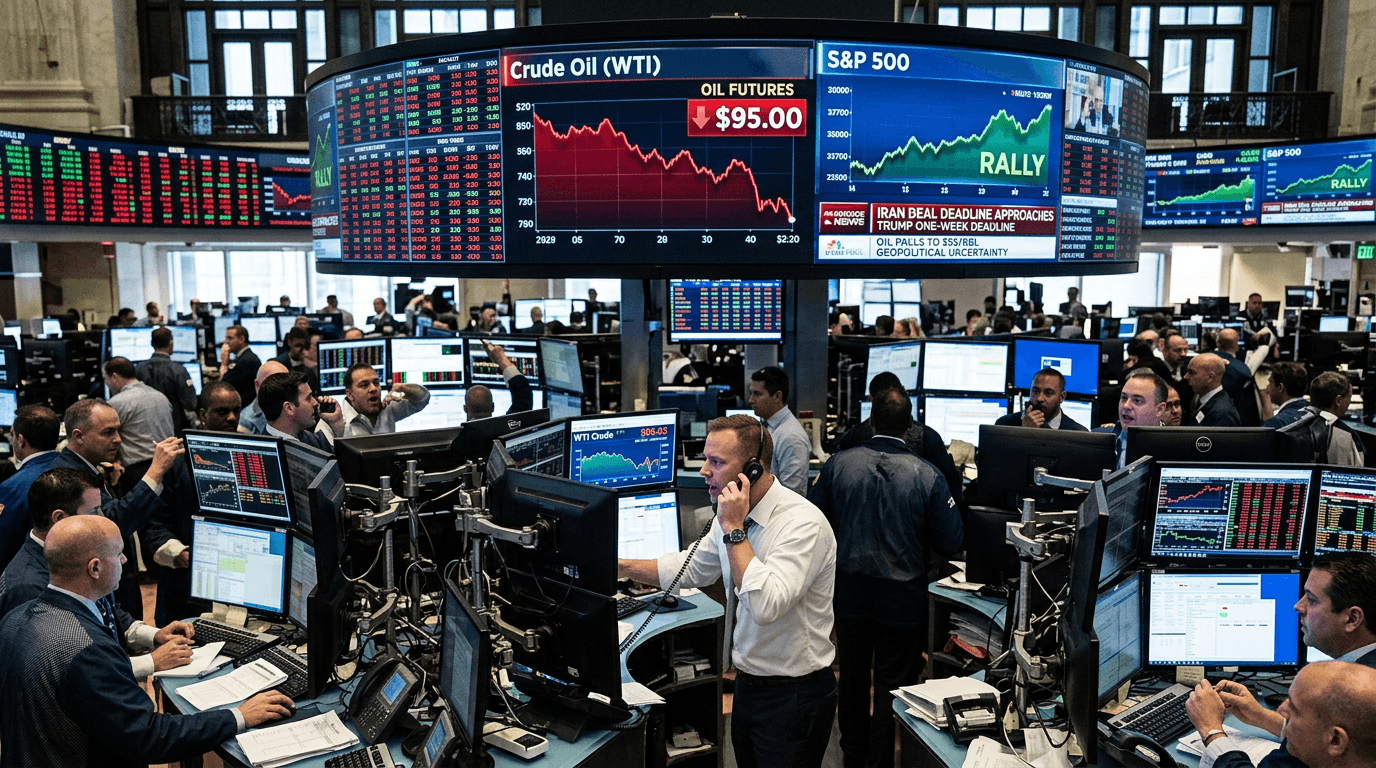
The geopolitical landscape shifted dramatically this week as President Trump announced that an Iran peace deal could materialize within one week, sending ripples through global markets and reshaping risk sentiment across multiple asset classes. The announcement represents a potential turning point in escalating Middle East tensions that have dominated headlines and trading decisions for months, with significant implications for investors and traders positioning across equities, commodities, and safe-haven assets.
Trump's Iran Deal Announcement And Market Reaction
President Trump's statement regarding an imminent Iran deal catalyzed an immediate market response that underscores how closely traders monitor geopolitical developments. Stock indices surged to new highs on the announcement, driven by optimism that a resolution would reduce uncertainty and remove a significant headwind to corporate earnings and consumer confidence. The mechanism behind the rally reflects a straightforward calculation: eliminated geopolitical risk removes a major source of volatility that has been constraining equity valuations throughout the conflict.
Simultaneously, crude oil prices declined sharply to near the $95 per barrel level, a meaningful drop from the elevated levels that had persisted during heightened military tensions. This decline reveals how heavily energy markets had been pricing in geopolitical premium due to concerns about disruptions to the Strait of Hormuz, one of the world's most critical chokepoints for global oil transportation. As deal prospects improved, traders rapidly repriced energy commodities lower, reflecting reduced supply-chain anxiety.
The Commodities Connection To Equity Performance
Understanding the inverse relationship between crude oil prices and equity market rallies is essential for SimFi traders seeking to interpret market dynamics correctly. When geopolitical tensions ease and oil prices fall, multiple positive effects compound in equity markets. Lower energy costs improve corporate profit margins across industries, reduce input costs for manufacturers and transportation firms, and decrease consumer fuel expenses, potentially boosting discretionary spending and economic activity.
This week's market action exemplified this dynamic in textbook fashion. As crude oil declined toward $95 per barrel, energy companies themselves saw their valuations pressured, but broader market indices rallied because the benefits to the wider economy outweighed sector-specific headwinds. This represents an important lesson for traders: not all negative developments in individual sectors or commodities translate to broad market declines. Context and systemic effects matter enormously.
Safe-haven Asset Demand And Portfolio Repositioning
A secondary but equally important market development involved reduced demand for safe-haven assets. During periods of elevated geopolitical risk, investors typically rotate capital toward defensive positions including U.S. Treasury bonds, gold, and other traditional hedges. Trump's announcement signaled that such hedging would become less necessary, prompting traders to rotate back into risk assets and higher-yielding investments.
This repositioning creates trading opportunities for those monitoring relative valuations across asset classes. When safe-haven demand diminishes, government bond yields may rise as fewer investors seek refuge in fixed income, credit spreads typically compress as risk appetite improves, and equity risk premiums decline. These interconnected movements create windows for sophisticated traders to execute tactical allocations or rebalance portfolios effectively.
The One-week Timeline And Strategic Considerations
Trump's framing of a one-week deadline introduces an important temporal dimension to market expectations. This specific timeframe serves multiple functions simultaneously. For markets, it provides a clear reference point around which traders can organize their positioning and risk management. For negotiations, it creates urgency that potentially accelerates decision-making on both sides. For investors and traders monitoring developments, it establishes a critical date when expectations will either be confirmed or disappointed.
This dynamic presents a classic example of how dates and timelines affect market psychology and behavior. As the week progresses, traders will monitor diplomatic developments, statements from Iranian officials, and signals from U.S. administration representatives to gauge the likelihood of deal completion. Any wavering in confidence could prompt quick reversals in the recent rally, as markets have already largely priced in an optimistic outcome.
Implications For Simfi Traders And Portfolio Managers
For traders on platforms like E8 Markets, this environment presents both opportunities and risks worthy of careful consideration. The immediate opportunity involves positioning for continued equity strength and lower energy prices if deal negotiations progress as hoped. However, the concentration of expectations around a single binary event also creates tail risk, as failure to reach an agreement could trigger sharp reversals across recently-rallied positions.
Successful traders in this environment manage these tensions through thoughtful position sizing, clear risk management discipline, and continuous monitoring of information flows. Rather than making aggressive directional bets on deal completion, prudent traders might consider smaller positions with tighter stops, allowing participation in any continued rally while protecting against disruptive surprises.
What Traders Should Monitor Going Forward
Watch statements from both U.S. and Iranian officials for any signs of negotiation breakdown or progress. Monitor crude oil's response to news developments, as energy markets often lead other assets in pricing geopolitical risk changes. Track equity index futures and volatility indices for signs of conviction changes among institutional investors. Finally, observe safe-haven flows into Treasuries and gold as early warning indicators of renewed risk-off sentiment.
The Iran deal announcement demonstrates how macroeconomic and geopolitical developments create actionable trading signals for those who understand the underlying connections between markets. By maintaining analytical discipline and monitoring multiple asset classes simultaneously, traders can identify opportunities while protecting themselves against the inevitable surprises that accompany complex international negotiations.