
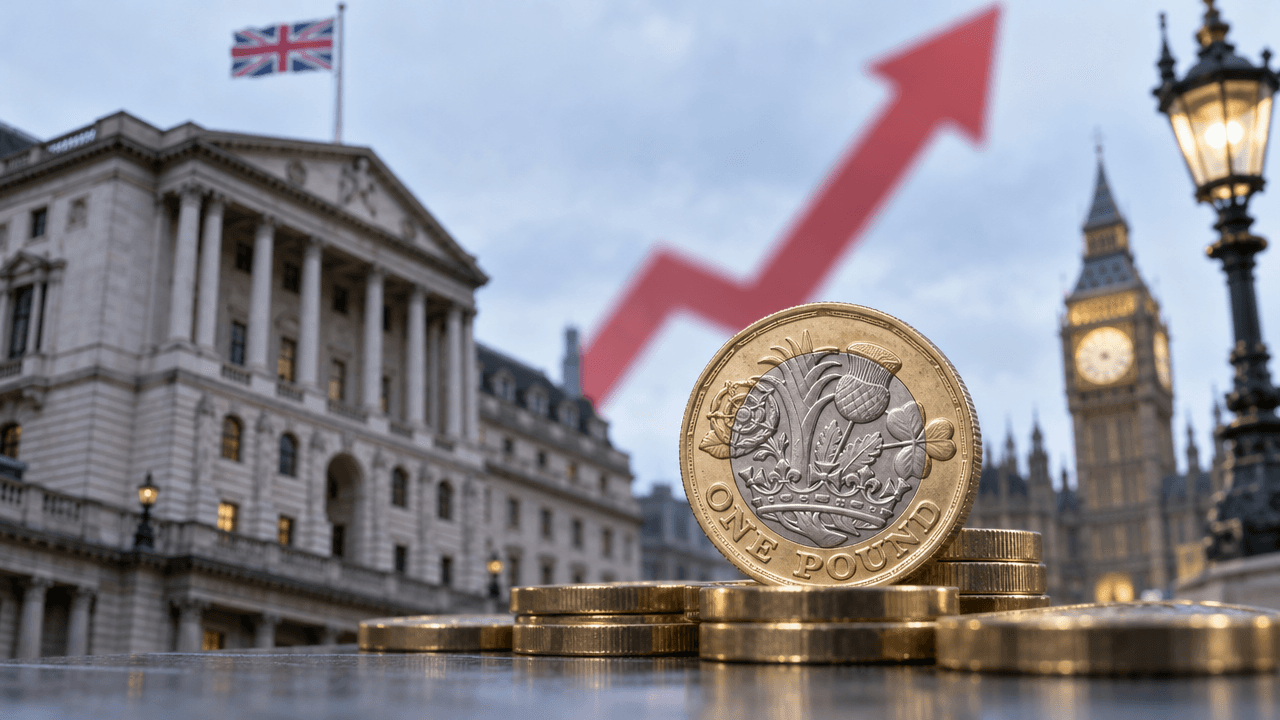
U.K. inflation has delivered a fresh challenge to the Bank of England and a timely boost to the pound. Consumer-price inflation rose to 3.5% in the year to September, up from 3.1% in August and above the 3.4% economists had expected. The increase marked the highest annual rate since October 2025, reinforcing expectations that the central bank may need to keep interest rates higher for longer. [3][8]
For financial markets, the data matters because inflation remains well above the Bank of England’s 2% target. It also arrives at a sensitive moment: policymakers had been trying to balance persistent price pressures against the risk that restrictive interest rates could weaken economic growth. September’s figures suggest that the inflation problem is not yet under control.
WHAT DROVE THE INCREASE?
The latest acceleration was led largely by motor-fuel prices. Higher petrol and diesel costs pushed up the headline inflation rate, creating a direct impact on household budgets and transportation expenses. Fuel prices can be volatile, so one month of stronger energy-related inflation does not necessarily prove that price pressures are becoming permanently embedded.
However, the report contained broader signals that deserve attention. Core CPI inflation, which excludes energy, food, alcohol and tobacco, rose from 2.6% to 2.8%. Services inflation also increased, reaching 3.7% from 3.4% previously. These measures are particularly important to policymakers because they can provide a clearer view of underlying domestic price pressures. [14]
A rise in core and services inflation makes the report more significant than a fuel-driven headline increase alone. Services prices are often influenced by wages, rents, business costs and consumer demand. If these pressures remain elevated, inflation could take longer to return to target even if energy prices stabilize.
Why The Bank Of England Is Under Pressure
The Bank of England’s Monetary Policy Committee held Bank Rate at 3.75% at its September meeting, but the decision was not unanimous. Six policymakers voted to keep rates unchanged, while three supported a 0.25 percentage-point increase to 4%. That split showed that some officials were already concerned about the risk of inflation remaining too high. [2]
The September inflation report strengthens the case for the more hawkish members of the committee. Markets are now placing substantial odds on a 25-basis-point rate increase at the Bank’s next meeting on November 5. Traders have also begun pricing in the possibility of another increase before the end of the year. [1][4]
Higher interest rates are intended to slow demand, reduce pricing power and prevent temporary shocks from becoming persistent inflation. The challenge is that monetary policy works with a delay. A rate increase today may not meaningfully affect spending, hiring or wage negotiations for several months. Policymakers therefore have to respond not only to current inflation but also to their forecast for future conditions.
The Bank has previously warned that inflation could rise further, with staff projecting a rate around 3.75% in the fourth quarter of 2026 and slightly above 4% in early 2027. [12] September’s data indicates that the near-term inflation rebound is developing broadly in line with those concerns.
Why The Pound Benefited
The pound tends to respond positively when markets expect higher interest rates, provided investors believe the central bank is acting to protect price stability. Higher U.K. yields can make sterling-denominated assets more attractive relative to assets in countries where rates are expected to remain lower.
Following the inflation release, the pound edged higher as traders increased expectations for Bank of England tightening. The currency’s response was measured rather than dramatic, reflecting the fact that much of the November rate increase had already been anticipated. [1]
Sterling’s next move will likely depend on whether incoming data continues to surprise on the upside. Strong wage growth, resilient services inflation or another increase in core prices could encourage expectations of additional rate hikes. Conversely, weaker economic activity could limit how aggressively the Bank is willing to act.
For traders, this creates a familiar tension. Higher rates can support a currency, but excessive tightening can damage growth and eventually weigh on it. The pound may therefore benefit from a gradual repricing of interest-rate expectations, while a severe economic slowdown could reverse that support.
What Markets Should Watch Next
The next key signals will come from wage growth, retail spending, business surveys and employment data. Wage pressures are especially important because sustained pay increases can keep services inflation elevated. Traders should also monitor energy markets, since another fuel-price surge could push headline inflation higher again.
The November Bank of England decision will be central. A 25-basis-point increase is increasingly expected, but the accompanying statement and voting split may matter just as much as the decision itself. A large majority supporting a hike could suggest that further tightening is possible. A close vote, combined with cautious guidance, might indicate that policymakers view the move as a one-time response.
Market participants should also distinguish between headline inflation and underlying trends. A temporary fuel shock may fade, while persistent services and core inflation could require a more durable policy response. Looking at only the headline number risks missing the information that central banks consider most useful.
Practical Takeaways For Traders
First, treat the inflation report as a catalyst for interest-rate repricing, not as an automatic signal to buy sterling. The pound’s direction will depend on how expectations evolve relative to other major economies.
Second, watch the spread between U.K. government bond yields and overseas yields. A widening yield advantage can support sterling, while a narrowing gap can reduce that support.
Third, manage volatility around central-bank meetings and economic releases. Inflation data can produce sharp moves in currency pairs, but the initial reaction may change as traders assess growth risks and policy communication.
Finally, consider the broader economic picture. Higher rates may strengthen the pound in the short term, but they also increase borrowing costs for households and businesses. A sustainable sterling rally would ideally be supported by falling inflation, stable growth and credible monetary policy rather than by increasingly restrictive rates alone.
Conclusion
September’s 3.5% inflation reading has made the Bank of England’s policy choice more difficult and strengthened the case for near-term tightening. The pound has found support as markets price a higher probability of rate increases, but the currency’s gains are unlikely to be automatic or permanent.
The central question now is whether September marks a temporary fuel-led setback or evidence of broader inflation persistence. Core and services inflation suggest that policymakers cannot dismiss the report as a one-off. For traders and investors, the most important task is to follow the interaction between inflation, interest-rate expectations and economic growth. That relationship will determine whether sterling’s latest support develops into a lasting trend or fades with the next shift in market expectations.