
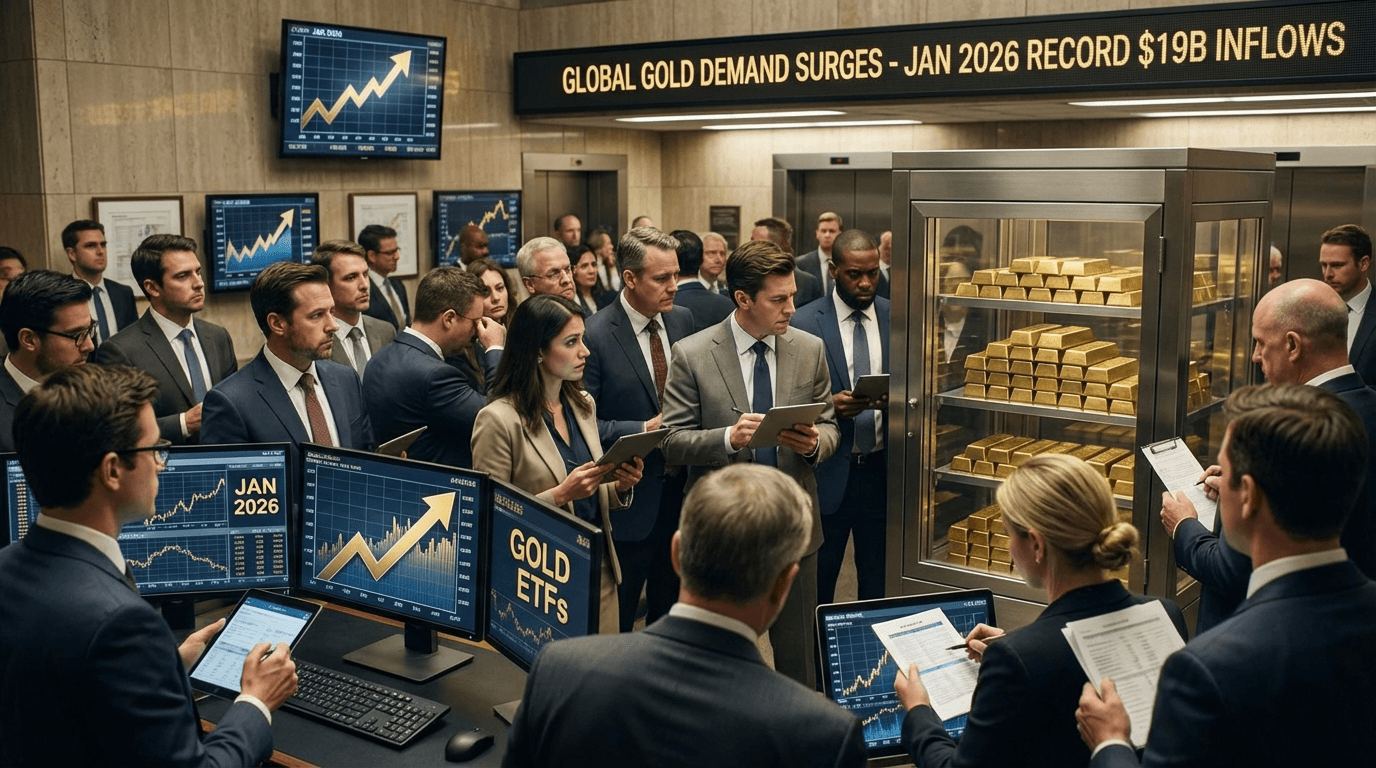
A Historic Surge in Gold ETF Inflows
January 2026 witnessed an unprecedented surge in global gold exchange-traded funds (ETFs), with inflows reaching a record-breaking $19 billion. This monumental influx highlights a pivotal shift in investor sentiment, as capital flocked to precious metals amidst growing geopolitical tensions, economic uncertainties, and weakening global currencies. Consequently, total gold ETF assets under management soared to a historic high of $669 billion, reaffirming gold's status as the preferred safe-haven asset for both institutional and retail investors worldwide.
Signaling a Shift in Market Dynamics
The remarkable performance in January stands out not only for its sheer magnitude but also for what it signals about evolving market dynamics. The $19 billion inflow into gold ETFs signified a strong vote of confidence in the asset class, coinciding with a period when traditional risk assets faced challenges from elevated valuations, policy uncertainties, and geopolitical tensions. Trading volumes further emphasized this shift, with January witnessing an average daily gold trading volume of 3,998 tonnes—a 35 percent increase from the previous month and significantly higher than the 2025 average of 3,247 tonnes per day.
Record Inflows Across Global Markets
The significance of January's gold ETF inflows cannot be overstated. In India alone, gold ETFs attracted ₹24,040 crore (approximately $2.9 billion), marking a remarkable 106 percent month-on-month surge from December's ₹11,646 crore. This single month set a new record for gold ETF inflows in India, surpassing the combined inflows of the previous five months. By the end of January, India's gold ETFs had accumulated over ₹61,000 crore ($7.5 billion), showcasing consistent investor appetite for exposure to precious metals.
Globally, the narrative was even more compelling. The World Gold Council reported a 120-tonne increase in physical gold holdings across ETFs in January alone, bringing total holdings to 4,145 tonnes. This rapid accumulation reflects both price appreciation and genuine new buying from investors seeking exposure to bullion without the complexities of physical storage or custody.
Drivers Behind the Gold Rush
Several factors converged to create an ideal environment for gold investment in early 2026. Gold prices surged by 14 percent, surpassing the $5,100 per ounce mark, generating momentum that attracted both technical traders and long-term investors. This price strength, coupled with expectations of further U.S. Federal Reserve rate cuts, made gold increasingly appealing as interest rates moderated and the opportunity cost of holding non-yielding bullion diminished.
Geopolitical uncertainties played a crucial role as well. Global trade tensions, regional conflicts, and policy unpredictability renewed investors' appetite for assets that perform well during crises. Central banks worldwide continued their aggressive accumulation of gold reserves, providing both direct demand and a powerful vote of confidence in precious metals as a store of value.
Additionally, the weakening U.S. dollar provided another tailwind. As the dollar depreciated against major currencies, gold denominated in other currencies became more attractive to international investors, creating cross-border demand dynamics that amplified inflows into ETFs. This currency effect has historically been one of the most potent drivers of gold investment flows.
A Shift in Portfolio Preferences
The January data revealed a profound insight: for the first time in recent history, gold ETFs attracted more inflows than actively managed equity mutual funds in a major market like India. While both asset classes received approximately ₹24,000 crore in January, the symbolism was significant. Equity mutual funds declined by 14 percent sequentially from December levels, with weakness concentrated in mid-cap and small-cap segments where elevated valuations prompted profit-taking.
This rebalancing reflects deliberate portfolio repositioning rather than a panic-driven flight to safety. Market analysts noted that investors appeared to be exercising discipline by rebalancing at the start of the year, adding gold as a hedge following volatile trading in risk assets throughout late 2025. The sustained buildup of gold ETF inflows since September 2025 supports this narrative of gradual, strategic repositioning rather than sudden panic.
Implications for Investors Moving Forward
Gold's performance in 2026 has been exceptional by any measure. Year-to-date returns of approximately 16 percent represent the strongest performance among major asset classes in the early months of the year. Over the trailing twelve-month period, returns exceeded 76 percent, validating gold's role as a legitimate return driver, not merely an insurance policy.
For portfolio construction, the January data underscores several key insights. The financialization of gold through ETFs has democratized access to precious metals, allowing investors of all sizes to gain exposure without navigating the complexities of physical ownership. Multi-asset allocation funds also benefited, with inflows rising 41 percent month-on-month as investors sought diversified precious metals exposure.
The January surge in gold ETFs represents far more than a temporary spike in investor interest—it reflects structural shifts in how global capital allocates across asset classes when uncertainty dominates. As investors navigate the volatile markets of 2026, gold's record inflows signal that capital will continue flowing toward assets that provide stability, diversification, and proven performance during turbulent periods.