
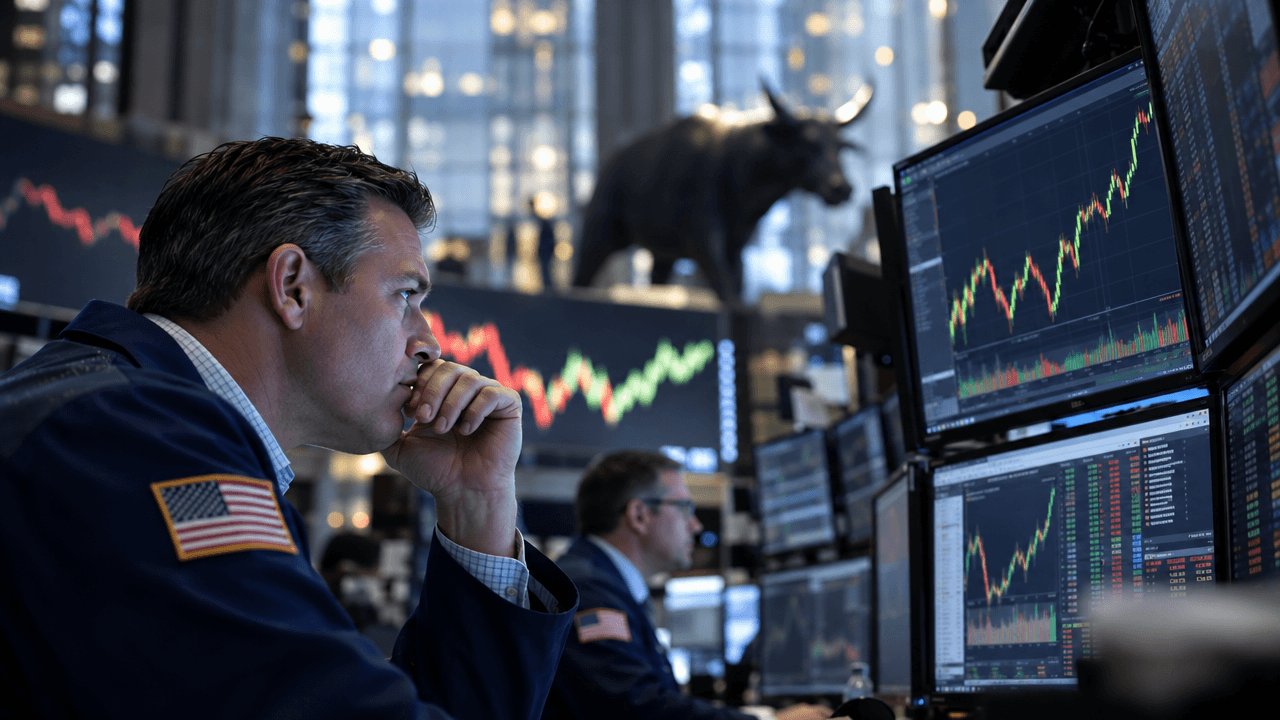
U.S. and European equity futures are pointing higher after a sharp technology-led selloff rattled global markets, offering investors a measure of short-term relief. Wall Street futures rose roughly 0.6%, while EUROSTOXX 50 futures gained about 0.7%, suggesting that buyers are returning after heavy selling pressure. However, the move looks more like an attempt at stabilization than proof that risk sentiment has fully recovered. [1]
The latest rebound highlights a familiar market dynamic: futures can improve quickly after an aggressive decline, but the reasons behind the original selloff still matter. Investors remain focused on artificial-intelligence valuations, semiconductor demand, borrowing costs, corporate earnings, and the financing required to build the infrastructure supporting the AI boom.
What Drove The Sharp Selloff
Technology and semiconductor shares were at the center of the recent decline. The Philadelphia Semiconductor Index suffered an extended losing streak, its longest since 2008, while major U.S. indexes recorded some of their weakest weekly performances in months. The Nasdaq was especially vulnerable because technology companies represent a large share of the index and many high-growth stocks are sensitive to changes in interest-rate expectations. [1]
The selling was not caused by one isolated headline. Instead, several concerns converged. Investors questioned whether AI-related companies had risen too far, too quickly, while also examining how heavily indebted data-center operators would finance future expansion. Higher interest rates can make those projects more expensive and reduce the present value investors assign to future earnings.
This combination encouraged traders to reduce exposure to speculative growth stocks. Capital moved toward defensive sectors and selected European companies viewed as cheaper or less dependent on the AI investment cycle. Earlier market activity showed banks, food and beverage companies, and other defensive groups attracting interest as investors rotated away from U.S. technology shares. [3]
Why Futures Are Rebounding
A rebound after a steep decline often reflects short covering, bargain hunting, and portfolio rebalancing. Traders who benefited from falling prices may close those positions, while longer-term investors may use the decline to buy companies they still consider fundamentally attractive.
The futures gains also came ahead of an important earnings period for major AI and technology companies. Investors are looking for evidence that extraordinary spending on chips, cloud capacity, and data centers is translating into sustainable revenue and profits. Strong results or optimistic guidance could reinforce confidence in the sector. Disappointing numbers, cautious forecasts, or evidence of slowing demand could quickly renew selling pressure.
The distinction between a bounce and a trend reversal is essential. A single positive futures session does not erase the damage caused by a sharp decline. For a more durable recovery, markets will likely need improving breadth, stronger participation from non-technology sectors, falling volatility, and earnings that justify current valuations.
What It Means For European Markets
European equity futures are participating in the rebound, but regional markets face their own challenges. European stocks were less exposed to the technology selloff than U.S. indexes, partly because major European benchmarks have greater representation from banks, industrial companies, healthcare, consumer firms, and energy businesses.
That sector mix can provide relative support when investors move away from high-growth technology shares. European value stocks may also attract buyers if traders believe U.S. technology valuations have become stretched. However, Europe is not insulated from global risk aversion. Weakness in Wall Street technology shares can affect international portfolios, while political and fiscal developments may create additional pressure.
Recent concerns surrounding France’s fiscal outlook and political tensions demonstrate why investors must assess local risks alongside global market themes. European futures may rise while individual national indexes or sectors remain vulnerable to domestic headlines. [1]
Key Signals For Traders To Watch
The most important question is whether technology shares can hold their rebound after the opening bell. A strong futures reading that fades during regular trading would suggest that sellers remain active. Conversely, sustained gains accompanied by rising trading volume could indicate that confidence is beginning to return.
Traders should also monitor Treasury yields, credit spreads, and market breadth. Falling yields may support growth stocks by easing valuation pressure, but a sharp decline caused by recession fears would carry a different message. Credit spreads can reveal whether concerns are spreading from equities into corporate debt markets. Breadth matters because a recovery led by only a handful of mega-cap technology stocks is generally less convincing than one supported by banks, industrials, consumer companies, and smaller businesses.
For SimFi traders, the session is a useful exercise in risk management. Rather than chasing the first move higher, define entry levels, stop-loss points, and maximum position size before taking a trade. Consider reducing leverage when volatility is elevated, and avoid assuming that a positive futures session guarantees a positive close.
A practical approach is to create two scenarios. In the bullish case, futures gains hold, technology stocks recover, and earnings expectations improve. In the defensive case, the rebound fades, yields rise, and investors resume selling high-growth shares. Planning for both outcomes can help traders respond objectively instead of reacting emotionally.
A Rebound, Not A Guarantee
The recovery in U.S. and European equity futures is encouraging, but it should be interpreted cautiously. It shows that buyers are willing to step in after a major technology-led decline, not that the market’s concerns have disappeared.
The next phase will depend on earnings, interest-rate expectations, credit conditions, and whether AI-related spending continues to produce credible economic returns. Until those questions receive clearer answers, markets may remain highly sensitive to headlines and sudden changes in positioning.
For investors and SimFi traders, the central lesson is straightforward: price rebounds matter, but confirmation matters more. Discipline, measured exposure, and attention to market breadth can be more valuable than trying to predict whether one green session marks the beginning of a lasting recovery.