
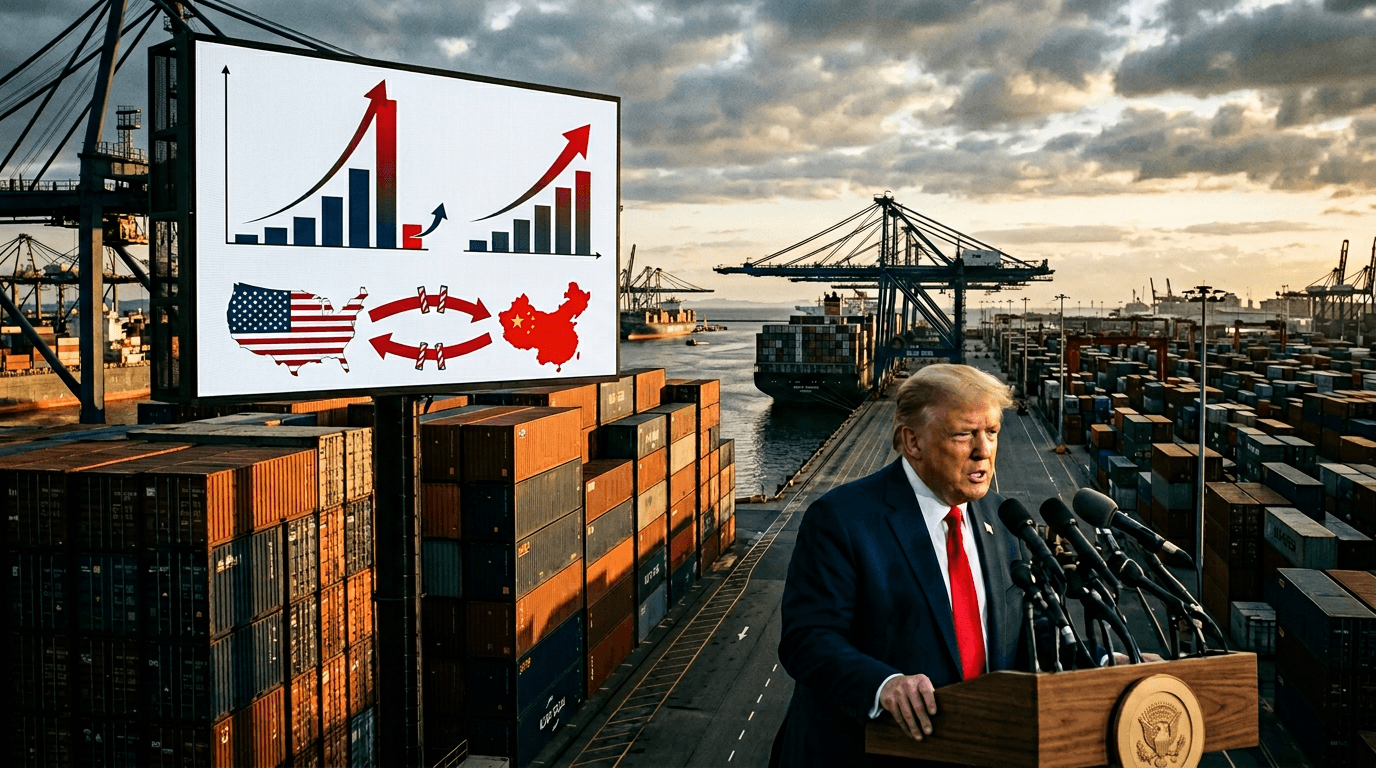
The US-China trade war has reached a pivotal moment as President Trump's administration elevated tariffs on Chinese imports to an unprecedented 145%, marking a significant escalation in the ongoing trade dispute. Initially announced as a 125% tariff, the White House clarified this figure to include a pre-existing 20% duty linked to fentanyl, thus bringing the total to this extraordinary level. This development holds enormous implications for global markets, traders, and businesses across the Pacific, reshaping international commerce like never before.
Decoding the Tariff Structure
The 145% tariff represents a strategic layering of trade policies. The Trump administration imposed a new 125% reciprocal tariff on Chinese goods, intended to counteract what they describe as China's market exploitation and disregard for fair trade principles. However, this rate did not stand alone. Earlier in 2025, a 20% tariff was already in place, targeting Chinese goods due to the country's involvement in fentanyl trafficking. Collectively, these measures create the 145% tariff rate now applied to Chinese imports.
This layered tariff approach demonstrates a calculated escalation strategy. By stacking different tariffs, the administration has crafted a cumulative effect far beyond the initial public announcement. This strategy has sown confusion in markets, with traders and businesses grappling to comprehend the actual cost implications of importing Chinese goods. The White House's clarification suggests that the lack of transparency itself may have been fueling market volatility.
China's Retaliatory Measures
In response, China has enacted its own tariffs, setting an 84% retaliatory rate on US goods. This counter-move targets American exports across various sectors, reflecting Beijing's resolve to protect what it sees as its economic interests and sovereignty. The Chinese foreign ministry has asserted that US tariffs threaten China's economic interests and undermine international fairness and justice.
China's retaliatory scale is notable. At its zenith, Chinese tariffs on US imports soared to 147.6% in mid-April 2025, later moderated through negotiations. This tit-for-tat escalation has created a volatile environment for businesses engaged in cross-Pacific trade, with both nations locked in a cycle of reciprocal tariff hikes, raising questions about the longevity of this escalation before meaningful negotiations resume.
Market Impact and Volatility
The tariff escalation has injected substantial uncertainty into financial markets, particularly impacting trade-sensitive currencies and equity indices. Businesses reliant on Chinese components face immediate pressure on profit margins as the cost of imported goods skyrockets. For traders, the volatility from tariff announcements and clarifications presents challenges and opportunities, with currency pairs and equity sectors reacting to each new development.
The timeline of tariff increases in 2025 reveals the rapid pace of this trade war escalation. From early February to mid-April, the US raised tariffs on Chinese imports through successive announcements, with particularly aggressive hikes on April 5, April 9, and April 10. This rapid succession of policy changes made it challenging for markets to adjust and businesses to effectively plan their supply chain strategies.
Historical Context and Comparative Analysis
The current tariff levels are a dramatic departure from historical norms. Average US tariffs on Chinese exports now stand more than fifteen times higher than before the US-China tariff war began in 2018. The average US tariff on imports from China increased from 3.0% to 18.4% across all goods between January 20, 2025, and subsequent months, with China-specific tariffs rising even more steeply.
This escalation surpasses even the tariff increases during Trump's first administration. The 26.8-percentage point rise in average US tariffs on Chinese imports during the second Trump term is 10 percentage points larger than the entire 16.2-percentage point increase during the first Trump administration. This comparison underscores the unprecedented nature of the current trade dispute.
Key Takeaways for Traders and Investors
The 145% tariff rate signifies a fundamental shift in US-China trade relations with long-term implications. Businesses must reassess supply chain strategies and pricing models immediately. Traders should remain vigilant for continued volatility in currency markets, particularly in yuan and dollar pairs, as well as equity sectors heavily exposed to China. Be alert for diplomatic signals suggesting potential negotiations, as previous talks in Geneva and Korea led to significant tariff reductions from their peaks. Understanding the layered nature of these tariffs is crucial for accurately calculating the true cost of Chinese imports and assessing which sectors face the greatest pressure.
The escalation of the trade war highlights that tariff policy remains a potent market-moving tool, capable of creating significant disruptions in global financial markets and shifting competitive dynamics between nations and industries.
News Impact Score: 8