
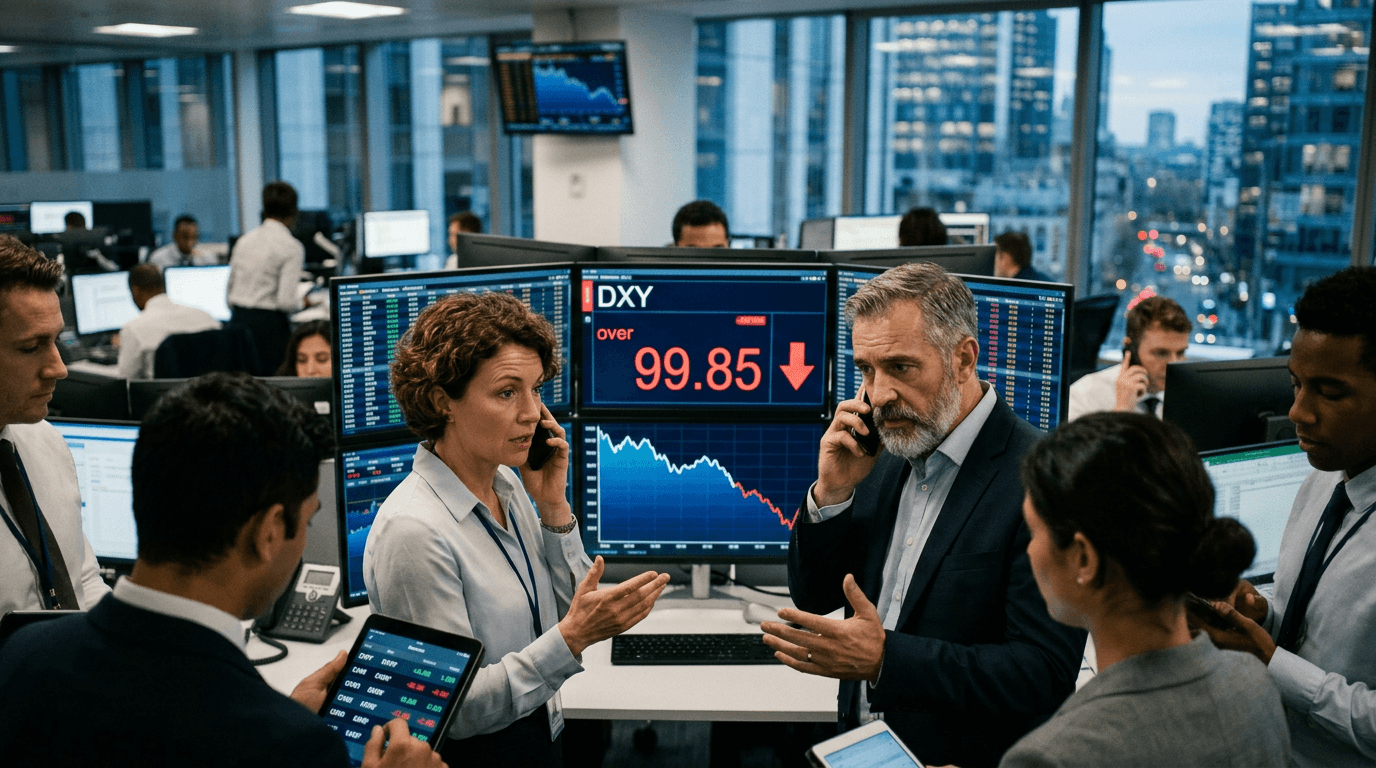
For the first time since July 2023, the US Dollar Index has decisively dipped below the 100 level, marking a pivotal moment in global currency markets. This technical breakdown is more than just a routine price fluctuation; it signals a fundamental reevaluation of US monetary policy, economic strength, and the dollar's status as the world's reserve currency. As traders and investors worldwide adjust their strategies, understanding the drivers of this decline and its implications for your portfolio has never been more crucial.
Understanding The 100 Level And Its Significance
The 100 mark on the US Dollar Index is more than just a round number. It's a crucial psychological and technical benchmark that has served as a key reference point for over a decade. The DXY measures the dollar's strength against six major currencies: the Euro, Japanese Yen, British Pound, Canadian Dollar, Swedish Krona, and Swiss Franc. Trading above 100 typically signals robust US currency performance, while a break below indicates a shift toward dollar weakness that demands immediate attention.
This level's significance extends far beyond casual observation. The 100 threshold acts as a critical reference within billions of dollars worth of algorithmic trading systems, risk management protocols, and global portfolio allocations. When major round-number thresholds break, they often trigger substantial institutional money flows and strategic portfolio rebalancing across asset classes. Earlier this year, the dollar nearly reached 110, driven by expectations of sustained Federal Reserve action. The recent dip below 100 represents approximately a 10 percent reversal in just a few months, a movement far from routine in currency markets.
The Fundamental Drivers Behind Dollar Weakness
The dollar's descent below 100 results from several converging factors that have systematically eroded its traditional strength. Primarily, the Federal Reserve has signaled a clear pause in its monetary tightening cycle, a major policy shift with profound implications for currency markets. For years, higher US interest rates attracted foreign capital seeking superior returns, providing the dollar with a significant structural advantage. With this advantage now substantially reduced, one of the dollar's primary supports has weakened considerably.
Simultaneously, major central banks, including the European Central Bank and the Bank of England, have adopted more hawkish stances, narrowing the interest rate differential that previously favored dollar-denominated assets. Improved economic data from the Eurozone has further diminished the dollar's traditional safe-haven appeal as investors grow more comfortable allocating capital toward riskier, higher-yielding opportunities. Additionally, ongoing trade tensions and policy uncertainties, particularly surrounding tariffs on China, Mexico, and Canada, have injected sustained volatility into markets. These conditions have prompted traders to trim dollar positions as part of broader risk management strategies, accelerating the pace of dollar weakness.
Technical Breakdown And Critical Support Levels
From a technical perspective, the breach below 100 is unmistakably bearish and carries significant structural implications. Current charts reveal a pattern of lower highs and lower lows, indicating institutional selling pressure rather than isolated profit-taking. The most telling signal is the death cross, where the 50-day moving average has crossed below the 200-day moving average. This classic bearish formation typically precedes sustained downward momentum and suggests that the weakness has conviction behind it.
Trading volumes surged significantly during this breakdown, a crucial confirmation that institutional investors are actively unwinding dollar positions rather than merely taking profits on short-term gains. For active traders, several key support and resistance levels now demand close attention. Immediate support exists near 99.70 and 98.50. A break below 98.50 could indicate deeper weakness, while a fall below 97.50 would signal a clearer long-term trend reversal with potentially significant implications for capital flows across various asset classes. On the upside, the 100.20 to 100.50 range represents a potential recovery zone, with resistance extending toward 101.60 and ultimately 103. The 200-day moving average remains a critical focal point as traders assess whether current weakness represents a temporary correction or the beginning of a sustained trend change.
Implications For Traders And Portfolio Strategy
This dollar weakness presents both challenges and opportunities for traders navigating current market conditions. The breakdown below 100 signals shifting risk appetite among institutional investors, likely driving continued volatility across forex, commodities, and emerging market assets. Traders should closely monitor whether the dollar finds support near key technical levels or continues accelerating lower. Dollar weakness typically benefits commodities priced in USD, emerging market currencies, and international equities, creating tactical opportunities for those positioning appropriately.
The broader message is clear: the era of dollar dominance driven by Fed tightening may be entering a new phase. This development carries profound implications not only for forex traders but for anyone engaged in international markets, commodities trading, or global investments. Adapting your strategy to reflect this shift in currency market dynamics will be essential for success in the months ahead.