
1. PLAIN TEXT format with NO HTML or markdown 2. Start DIRECTLY with the first paragraph - no preamble 3. ALL CAPS for section headings on their own line 4. Blank lines between paragraphs 5. 3-5 main sections with clear takeaways 6. Engaging and educational content 7. At the END: TITLE, EXCERPT, NEWSIMPACTSCORE
The search results provide good information about: - The significance of the 100 level on the DXY - Factors driving the dollar downward (Fed rate pause, policy shifts) - Technical analysis (death cross, moving averages) - Support and resistance levels - Market context about tariff tensions and geopolitical factors - EUR/USD and GBP/USD implications
I need to synthesize this into an engaging 800-word blog post for E8 Markets (SimFi platform).
Key points to cover: 1. What happened - DXY below 100 2. Why it matters - significance of the 100 level 3. What caused it - Fed policy, tariff concerns, geopolitical factors 4. Technical analysis - death cross, support/resistance 5. Market implications - currency pairs, trading opportunities 6. Action items for traders
Let me structure this as: - Opening paragraph with hook - What This Means for Traders (context) - The Technical Picture Tells a Story (technical analysis) - What's Driving the Dollar Lower (fundamental factors) - Key Levels Every Trader Should Know (trading guides) - Actionable Takeaways for Your Portfolio
Let me write this in plain text, no markdown, with clear section headings.
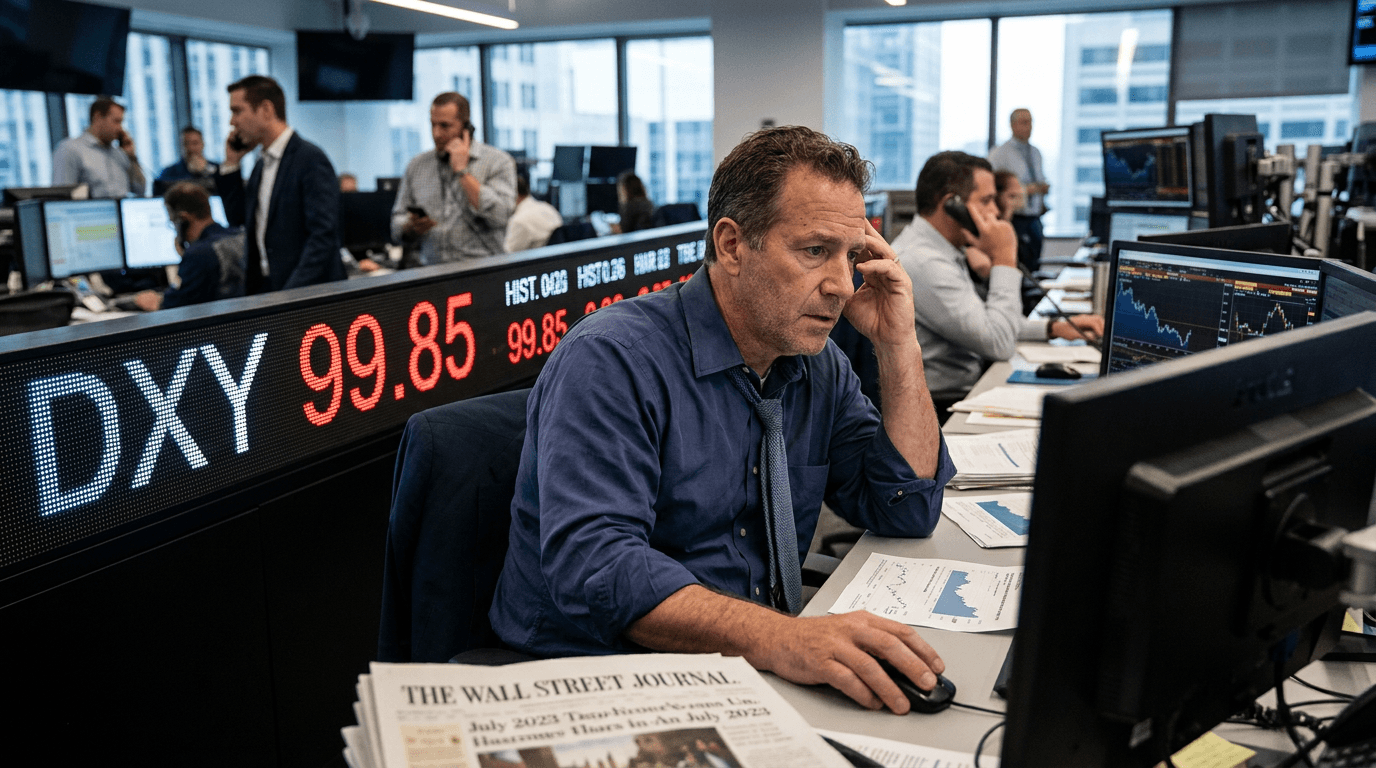
The US Dollar Index just crossed a threshold that many traders thought would hold firm. For the first time since July 2023, the DXY has decisively broken below the 100 level, and this isn't just another technical blip. This move signals a fundamental shift in how global markets are pricing the dollar's future, and whether you're trading forex, commodities, or equity positions denominated in other currencies, understanding what's happening matters.
The 100 mark on the Dollar Index isn't arbitrary. This benchmark measures the dollar's strength against a basket of six major world currencies: the Euro, Japanese Yen, British Pound, Canadian Dollar, Swedish Krona, and Swiss Franc. For over a decade, the 100 level has functioned as a critical support and resistance zone, acting as a psychological anchor for institutional investors, central banks, and multinational corporations. When an index pierces such a round-number level with substantial trading volume, it typically triggers institutional money flows and signals a shift in currency strategies. This current breakdown is particularly noteworthy because the 100 level marks the dollar trading weaker than its historical average since the index's inception in 1973. A breach below this threshold suggests that traders are losing faith in the dollar's traditional strength narrative.
What This Means For Traders
This isn't merely a routine technical adjustment; it signifies a fundamental shift in how global markets are evaluating the future of US monetary policy, economic growth, and capital flows. The breakdown is already reshaping currency pairs. EUR/USD and GBP/USD are strengthening as the dollar weakens, creating trading opportunities for those positioned correctly. Meanwhile, commodity prices are reacting sharply since many commodities are dollar-denominated. A weaker dollar typically makes commodities cheaper for foreign buyers, potentially lifting prices across energy, metals, and agricultural markets.
For traders and investors alike, grasping the implications for your positions and strategies is vital. A weakening dollar can inflate returns on foreign investments but also introduces currency risk into your portfolio. If you hold overseas assets or have currency exposure, this shift could either work in your favor or against you depending on your positioning.
The Technical Picture Tells A Story
From a technical standpoint, the decline below 100 is unmistakably bearish. Charts reveal a pattern of lower highs and lower lows, indicating institutional selling pressure rather than mere profit-taking. The most telling signal is the "death cross" pattern—the 50-day moving average has crossed below the 200-day moving average, a classic pattern traditionally associated with sustained downward momentum.
Trading volume surged significantly during this breakdown, affirming that this move carries conviction and strength. This isn't a weak decline driven by thin liquidity; institutional investors are actively unwinding dollar positions. The recent selloff has pushed the DXY toward the 96.50 to 97.00 support zone, levels not tested since the 2025 lows. If the index breaks below 98.50, further losses could ensue. A breach below 97.50 would signal a clearer, longer-term reversal with potentially significant implications for capital flows across asset classes.
What's Driving The Dollar Lower
Several interwoven factors have driven the dollar downward. The Federal Reserve's shift to a rate pause has stripped away a key advantage the dollar previously enjoyed. For years, higher US interest rates enticed foreign capital seeking better returns, bolstering the dollar's strength. With the Fed now maintaining steady rates, that edge has vanished.
Beyond monetary policy, geopolitical factors and tariff tensions are weighing on the dollar. Some European funds are actively selling their dollar-denominated debt assets in concern over new, aggressive policies, reducing dollar demand and amplifying the current decline. Additionally, there's a seasonal tendency for the US Dollar to drop ahead of interest rate decisions during cutting cycles. Fewer market participants can absorb sudden outflows ahead of FOMC meetings for risk-management reasons, amplifying such moves.
Key Levels Every Trader Should Know
Support levels to monitor are 99.70 and 98.50. If the DXY breaches the 98.50 zone—not tested since early 2023—further losses could ensue. A break below 97.50 would signal a clearer, longer-term reversal. On the upside, 100.20 to 100.50 represents a potential recovery area, with resistance stretching toward 101.60 and 103. The 200-day moving average remains a critical focal point; traders are watching to see if this weakness is temporary or indicative of a sustained trend change.
Actionable Takeaways For Your Portfolio
Keep a close watch on the 98.50 support level—a breach confirms deeper weakness and potential for further downside. Scrutinize Federal Reserve communications for cues about future rate cuts and policy direction. Track economic data releases, particularly jobs reports and inflation figures, as these will influence both Fed policy and dollar sentiment. Evaluate the implications for your currency pairs and commodity positions, and align your strategy with your risk tolerance and trading timeframe.
The breakdown below 100 is significant precisely because it represents a shift in institutional conviction about the dollar's direction. Whether this becomes a sustained trend or a temporary pullback will depend on the Fed's next moves and broader geopolitical developments. Position yourself accordingly.
---