
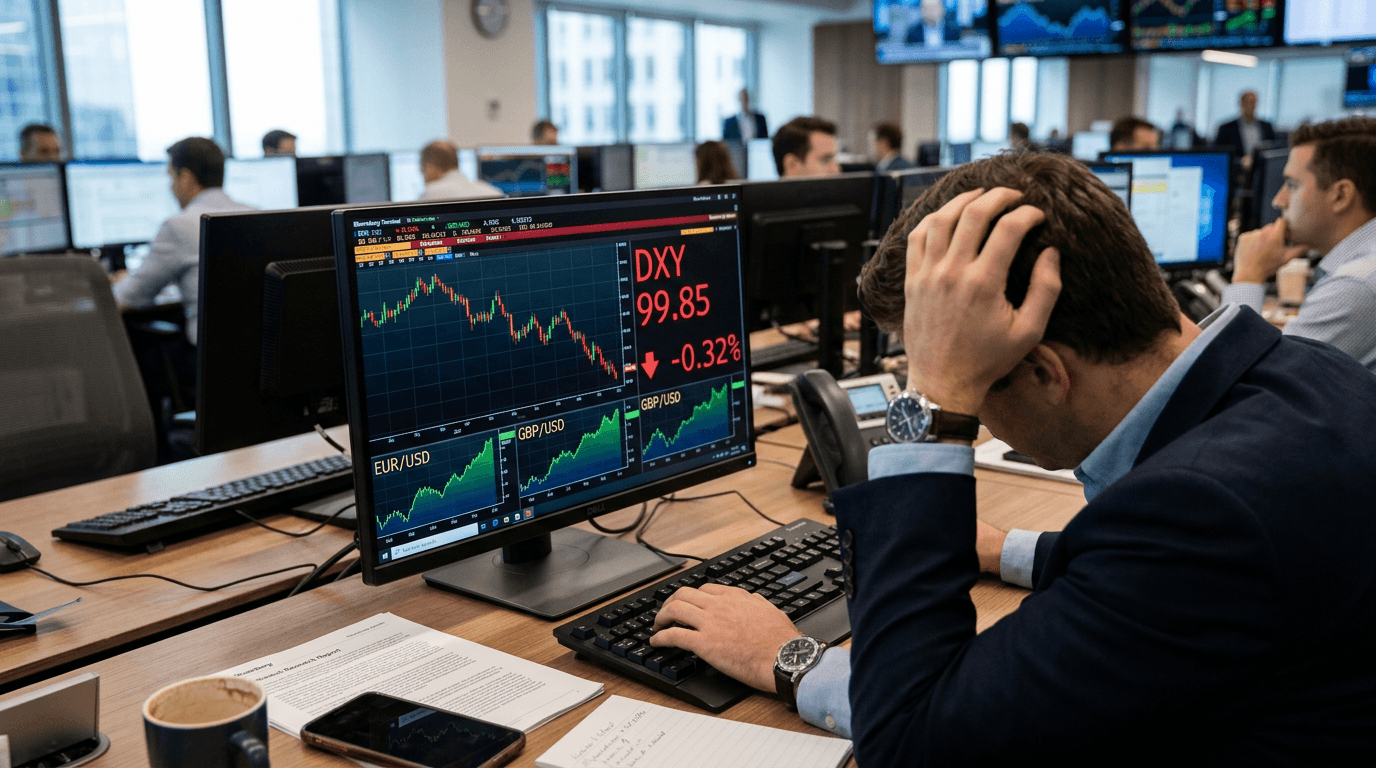
US Dollar Index Dips Below 100: Unpacking the Implications for Forex Traders
For the first time since July 2023, the US Dollar Index (DXY) has plunged below the pivotal 100 mark, reaching a low of 99.74. This isn't just a minor market fluctuation or technical anomaly; it signals a profound shift in global currency dynamics. This development marks a confluence of macroeconomic strains, evolving policies, and geopolitical shifts reshaping capital flows in forex markets and beyond.
Breaking the 100 barrier goes beyond mere numbers—it has been a critical technical support and psychological benchmark for over a decade. When such levels fall amid high trading volumes, it indicates genuine institutional repositioning rather than mere market noise. The uptick in volume during this breakdown shows key players are offloading dollar positions, signaling a serious reassessment of the dollar's inherent strength.
What Induced the Dollar's Drop?
The dip below 100 isn't the result of a single event but rather a combination of forces exerting downward pressure on the dollar. Central to this is the shift in Federal Reserve policy. For years, the allure of high US interest rates attracted global capital seeking superior yields, bolstering the dollar. However, as the Fed halts its rate hikes and markets anticipate steady or declining rates into 2026, this foundational support has weakened considerably.
Adding to this strain are rising tariff tensions under the current administration. While Wall Street anticipated dollar strengthening, the greenback has instead slumped over 7% since the administration's onset. Uncertainties around tariff strategies and a fraying trade relationship with China are creating sustained dollar selling pressure. Investors are increasingly wary of recession risks born from protectionist stances, further diminishing demand for dollar-backed assets.
Geopolitical shifts also contribute. News of potential ceasefire talks between Iran, the US, and regional mediators initially pressured the dollar as investors moved away from safe-haven assets. This reflects a broader trend: as global risk appetite grows, the safe-haven allure of US assets wanes, reducing dollar demand precisely when monetary support is dwindling.
Technical Breakdown Points to Further Challenges
Technically, breaching the 100 level spells trouble for dollar optimists. The 50-day moving average has fallen below the 200-day average, forming the ominous "death cross." This bearish signal suggests ongoing selling pressure and diminished momentum, not just a fleeting setback. The pattern of descending highs and lows on daily charts confirms a systematic reduction in dollar exposure by institutional investors.
Support now lies near 98.50, a zone untested since early 2023. Breaching this could lead to further losses into unexplored territory. Conversely, the 100.20 to 100.50 range has become critical resistance; sustaining above could see attempts toward 101.60 or even 103. However, given current trends and selling strength, the risk of further decline remains high.
Implications for Forex Traders and Markets
For forex traders, this scenario presents both hurdles and prospects. Dollar weakness has already elevated EUR/USD and other major pairs as investors diversify beyond US borders. The heightened volatility during this transition rewards nimble strategies but punishes complacency.
The evolving landscape has also boosted the Yen and Swiss Franc as alternative safe-havens as investors pivot from dollar assets. This marks a significant shift in global capital flows, prompting a reevaluation of long-held assumptions about dollar strength.
What Lies Ahead
The dollar's path forward hinges on forthcoming economic data and Federal Reserve communications. Positive surprises in inflation or employment could swiftly reverse the dollar's weakness, but indications of slower growth or earlier rate cuts might push it lower.
Traders should vigilantly track economic calendars for employment data, inflation figures, and central bank announcements. These catalysts will dictate whether this marks the beginning of a prolonged dollar decline or a mere pause in extended valuations. One certainty prevails: volatility will continue, offering ample opportunities for those ready to navigate this shifting landscape with discipline and clear strategies.
The descent below 100 is a watershed moment for currency markets. Traders who grasp both technical cues and fundamental forces will be well-positioned to seize the directional movements ahead.
NEWSIMPACTSCORE: 7