
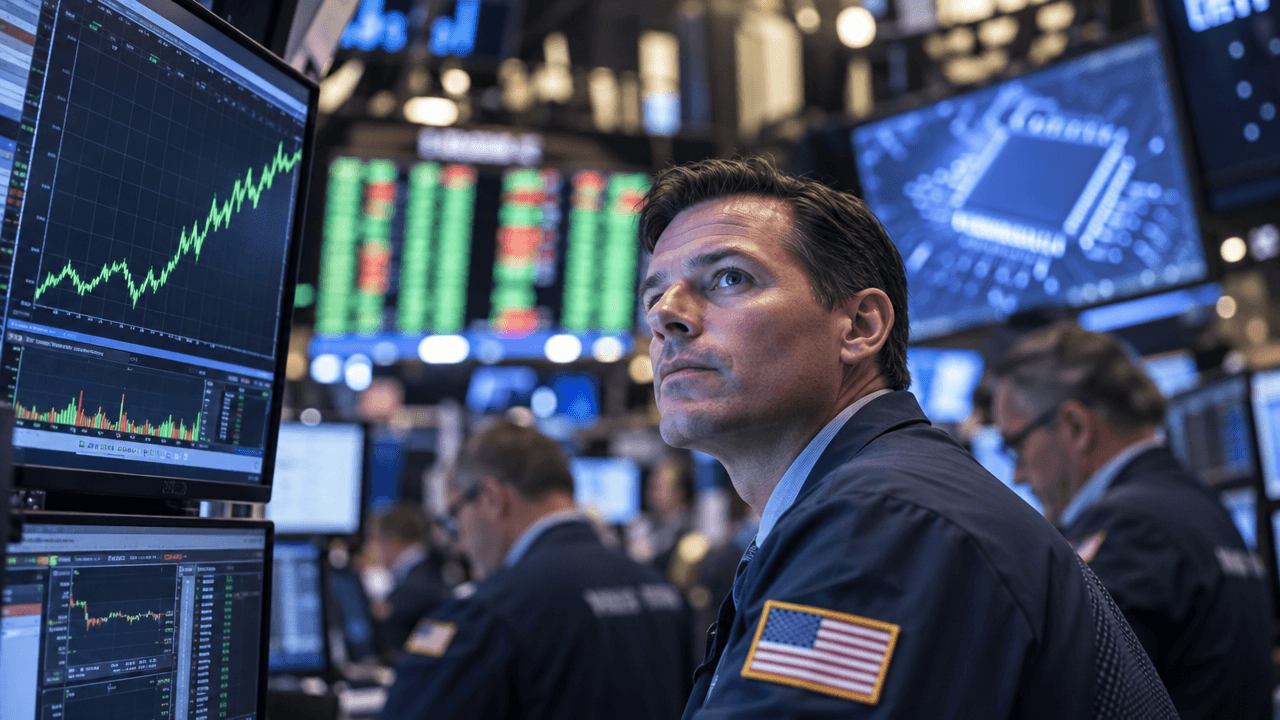
U.S. equity futures edged higher as investors weighed a new wave of corporate earnings and renewed confidence in the commercial potential of artificial intelligence. S&P 500 futures rose roughly 0.2%, while Nasdaq 100 futures gained about 0.4% to 0.5% in early trading. Dow futures were little changed, signaling a cautious but constructive mood rather than a broad-based rush into risk. [4][5]
The market’s reaction reflects a familiar pattern during earnings season: strong results can lift sentiment quickly, but investors are becoming increasingly selective about which companies can convert high expectations into durable revenue, profits, and cash flow.
Earnings Take Center Stage
Corporate earnings remain the immediate catalyst for the market. Investors are looking beyond whether companies beat quarterly estimates and focusing on forward guidance, margins, demand trends, and management commentary about the economic outlook.
Recent reports have provided several reasons for optimism. SpaceX posted third-quarter revenue of $14.6 billion, representing growth of more than 160% from the same period a year earlier and exceeding analyst expectations. Its shares rose sharply in premarket trading after the company also reported stronger-than-expected profitability. [5][8]
Tesla also delivered a better-than-expected top and bottom line, while Meta Platforms reported a revenue beat and offered strong guidance for the current quarter. These results helped support the view that some of the largest technology companies continue to find ways to grow despite elevated interest rates and persistent economic uncertainty. [1]
However, the earnings season has also shown that positive results do not guarantee a higher stock price. Netflix shares declined even after the streaming company reported stronger-than-expected profit, illustrating how investors may punish companies when guidance, subscriber trends, or valuation fail to match ambitious expectations. [7]
The Ai Trade Remains A Major Driver
Artificial intelligence continues to shape market leadership. The technology is no longer being evaluated solely as a long-term innovation. Investors are looking for measurable evidence that AI spending is producing stronger sales, improving productivity, and creating new business opportunities.
Optimism intensified after strong results from companies connected to AI infrastructure and applications. SpaceX’s performance, including growth in satellite communications and artificial-intelligence-related businesses, helped lift enthusiasm across the broader technology ecosystem. Shares of semiconductor companies such as Micron Technology and Advanced Micro Devices also benefited from renewed interest in AI demand. [1][8]
The opportunity is substantial, but so are the risks. Technology companies are committing enormous sums to data centers, chips, cloud capacity, and software development. The crucial question for investors is whether future earnings will grow quickly enough to justify those investments.
A strong earnings report can therefore have an effect beyond one company. It may influence expectations for suppliers, chipmakers, cloud providers, and other businesses viewed as beneficiaries of the AI buildout. Conversely, disappointing guidance from a major technology company can quickly pressure the entire group.
Why The Futures Move Matters
A modest rise in futures is best interpreted as an indication of sentiment, not a guarantee of how the regular session will finish. Futures prices can change significantly before the opening bell as investors respond to additional earnings, economic data, bond yields, or geopolitical developments.
The limited gains also suggest that traders are balancing optimism with caution. Major U.S. indexes have reached elevated levels, and strong earnings expectations are already reflected in many share prices. According to market data cited by Yahoo Finance, third-quarter S&P 500 earnings growth expectations had risen to approximately 25% year over year, while 83% of the companies that had reported at that point had exceeded estimates. [12]
That level of optimism raises the standard for future results. Companies may need to deliver not merely an earnings beat, but also stronger forecasts or evidence that demand will remain resilient. When expectations are high, an otherwise solid report can be treated as disappointing if it does not provide a meaningful upside surprise.
What Traders Should Watch
For short-term traders, the most important developments may come from the interaction between earnings and price action. A stock that rises after a report and holds those gains during the session may be showing stronger conviction than one that spikes initially and then reverses.
Traders should also monitor market breadth. If gains remain concentrated in a handful of mega-cap technology companies, the rally may be more vulnerable than an advance supported by financials, industrials, consumer companies, and smaller firms.
Bond yields are another important variable. Higher yields can reduce the relative appeal of growth stocks by increasing the discount rate applied to future earnings. Lower yields, meanwhile, can provide support for technology and other long-duration assets. Oil prices, inflation data, and geopolitical headlines may add further volatility.
A practical approach is to avoid treating a positive futures signal as a standalone trade. Instead, traders can identify key support and resistance levels, define a maximum loss before entering, and wait for confirmation after the opening move. In a SimFi environment, this makes it possible to practice reacting to earnings gaps, managing position size, and distinguishing genuine momentum from an emotional first-hour move.
The Broader Market Outlook
The current backdrop remains constructive, but it is not risk-free. Earnings optimism and AI enthusiasm are supporting equity prices, while high valuations and heavy investment requirements create room for disappointment.
The market’s next phase will depend on whether companies can broaden the earnings recovery beyond a small group of technology leaders. Continued revenue growth, healthy margins, and credible guidance could sustain the advance. Signs of slowing demand, rising costs, or weaker returns on AI investment could lead investors to rotate toward more defensive areas.
For now, the rise in U.S. equity futures reflects confidence that corporate America is still delivering. The more important test is whether that confidence survives the full earnings season. For traders and investors alike, the lesson is clear: follow the numbers, scrutinize guidance, and treat optimism as a starting point for analysis rather than a substitute for risk management.