
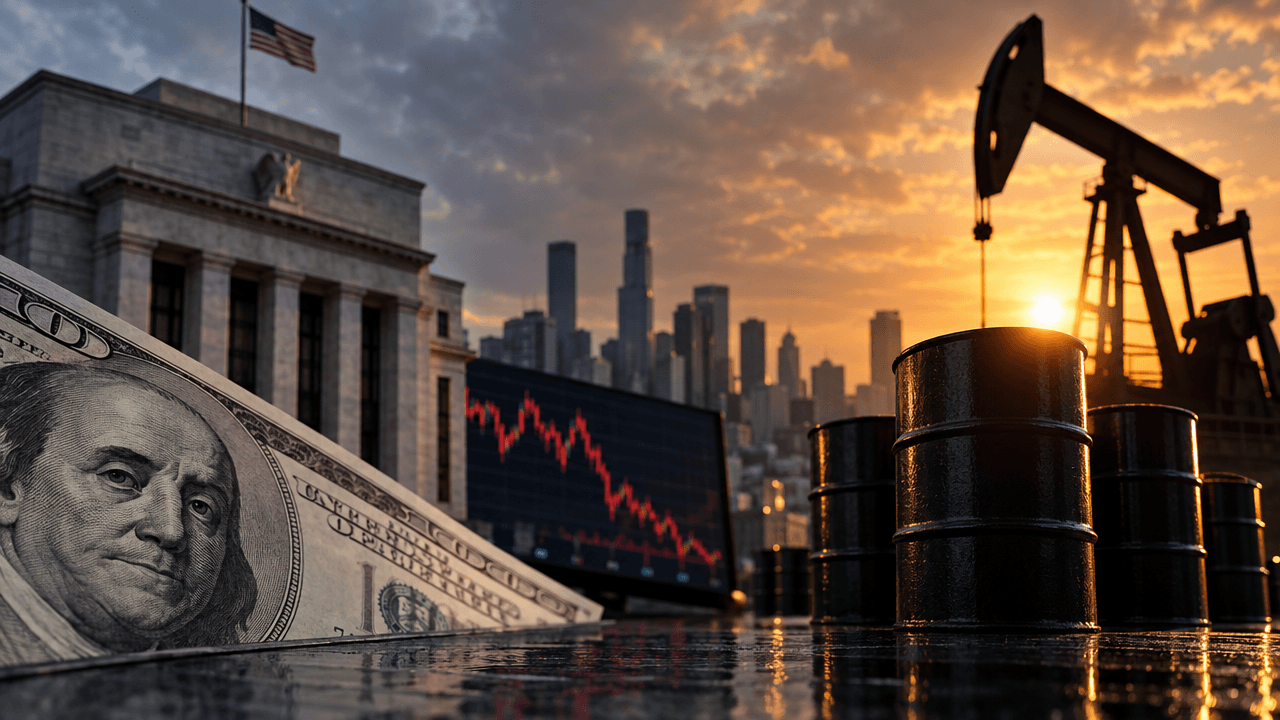
U.S. equity futures are signaling a softer open as traders recalibrate risk in the face of rising bond yields and a renewed surge in oil prices. Recent sessions have already seen cash markets slip as higher energy costs and climbing Treasury yields revive inflation worries, putting particular pressure on growth-heavy indices like the Nasdaq 100 that had only just notched fresh record highs.[9][11][13]
Markets Start On The Back Foot
When yields and oil rise together, equity futures typically struggle, and that is exactly the backdrop facing U.S. traders today.[9][10][11] Higher Treasury yields, with the 10-year benchmark edging toward levels last seen in early 2025, have weighed on risk appetite across global markets, extending a broad selloff in government bonds.[10][11][13] At the same time, Brent crude has pushed back into the low-to-mid $90s per barrel after weeks of gains, reinforcing the sense that inflation may prove more persistent than investors hoped.[9][10][13]
Growth-oriented futures such as the Nasdaq 100 are especially sensitive to this mix because their valuations depend heavily on expectations for low, stable interest rates and robust earnings growth.[11][13] With yields repricing higher, the discount rate applied to future cash flows rises, compressing valuation multiples and making richly priced technology and consumer growth names more vulnerable to pullbacks.[11][13]
Why Rising Yields Pressure Equities
Bond yields represent the “competition” for equities in investors’ portfolios, and the latest moves have been meaningful rather than marginal. The 10-year U.S. Treasury yield has recently pushed toward the 4.8–5.0% zone, marking the highest levels since 2023–2025 depending on the maturity.[10][11][14] Two-year yields, which closely track expectations for Federal Reserve policy, have climbed into the mid‑4% range, up sharply from around 3.5% at the start of the year.[9][11][13]
These levels matter because they reset the hurdle rate for capital. A risk‑free asset yielding close to 5% forces investors to ask harder questions about paying premium valuations for equities, especially in sectors where earnings are more cyclical or speculative.[11][13] Higher yields also translate into tighter financial conditions: borrowing becomes more expensive for companies and households, which can dampen investment, consumption, and ultimately corporate profits over time.[9][13]
For traders on a simulated finance platform, this is a textbook environment to study how duration and sector biases impact portfolio performance. Long-duration assets such as high‑growth tech and unprofitable innovators tend to underperform when yields spike, while value‑oriented sectors and cash‑generative businesses may hold up relatively better.[11][13]
OIL’S ROLE IN THE MACRO PUZZLE
Oil is the other key piece of the puzzle driving today’s risk-off tone. Brent crude has climbed sharply from a little over $70 per barrel in July to nearly $110 at one point, before settling back closer to the low $100s.[10][14] This swing has been fueled by geopolitical tensions, supply concerns, and resilient demand, all of which have reignited worries that headline inflation could reaccelerate.[9][10][13]
Higher oil prices feed into the economy through multiple channels: they lift transportation and production costs, squeeze corporate margins, and act as a tax on consumers, particularly lower‑income households.[9][13] For central banks already battling lingering inflation, a fresh bout of energy‑driven price pressure raises the risk that policy rates will need to stay higher for longer, or even move higher still.[2][5][7]
Market reactions in recent sessions underscore this link. When oil has spiked, global bond yields have tended to push higher in tandem, with investors demanding greater compensation for inflation risk and fiscal concerns, and equity indices in the U.S. and Europe have generally traded lower.[2][5][7][11] That combination helps explain why U.S. equity futures are under pressure today despite relatively solid economic data: the market is repricing the cost of money and energy simultaneously.
Implications For Traders And Simulated Finance
For participants in simulated markets, this environment offers a rich learning laboratory. Rising yields and oil prices create cross‑asset volatility that tests everything from sector rotation strategies to macro‑driven futures trading.[5][10][11] Equity index futures—such as contracts linked to the S&P 500 or Nasdaq 100—can move meaningfully on days when bond and commodity markets drive the narrative, even in the absence of major earnings or data releases.[11][13]
One practical application is to model different scenarios for inflation and rates and observe how futures prices respond. For example, traders can simulate a path where oil holds above $95, inflation expectations tick higher, and 10‑year yields break decisively above 5%, then compare that to an alternative where oil retreats and yields stabilize.[10][11][14] Tracking the performance of growth versus value, cyclicals versus defensives, and U.S. versus international indices under each scenario helps build intuition around macro sensitivity.
Another key takeaway is the importance of watching correlations. In calmer periods, equities and bonds may move independently, but in stress episodes like the current one, they often sell off together as inflation shocks hit both asset classes.[2][7][11] Understanding when traditional diversification fails is critical preparation for live markets—and simulated environments provide a safe space to explore that dynamic without capital at risk.
Key Takeaways For Your Playbook
First, rising yields and oil prices are not just headlines; they are structural forces that reshape discount rates, cash‑flow expectations, and sector leadership. Traders who grasp these links can position more intelligently rather than reacting to price moves in isolation.[9][10][11][13]
Second, growth-oriented equities and futures tend to be more vulnerable when the cost of capital rises, especially after strong runs to record highs. Monitoring valuation metrics and rate expectations alongside price action can help identify when risk/reward is deteriorating.[11][13]
Third, macro catalysts can emerge from outside traditional equity drivers. Geopolitical developments that affect oil supply, shifts in central bank rhetoric, or surprise moves in global bond markets can all ripple swiftly into U.S. equity futures.[2][5][10][11] Maintaining a cross‑asset view—rather than focusing solely on stock indices—improves situational awareness.
Finally, simulated trading platforms allow market participants to rehearse responses to complex, multi‑factor environments like today’s without financial consequences. By experimenting with hedging strategies using index futures, sector rotation, and exposure to rate‑sensitive assets, traders can refine playbooks that will be invaluable when similar conditions arise in live markets.[5][7][11]
Conclusion
U.S. equity futures pointing lower amid rising yields and surging oil prices reflect a market grappling with the possibility that the era of easy money and benign inflation may be behind it, at least for now.[9][10][11][13] For traders and investors, this is a reminder that macro forces can quickly reclaim center stage, challenging complacency built during strong equity runs. In a simulated finance setting, today’s backdrop is a powerful opportunity to deepen understanding of cross‑asset relationships, stress‑test strategies, and prepare for a world where the price of money and energy matters as much as earnings and growth narratives.