
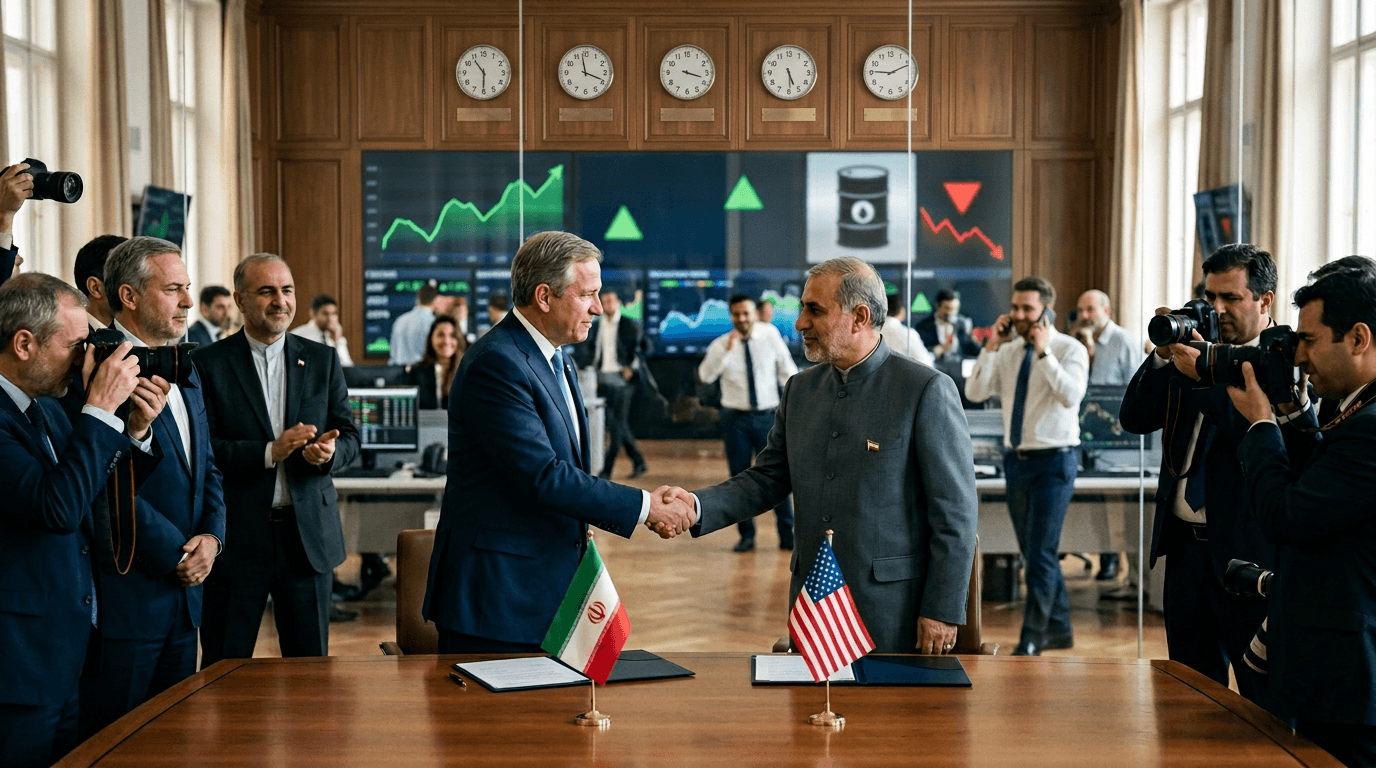
US-Iran Ceasefire: A Turning Point for Global Markets
In a dramatic twist that eases global tensions, the U.S. and Iran have reached a pivotal two-week ceasefire, brokered by Pakistan just before an 8 p.m. deadline. This agreement, contingent on the reopening of the Strait of Hormuz, marks a significant shift from the brink of conflict that threatened international stability and financial markets. As the world's most critical shipping lane reopens, market sentiment is transforming from defensive to a relief-driven recovery, unveiling new opportunities across equities, commodities, and currency markets.
Diplomacy Triumphs Over Escalation
The geopolitical climate had intensified when President Trump issued stark ultimatums, foreshadowing dire consequences for Iran if negotiations failed. Yet, this successful diplomatic effort underscores the profound influence of negotiation in de-escalating geopolitical tensions, proving vital for financial markets. For traders and investors grappling with volatility, this ceasefire offers a crucial reset after an extraordinarily tense period in the Middle East.
Delving into the Ceasefire Agreement
This two-week suspension of hostilities, facilitated by Pakistan, sets the stage for formal negotiations in Islamabad. The Strait of Hormuz, a vital artery for approximately 30 percent of global maritime oil trade, will see safe passage assured through coordination with Iran's Armed Forces. This development is crucial as any disruption directly affects global oil supplies and energy-dependent nations' economic outlook.
Israel's reported agreement to the ceasefire framework diminishes regional escalation risks. The U.S. and Iran have committed to these terms, with Iran's Foreign Minister affirming that defensive operations will cease if attacks halt. Concurrently, the U.S. has introduced a comprehensive 10-point peace plan aimed at achieving enduring resolution.
Market Dynamics and the Relief Rally
For weeks, geopolitical risks have dictated market dynamics, with scenarios ranging from supply chain disruptions to energy price surges. The ceasefire has immediately altered this landscape. With the Strait of Hormuz reopening and military tensions easing, concerns over oil supply constraints have significantly diminished. Brent crude and other energy benchmarks are likely to face downward pressure, benefiting consumers and energy-sensitive sectors.
The transition from risk-off to risk-on sentiment favors equities, particularly growth and technology stocks that had underperformed during heightened uncertainty. The Nasdaq 100 has responded positively, as investors shift from defensive stances to high-yielding assets. Currency markets have reacted similarly, with the Japanese yen weakening as risk appetite improves, reflecting reduced demand for refuge currencies like the yen.
The Critical Next Two Weeks
The coming two weeks are vital for establishing momentum toward a lasting resolution. Formal negotiations in Islamabad will test whether both sides can move beyond the temporary ceasefire to address underlying issues substantively. Although the timeline is tight, the voluntary commitment of both nations suggests genuine interest in resolution rather than mere tactical positioning.
During this period, markets will be acutely sensitive to negotiation developments. Positive progress signals could further support risk assets and energy prices, while setbacks might prompt swift reversals. Traders should closely monitor official statements from governments, international mediators, and security developments.
Trading Opportunities and Risks
This geopolitical shift presents distinct opportunities and risks for active traders. The initial relief rally may offer chances to capitalize on defensive positions or invest in growth equities previously hindered by uncertainty. Energy traders should watch how crude oil prices adjust to the improved supply outlook. Currency traders might benefit from yen weakness, though broader USD movements will hinge on other economic factors.
However, it's crucial to remember that this is only a two-week ceasefire, not a permanent resolution. Underlying tensions persist, and any breakdown in negotiations could trigger rapid market reversals. Professional risk management, including clearly defined stop losses and position sizing, remains essential amid ongoing uncertainty.
Looking Ahead
The U.S.-Iran ceasefire represents a significant stride toward regional de-escalation and a potential turning point for markets under extreme geopolitical pressure. If sustained beyond the two-week period and leading to a permanent agreement, it could unlock substantial investment flows into emerging markets, energy stocks, and growth equities depressed by conflict premium pricing.
This breakthrough illustrates that even amid volatile geopolitical circumstances, negotiation and diplomacy can chart a forward path beneficial to all stakeholders. For financial markets, it offers relief from tail-risk positioning and the chance to refocus on fundamental economic and corporate performance drivers.
NEWSIMPACTSCORE: 8