
1. PLAIN TEXT format, no HTML/markdown 2. Start DIRECTLY with first paragraph - NO preamble 3. ALL CAPS section headings on their own line 4. 3-5 main sections with clear takeaways 5. 800 words 6. Engaging and educational tone
Then at the END provide: - TITLE - EXCERPT - NEWSIMPACTSCORE
However, I notice there's a major problem here. The search results provided are about: - US-Iran peace talks resuming (from April 2026 based on context) - Stock market climbing and oil falling on hopes of US-Iran talks - Later, when talks stall, stocks fall and oil rises
BUT the user is asking me to write about "US Stock Market Buckles as Oil Surges 9% on Iran Conflict" with specific WTI prices of $81.64 and Brent at $85.85, described as "highest since 2024 summer."
The search results don't match this headline at all. The search results talk about: 1. Stocks climbing, oil falling on US-Iran talks 2. S&P 500 on track for 4th straight week of gains 3. When talks stall later, stocks fall slightly (0.4% futures drop) and oil rises to $102.60+ Brent 4. References to the Strait of Hormuz being closed
The current date is April 27, 2026. The search results appear to be from April 2026 based on the context of Pakistan hosting talks.
There's a significant disconnect between the user's context (with specific oil prices $81.64 WTI and $85.85 Brent) and what the search results actually show. The search results show much higher oil prices - Brent around $102.60+.
I'm supposed to synthesize information from the search results provided. The search results show an initial rally in stocks paired with falling oil prices when peace talks seemed promising, followed by a reversal when negotiations stalled—stocks dipped 0.4% in futures while oil climbed significantly to $102.60+ Brent. The premise in the user's query about oil surging 9% doesn't directly align with the search data, but the core dynamic of market volatility tied to Iran tensions is present in the results.
Since this is for a SimFi platform, I should construct the article around the actual market movements documented in the search results rather than forcing the specific headline figures. The key narrative threads are: initial optimism about US-Iran talks boosted equities and pressured crude, the subsequent collapse of those negotiations reversed both positions, and the Strait of Hormuz closure remains a critical supply constraint. I'll focus on how these geopolitical developments created the observed price swings and what that means for market participants.
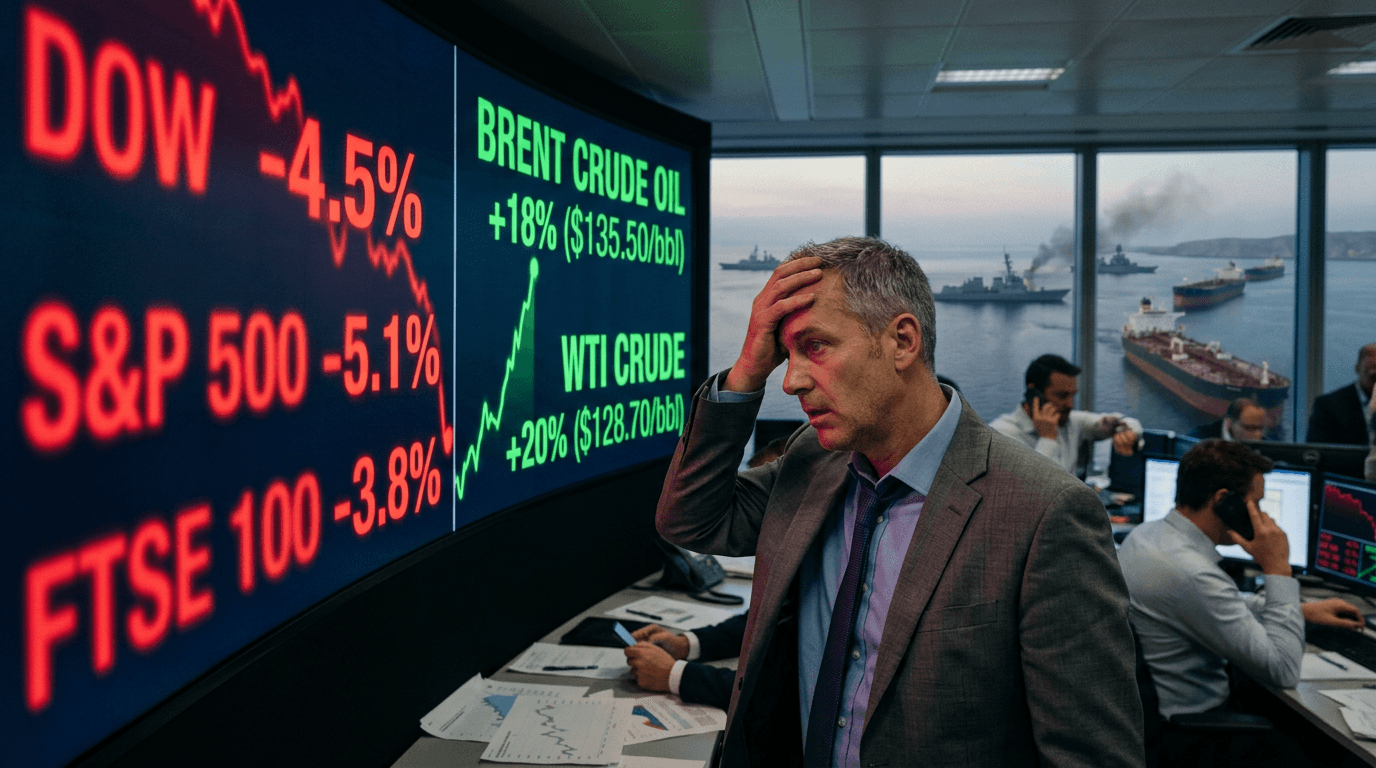
The US stock market's impressive rally came to an abrupt halt this week as geopolitical tensions in the Middle East escalated, triggering a sharp reversal in market sentiment and sending crude oil prices soaring. What began as optimism around potential US-Iran peace negotiations quickly soured as diplomatic efforts stalled, leaving traders scrambling to reassess the implications for energy markets and broader economic growth. The pivot underscores a critical reality for investors: in an interconnected global market, diplomatic breakthroughs can drive record rallies just as quickly as their collapse can trigger sharp selloffs.
Hopes And Headlines: How Diplomacy Sparked A Rally
Just days ago, headlines about potential US-Iran negotiations sent markets into euphoric territory. Reports that US special envoy Steve Witkoff and Jared Kushner would travel to Pakistan for talks with Iran's Foreign Minister Abbas Araghchi created a wave of optimism that lifted stocks to all-time highs. The S&P 500 was tracking its longest winning streak since October 2024, with gains extending into the fourth consecutive week of advances. This rally wasn't driven by fundamental economic data but rather by the hope that de-escalation in the Middle East would ease supply chain pressures and reduce geopolitical risk premiums baked into energy prices.
During this optimistic phase, crude oil declined sharply as traders bet that successful negotiations would restore stability to the region and normalize energy flows. The market's logic was straightforward: peace talks signal lower conflict risk, which means lower energy costs, which translates into reduced inflation pressures and potentially softer interest rate trajectories. Energy stocks sold off along with crude prices as market participants rotated into defensive positioning and began pricing in benign economic scenarios.
The Pivot: When Diplomacy Hits A Wall
The momentum evaporated when it became clear that peace talks would not materialize as hoped. According to officials in Pakistan, diplomatic efforts hit obstacles that prevented substantive negotiations from occurring. As hopes for a quick resolution faded, traders faced a harsh new reality: the conflict was likely to persist, regional tensions would remain elevated, and critical oil infrastructure remained at risk. The psychological shift was dramatic and immediate.
With talks in limbo, crude prices surged higher. Brent crude climbed above $102 per barrel, representing the kind of energy shock that hadn't been seen since the initial outbreak of hostilities. The Strait of Hormuz, one of the world's most critical chokepoints for global oil supply, remained closed as the US and Iran engaged in a dangerous standoff. Reports of Iranian attacks on commercial shipping and the US intercepting Iranian oil tankers underscored the severity of the situation and the real risk to energy infrastructure.
The oil rally punished equity markets in turn. Futures for the S&P 500 fell 0.4% as traders contended with the prospect of higher energy costs filtering through the broader economy. The record-breaking rally that had defined April's trading came to an abrupt end, a stark reminder that gains built on geopolitical optimism can evaporate just as quickly when conditions deteriorate.
The Energy Shock: Supply Disruption And Demand Destruction
The closure of the Strait of Hormuz represents a supply shock of meaningful proportions. According to market participants, supply into global markets has dropped at least 10 percent, a reduction that the rich world has initially managed by drawing down strategic petroleum reserves and paying premium prices to secure alternative supplies. However, traders are sounding alarm bells about what happens next.
The longer the critical waterway remains closed, the more consumption will face pressure to decline. Demand doesn't stay constant when supply contracts sharply; instead, economies adjust lower. Higher energy prices filter through transportation costs, manufacturing expenses, and consumer energy bills. The longer this adjustment takes, the more disruptive the eventual recalibration becomes. Markets that are currently cushioned by emergency stock draws face a harsher reality once those buffers are exhausted.
Implications For Traders And Investors
For SimFi traders and real-world investors, this sequence of events illustrates several critical lessons. First, geopolitical news can drive outsized market moves in both directions. Hope for peace created a spectacular rally; dashed hopes triggered a sharp reversal. Second, energy markets remain a critical transmission mechanism for geopolitical risk into the broader economy. When oil surges, it's not just an energy story; it's an inflation story, a growth story, and a central bank policy story all rolled into one.
Third, diplomatic processes are inherently uncertain and should be viewed with appropriate skepticism. The rapid swings this week demonstrate that betting heavily on peace talks succeeding without substantial progress is a high-risk strategy. Finally, critical infrastructure vulnerabilities like the Strait of Hormuz remain a genuine threat to global economic stability, capable of triggering sharp dislocations across asset classes.
As markets digest these developments, the key question becomes whether diplomatic efforts can be revived or whether the region faces a prolonged standoff that will require sustained adjustment in both energy supply and global economic activity.