
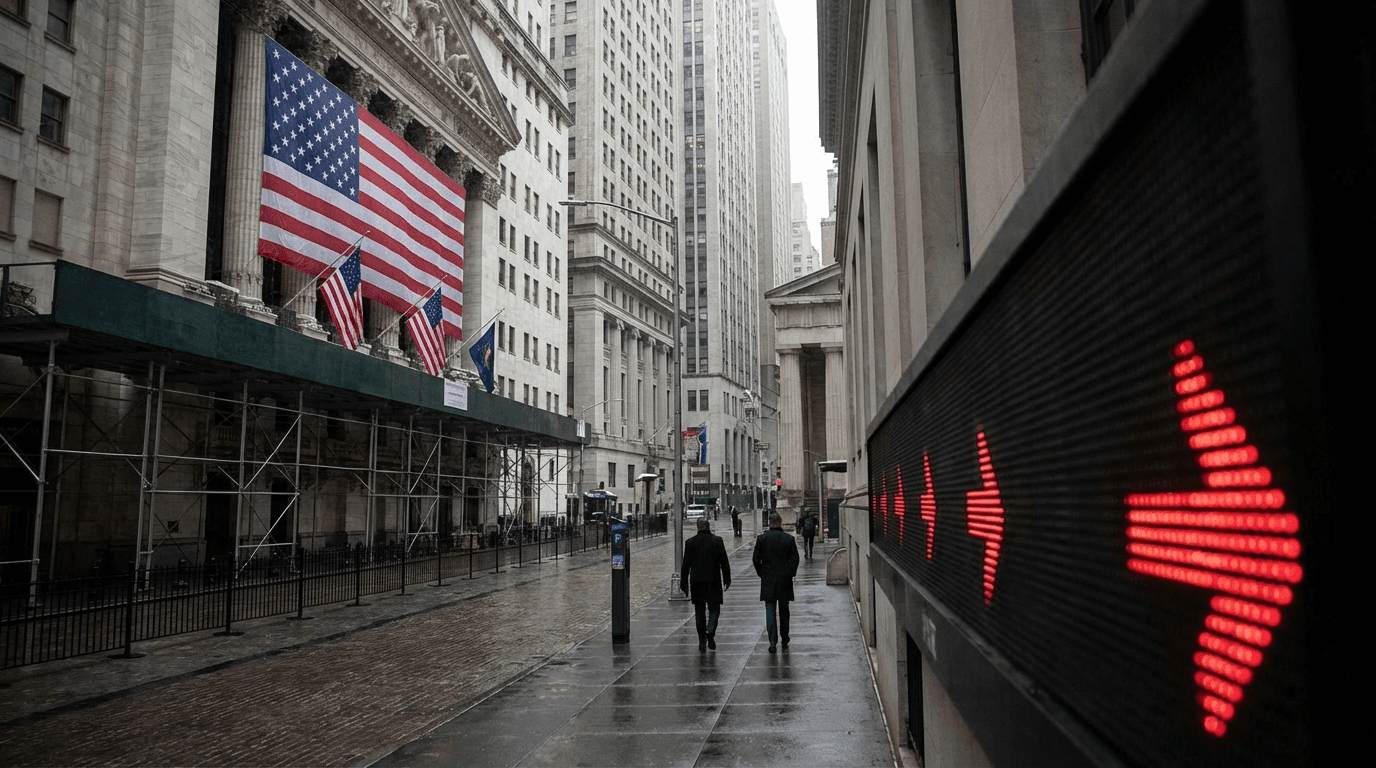
As Wall Street marks Presidents Day on Monday, February 16, 2026, traders are at a critical juncture in the trading calendar. Major indices have witnessed significant volatility over the past week, and while today's market closure offers a brief pause, it is not a moment of calm. Instead, futures remain range-bound, as traders brace for a surge of economic data and earnings announcements poised to reshape market sentiment in the coming weeks.
The Market Closed, But Not The Conversation
The U.S. stock markets, including the NYSE and Nasdaq, are closed today in observance of the federal holiday. Trading will resume on Tuesday, February 17, at 9:30 a.m. ET. For traders accustomed to a continuous market pulse, this break offers a chance to digest last week's tumultuous price actions and strategize for what lies ahead. While the physical trading floor is silent, the economic narratives and risk factors that roiled markets last week remain active and influential.
An Analysis Of Last Week's Volatility
The market's closure on Friday brought modest relief from the week's earlier steep declines. The S&P 500 remained nearly unchanged, while the Dow Jones Industrial Average saw a slight uptick of 48 points, or 0.1 percent, and the Nasdaq composite dipped by 0.2 percent. Despite these Friday gains, the week proved troubling for equities. Throughout the trading week, the S&P 500 dropped 1.39 percent, and the Nasdaq fell 2.1 percent, marking their steepest declines since November. The Dow reached an all-time high of 49,501 before the retreat, illustrating that even record highs offer no shield against swift reversals.
Much of this volatility was catalyzed by fears surrounding artificial intelligence and its potential to disrupt established business models across various sectors. This "shoot first, ask questions later" mindset among investors led to sudden selloffs in companies perceived as vulnerable to AI competition, regardless of their current financial performance. AppLovin, for instance, lost nearly 20 percent of its value on Thursday despite reporting robust profits, only to recover 6.4 percent on Friday. Similar volatility was seen in transportation and freight sectors following AI-related announcements that sparked disruption concerns.
A Glimmer Of Stability From Inflation Relief
Not all news from last week was bleak. U.S. consumer inflation data offered more positive signals than economists expected. Prices for essentials like groceries and clothing rose 2.4 percent year-over-year in January, a notable decrease from December's 2.7 percent rate. More importantly, the core measure of inflation, seen as a predictor of future trends, slowed to its lowest level in nearly five years. This easing of inflationary pressures helped reduce Treasury yields and temporarily stabilized equity markets on Friday, highlighting that inflation trends still wield significant influence over market dynamics.
Nevertheless, inflation remaining above the Federal Reserve's 2 percent target continues to weigh on investor sentiment. The Fed's monetary policy trajectory, partly determined by inflation trends, remains a crucial factor for equity valuations and market mood.
Futures Range-bound With Volatility On The Horizon
With markets closed today, traders are closely monitoring futures contracts and economic calendars for indications of sentiment direction when trading resumes. Although specific futures data is not detailed in recent reports, the broader context suggests a market caught between conflicting narratives. Cooling inflation could support equity valuations, but ongoing fears of AI-driven disruption and earnings season uncertainties keep investors vigilant.
In the coming weeks, critical economic releases, including PCE inflation data and Q4 GDP figures, will accompany a deluge of corporate earnings reports. These data points could either validate the recent pullback as a healthy correction or trigger further volatility, depending on actual results versus expectations.
Focus Points For Traders When Markets Reopen
When the markets reopen Tuesday morning, traders should prioritize several key factors. First, observe which sectors attract buyers, as this will indicate whether AI fears have subsided or if volatility in tech and vulnerable sectors will persist. Second, assess how economic data surprises influence Treasury yields and bond markets, often precursors to equity reactions. Third, scrutinize earnings guidance from major companies, which can either alleviate or amplify fears about competitive disruption.
Takeaway For Traders
Today's market closure presents a natural pause amidst a volatile period. The recent 49,500-plus levels achieved by the Dow underscore the market's fundamental strength, yet the 2-3 percent weekly declines in the S&P 500 and Nasdaq reveal intrinsic vulnerabilities. As traders return Tuesday morning, remember that range-bound futures often precede significant moves. Effective position sizing, vigilant risk management, and staying informed about economic releases will be pivotal as volatility warnings linger in the weeks ahead.