
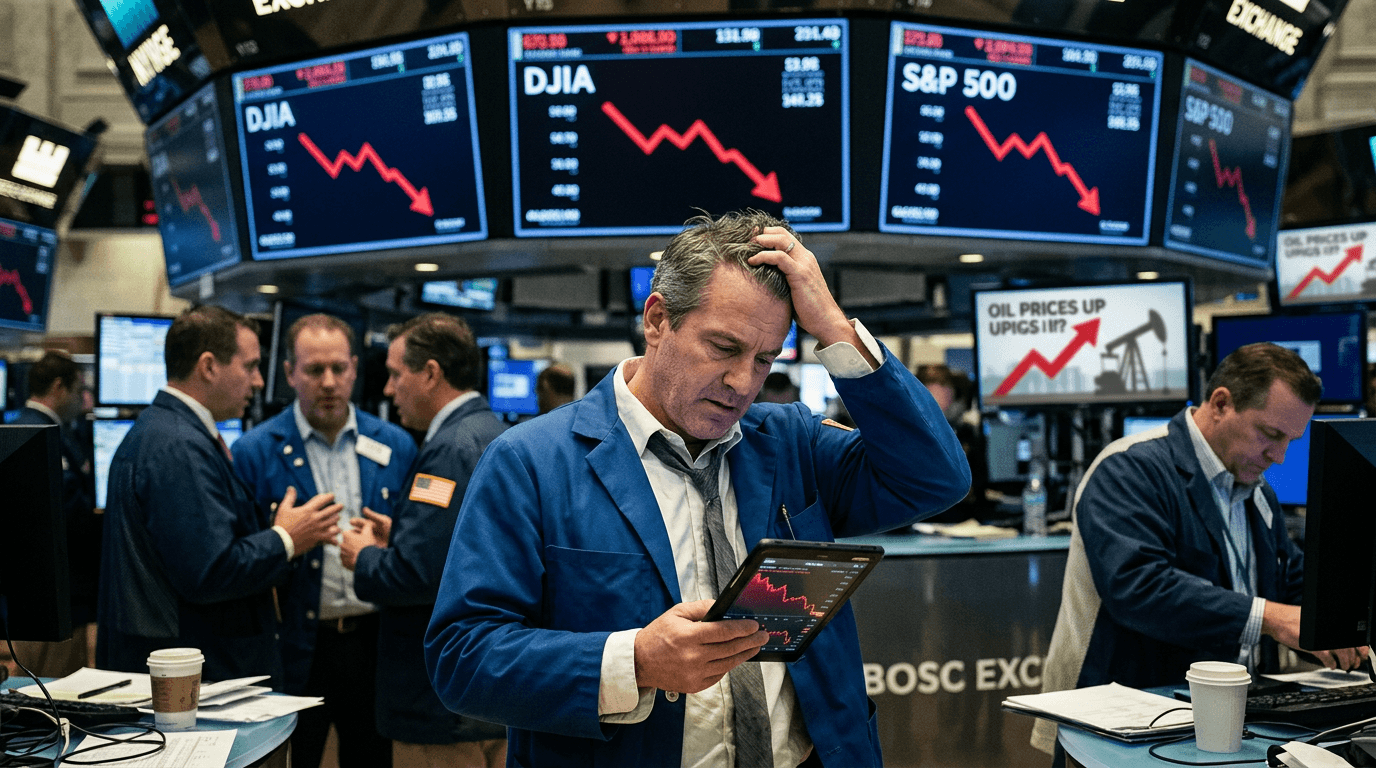
U.S. stock markets took a hit on Friday as crude oil prices soared, driven by escalating tensions in the Middle East. This surge has reignited stagflation fears, which have been troubling investors since early 2026. The S&P 500 fell 0.6% to 6,632.19, the Dow Jones Industrial Average dropped 0.3% to 46,558.47, and the Nasdaq Composite slipped 0.9% to 22,105.36—all three major indices marking their lowest closes of the year. What makes this selloff particularly noteworthy is not just the magnitude of the decline, but the underlying catalyst: a potent combination of rising energy prices and persistent inflation that threatens to squeeze corporate profit margins and consumer purchasing power simultaneously.
### THE OIL SHOCK AND GEOPOLITICAL UNCERTAINTY
The primary driver behind Friday's market weakness was the sharp increase in crude oil prices, sparked by ongoing conflict between U.S.-Israel forces and Iran, with no immediate resolution in sight. Oil prices hovered around $100 per barrel, a level with significant implications for the broader economy. Energy shocks of this magnitude ripple through multiple channels: they increase input costs for manufacturers, raise transportation expenses for retailers, and ultimately squeeze profit margins across numerous industries. For SimFi traders monitoring real economic conditions, this dynamic represents a critical inflection point that traditional stock valuations may not yet fully reflect.
The geopolitical dimension adds another layer of complexity. Unlike typical economic data releases that traders can quickly analyze and price in, geopolitical tensions carry inherent uncertainty that makes market positioning treacherous. When investors lack visibility into conflict resolution timelines, they tend to de-risk portfolios and seek safer assets, which typically means selling equities and adding to cash positions. This defensive posture was evident in Friday's market breadth, where decliners outnumbered advancers on the New York Stock Exchange by a 1.90-to-1 ratio, suggesting broad-based selling pressure rather than isolated weakness in specific sectors.
### THE STAGFLATION SPECTER
Perhaps the most concerning aspect of Friday's decline involves what persistently rising oil prices could mean for inflation trends. The Federal Reserve's preferred inflation gauge, the core PCE price index, rose 0.4% in January with year-over-year readings at 3.1%, significantly above the Fed's 2% target. An oil shock, if it continues to intensify, threatens to push these readings even higher precisely when Fed officials were beginning to feel confident about inflation's downward trajectory. This creates a genuine stagflation risk: the combination of stagnant economic growth and rising prices that particularly challenges equity investors and policymakers alike.
The Q4 2025 GDP report already showed concerning signs, with economic growth slowing to 1.4% on an annualized basis, significantly below the 2.5% economists expected and down from Q3's robust 4.4% pace. Layering higher energy costs and inflation onto an already-decelerating economy creates precisely the scenario that kept stagflation fears alive throughout early 2026. If companies cannot easily pass these higher costs to consumers already showing signs of spending caution, profit margins will compress. This margin compression dynamic is particularly damaging to equity valuations, which are often already stretched in a low-growth environment.
### SECTOR-SPECIFIC CASUALTIES
The weakness manifested unevenly across market sectors, providing important signaling about where investors fear the most damage. The Consumer Discretionary Select Sector SPDR tumbled 2.3%, reflecting reduced confidence in consumers' ability or willingness to spend on non-essential purchases. The Industrials Select Sector SPDR fell 2.5%, as manufacturers face both higher energy input costs and softer demand. Information Technology slid 1.8%, continuing a difficult stretch for the tech-heavy index, which has now posted three negative months in the past four. These sector rotations suggest investors are repricing economic fundamentals toward a slower-growth, higher-inflation scenario.
Meanwhile, the fear gauge CBOE Volatility Index stayed elevated at 27.19, indicating persistent anxiety about near-term market direction. Trading volume of 18.12 billion shares fell below the 20-session average of 19.84 billion, suggesting that while sellers were present, some potential buyers chose to sit on the sidelines, waiting for greater clarity on both geopolitical developments and economic data.
### WHAT COMES NEXT
The path forward depends critically on two variables: oil price stabilization and additional economic data. Already, U.S. equities are down roughly 4% since the Iran conflict began, and the S&P 500 has posted three straight losing weeks for the first time in nearly a year. However, Monday's modest recovery, with both the S&P 500 and Nasdaq Composite up over 1% as oil prices cooled, suggests the market may be finding a temporary equilibrium. Investors should remain vigilant for upcoming inflation reports, geopolitical developments, and corporate earnings guidance that addresses cost pressures.
The current market environment demands that traders remain disciplined and data-focused, recognizing that stagflation concerns, though real, are not yet fully confirmed. Until that confirmation arrives through sustained higher inflation readings combined with weakening economic growth, opportunities may exist for tactical positioning amid the volatility.
NEWSIMPACTSCORE: 7