
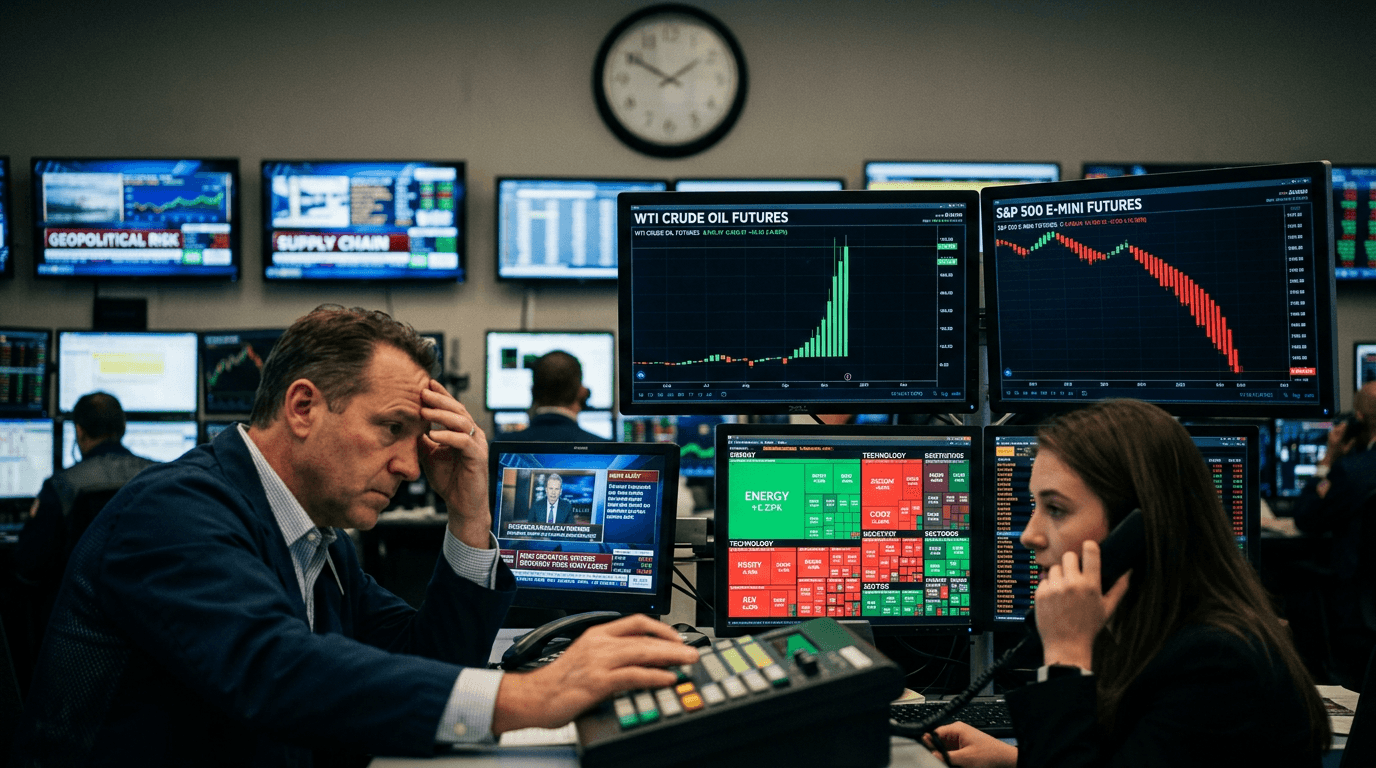
Fresh U.S. strikes on Iran are rippling through global markets, keeping equity futures under pressure while crude oil prices firm near recent highs. Overnight action saw stock index futures signaling a weaker open as traders digested the renewed conflict risk and the potential for more persistent inflation via higher energy costs.[10][9] At the same time, oil futures extended recent gains, reflecting anxiety about supply routes through the Strait of Hormuz and the broader Middle East.[7][12]
Market Reaction: Futures Under Pressure
Equity futures tend to respond quickly to geopolitical shocks, and the latest U.S. strikes on Iran are no exception. After the new wave of attacks aimed at degrading Iran’s capacity to threaten commercial shipping, major U.S. index futures traded lower, pointing to a risk-off start for cash markets.[10][9] Recent sessions have shown S&P 500, Nasdaq 100, and Russell 2000 futures slipping between roughly 0.5% and 1.2% as investors reprice growth, earnings, and risk premia in light of ongoing hostilities.[10][13]
The logic is straightforward: military escalation introduces uncertainty about global trade, corporate margins, and the policy response. When that uncertainty is layered on top of already elevated market valuations, it can prompt a defensive rotation out of cyclicals and growth names and into perceived safe havens such as the dollar or certain defensive sectors.[14] Futures markets function as the first arena where this repricing occurs, often hours before cash equities open, making them especially sensitive to overnight headlines.
For traders, it is important to distinguish between knee-jerk reactions and durable shifts. A single headline can push futures sharply lower, but the more lasting impact depends on whether the conflict appears contained, whether energy markets stabilize, and how quickly corporate and macro data begin to reflect the new environment.
Oil Firms On Supply Fears
On the commodities side, crude oil has moved higher in response to each new round of strikes, underlining how sensitive prices are to disruption risk in the Gulf.[5][7] In recent trading, U.S. West Texas Intermediate (WTI) has jumped more than 4% in some sessions, moving from the low $70s toward the mid-$70s per barrel after fresh U.S. attacks on Iranian targets.[10] Reuters and other outlets have reported gains of roughly 3% in Brent and WTI as strikes by both sides raised the threat to energy shipments via the Strait of Hormuz.[7][12]
The Strait of Hormuz is a critical chokepoint through which a significant share of global seaborne oil passes, so any perception that shipping lanes could be compromised tends to be rapidly priced into crude futures.[7] Beyond the immediate risk of physical disruption, traders know that insurers, shippers, and refiners may demand higher premiums or reroute flows, effectively tightening available supply even without a formal embargo.
At the same time, the broader backdrop is not purely bullish for oil. OPEC+ decisions to adjust output, Saudi pricing strategies, and expectations for global demand all compete with geopolitical risk in shaping the curve.[4] That is why some recent rallies have occurred from relatively subdued levels; even with strikes, investors are weighing increased production pledges and discounting strategies from major exporters.[4] For market participants, the takeaway is that geopolitical shocks can override fundamentals in the short term, but those underlying supply-demand dynamics still matter for how long the move persists.
Inflation Expectations And The Rate Path
Higher oil prices carry macro implications that extend well beyond the energy complex. Rising crude feeds into fuel, transportation, and eventually broader consumer prices, which can nudge inflation expectations higher. While the latest strikes are a geopolitical story, they are also being read through the lens of central bank policy: if energy costs stay elevated, policymakers could face renewed pressure to maintain tighter financial conditions longer than markets previously assumed.
Analysts have warned that an extreme scenario—such as a major supply disruption—could see oil rising far beyond current levels, with some commentary even discussing the potential for very large percentage surges from pre-conflict prices.[13] Even if such tail risks never materialize, their presence in the narrative can influence breakeven inflation rates, bond yields, and equity valuation multiples.
Equity index futures tend to embed these expectations quickly. When traders anticipate higher input costs and possibly slower consumer demand, earnings forecasts for oil-sensitive sectors can be revised lower, reinforcing the downside pressure on broad indexes.[10][14] Conversely, if subsequent headlines suggest de-escalation or alternative sources of supply coming online, that inflation risk premium can compress, allowing futures to stabilize or recover.
Sector Winners And Losers
Not all parts of the market react the same way to U.S.–Iran flare-ups. Energy-linked assets, including oil majors, refiners, and certain oilfield services firms, typically benefit from firmer crude prices and wider margins.[5][7] Energy futures and sector ETFs often outperform during these episodes as investors seek exposure to the most direct beneficiaries of higher prices.
In contrast, sectors that are heavily exposed to fuel costs or global trade routes—such as airlines, logistics, autos, and some industrials—can come under pressure as markets discount higher operating expenses and potential disruptions.[14] Technology and growth stocks may feel a double hit: not only from risk-off sentiment but also from higher discount rates if inflation concerns translate into expectations for a more hawkish policy stance.
For portfolio builders, this dispersion underscores the importance of understanding factor and sector exposures rather than treating “the market” as a monolith. Geopolitical shocks are often rotation events: capital moves from one part of the market to another, even if headline index levels are only modestly lower.
How Traders Can Navigate The Volatility
For active traders and investors, the current environment offers both opportunity and elevated risk. Geopolitical headlines can trigger rapid moves in futures and options, and liquidity may thin out during off-hours, amplifying price swings. That makes risk management—position sizing, diversification, and the use of protective hedges—especially critical.
One practical approach is scenario planning. Traders can map out how their portfolios might behave if oil stays near current levels, spikes sharply higher, or quickly retraces. From there, they can identify which exposures are most vulnerable and consider instruments such as index futures, sector futures, or energy contracts to balance those risks.[10] Simulated trading environments are particularly valuable here, because they allow participants to test strategies across a range of conflict and price scenarios without putting real capital at risk.
Finally, it is important to remember that markets are forward-looking. The immediate reaction to U.S. strikes on Iran—equities under pressure, oil firming—reflects the information currently available.[5][10] As new data emerge on the scope of the conflict, diplomatic efforts, and any changes in production policy by major exporters, expectations can shift quickly. Staying agile, informed, and disciplined is key to turning headline-driven volatility from a threat into a learning and trading opportunity.