
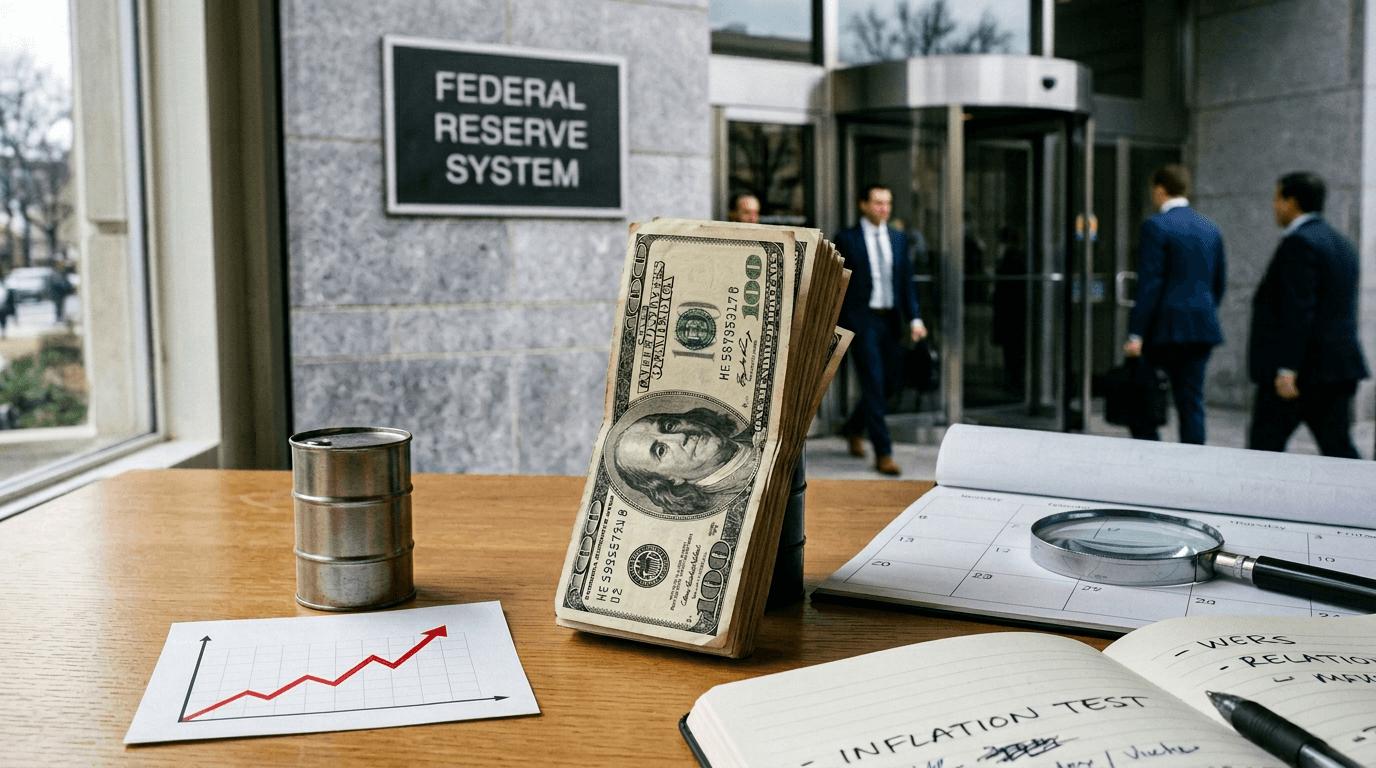
The US dollar has emerged as a beneficiary of recent geopolitical tensions and elevated oil prices, creating a short-term headwind for major currency pairs like EUR/USD. While global markets grapple with uncertainty surrounding Iran nuclear talks and the Strait of Hormuz, energy costs have spiked higher, triggering a rotation toward safer assets and lifting the dollar from oversold conditions. This risk-off sentiment is expected to provide meaningful support to the greenback through early March, though the longer-term trajectory remains contested among analysts and market participants.
The primary driver of near-term dollar strength stems from the classic safe-haven dynamic that emerges during periods of elevated geopolitical risk. When tensions rise in critical energy chokepoints like the Strait of Hormuz, investors instinctively shift capital toward assets perceived as lower-risk, traditionally including the US dollar. This flight-to-safety mechanism has been reinforced by oil's sharp climb, which has dragged inflation expectations higher and forced market participants to reprice Federal Reserve policy expectations. The connection is direct: as oil prices surge, so too does the probability that inflation remains sticky, making the Fed less likely to cut rates aggressively, which in turn supports the currency.
The Geopolitical Wildcard
Geopolitics currently influence the dollar through multiple channels, each amplifying the near-term support narrative. First, there is the direct safe-haven component mentioned above. Second, elevated oil prices affect US export competitiveness and the broader energy sector's relative performance within equity markets. Third, and perhaps most importantly, geopolitical risk creates uncertainty that shifts capital flows away from emerging markets and toward developed economy assets, with the dollar benefiting from its status as the world's primary reserve currency.
However, recent market commentary suggests this advantage may be more fragile than historical patterns suggest. According to recent analysis, when risks within the US rise, flight-to-safety flows have increasingly shifted toward gold and other alternatives rather than the dollar itself. This represents a subtle but meaningful erosion of the dollar's traditional safe-haven appeal. The loss of confidence among international investors has been attributed partly to concerns about US debt levels, potential tariff disputes, and upcoming political and policy uncertainties.
The March Fomc Inflection Point
The timing of the March 17-18 Federal Reserve policy meeting cannot be overstated in terms of its importance for dollar direction. Currently, markets are pricing in only a 4.7% probability of a rate cut at that decision point, suggesting consensus expects the Fed to hold steady. A higher-than-expected inflation print in the days preceding the meeting could push rate cut expectations further into the future, providing additional support for the dollar. Conversely, softer inflation data would reopen the door to renewed rate cut pricing and potential relief across risk assets, including pressure on the greenback.
This dynamic underscores a critical tension facing the dollar in 2026. While oil price shocks and geopolitical tensions are providing near-term support, the Federal Reserve faces its own dilemma: unemployment has risen to 4.4% while inflation remains elevated at 2.7% CPI and 2.8% PCE. If the labor market weakens further in coming weeks, the Fed may feel compelled to cut rates more aggressively than currently expected, which would undermine the dollar's fundamental appeal relative to other currencies.
Capital Flows And The Structural Headwind
Despite the near-term tailwinds from risk-off sentiment and energy prices, broader capital flow trends paint a more cautious picture. In January 2026, global capital saw net outflows of $18 billion from the US Treasury market and $22 billion from the US stock market. This capital reallocation shifted toward the Eurozone and emerging markets where interest rates remain relatively higher, intensifying structural downward pressure on the dollar.
The interest rate differential between the US and Europe has narrowed significantly to just 0.25 percentage points, eliminating much of the dollar's carry-trade advantage that had supported it in prior years. This narrowing reflects market expectations that the Federal Reserve will cut rates by approximately 100 basis points cumulatively throughout 2026, far exceeding the 75 basis points of cuts that occurred in late 2025.
Strategic Implications For Traders
For traders positioning around these dynamics, the key is recognizing that current dollar strength appears cyclical rather than structural. The geopolitical premium and oil price spike provide meaningful but temporary support extending into early March. The March FOMC meeting represents a critical inflection point where the market will reassess whether the Fed truly intends to ease aggressively or maintain a more cautious stance.
Monitoring core versus headline inflation divergence will be essential, as will tracking whether tariff pass-through continues to show up in goods prices. Additionally, watching for any diplomatic signals from Iran nuclear talks could shift both oil prices and safe-haven demand dynamics significantly. For now, dollar strength should be viewed as a near-term phenomenon driven by specific risk factors rather than a reversal of the broader depreciation trend expected to dominate 2026.