
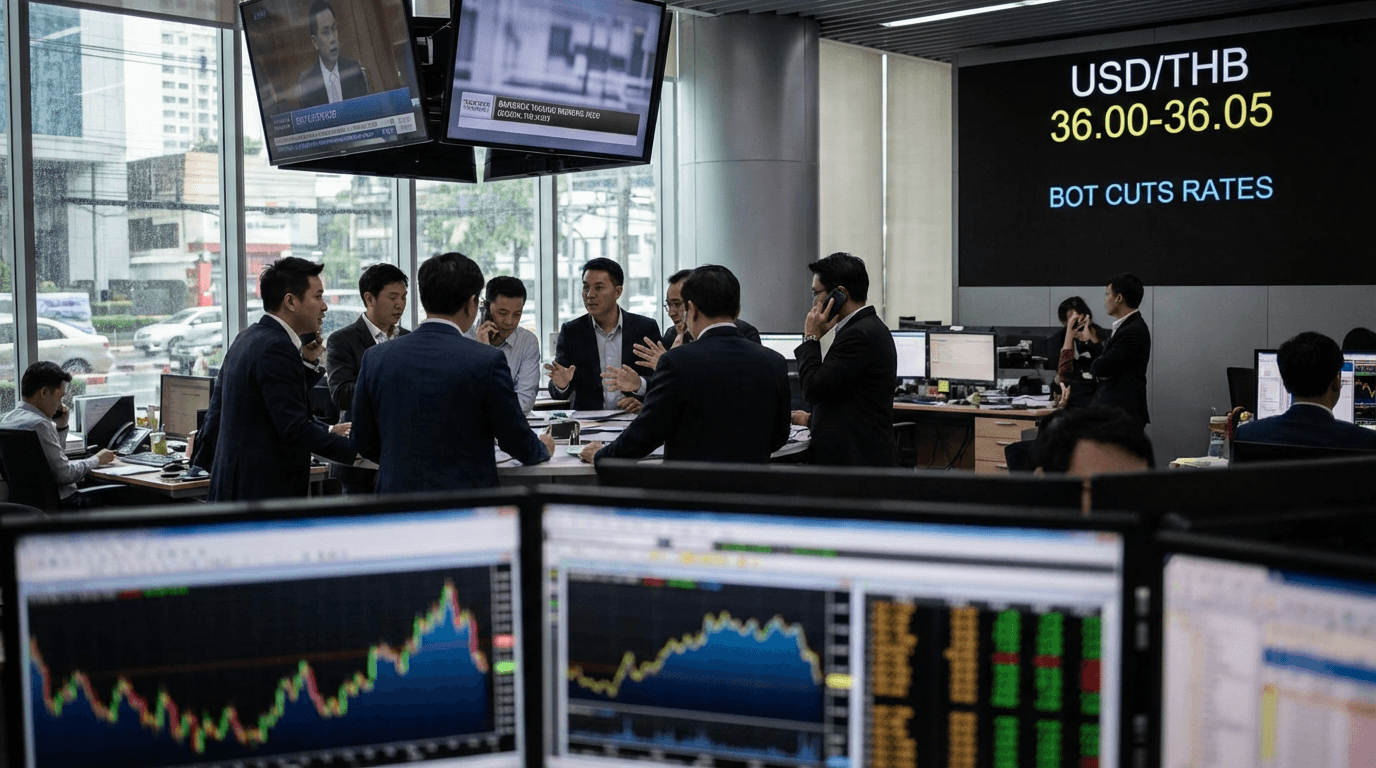
The USD/THB currency pair is exhibiting textbook consolidation behavior this morning, trading within a compressed range of 31.02 to 31.07 Thai Baht per US Dollar. This tight trading pattern reflects a market in equilibrium, where buyers and sellers are equally matched at current price levels. For traders monitoring this pair, understanding the mechanics behind this consolidation and the technical levels that define it is essential for timing your next trade effectively.
The consolidation we're seeing today represents a significant narrowing from the broader volatility that characterized February trading. Earlier in the month, the USD/THB pair traded between 30.925 and 31.73, creating a substantial 80-point range. That volatility has now contracted into a 5-point band, signaling a shift toward equilibrium. This type of price compression typically occurs when major fundamental drivers have been absorbed by the market, and traders are awaiting fresh catalysts to determine the next directional move. From a technical perspective, traders using E8 Markets' SimFi platform can observe this consolidation pattern as a critical juncture where breakout trading opportunities may emerge.
Understanding The Technical Framework
The tight range of 31.02 to 31.07 sits just below the resistance level identified at 31.10 Thai Baht. This proximity to resistance is noteworthy because it suggests that the current consolidation is occurring near an important supply zone. Support for the pair is located significantly lower at 30.80, representing a 22-point cushion below current trading levels. This wide distance between support and resistance creates an asymmetrical risk-reward situation that traders should carefully evaluate. The range itself acts as a defined trading zone where scalping strategies can be employed with relatively tight stop losses, making it attractive for intraday traders operating on simulated markets.
Technical analysis of the USD/THB pair reveals that consolidation patterns often precede directional breakouts. The fact that trading is occurring in such a narrow band suggests that a larger move may be imminent once sufficient buying or selling pressure accumulates. For traders using simulation platforms, this environment is ideal for testing range-bound trading strategies while maintaining position discipline and awaiting breakout confirmation.
Fundamental Drivers And Market Context
The consolidation pattern in USD/THB has been influenced by a recent Thai interest rate cut and the broader weakness in the US Dollar. The Thai central bank's rate reduction typically weakens the Thai Baht by making Thai assets less attractive to international investors seeking yield. Conversely, the US Dollar weakness stems from global economic concerns and reduced expectations for US interest rate levels, creating downward pressure on the currency pair. These competing forces have produced the equilibrium we're observing in current price action.
The local bond yield decline accompanying the Thai rate cut has also supported narrower trading ranges, as the interest rate differential between US and Thai fixed income instruments has compressed. This fundamental backdrop explains why the pair has failed to break decisively through the 31.10 resistance level despite multiple attempts. Traders should monitor upcoming economic data releases from both the United States and Thailand, as these could provide the catalyst needed to break the current consolidation pattern.
Trading Implications And Strategy Considerations
For SimFi traders working with this pair, several trading approaches merit consideration. Range traders can execute buy orders near 31.02 support with profit targets near 31.07, capturing the spread within the consolidation zone. This approach requires disciplined risk management and acceptance of smaller per-trade profits. Alternatively, traders can wait for a breakout from the 31.10 resistance or 30.80 support to enter larger positions with more favorable risk-reward ratios. The key is determining which approach aligns with your trading style and the time frame you're operating within.
Stop loss placement becomes critical in tight consolidation patterns. Traders taking long positions should place stops below 30.80 support, while short traders should set stops above 31.15 to account for potential breakout noise. Position sizing is equally important when trading in compressed ranges, as profit potential per trade is limited, requiring disciplined capital allocation to achieve meaningful returns.
Looking Ahead
The USD/THB consolidation at 31.02-31.07 represents a market taking a temporary breath after significant directional moves earlier in February. This pause provides an opportunity for traders to reassess positions, refine technical entry points, and prepare for the next meaningful move. Market participants should watch for either a breakdown below 30.80 or a breakout above 31.10, as these levels will determine the direction of the next trending phase.
Whether you're scalping within the range or waiting for directional confirmation, the current environment in USD/THB rewards traders who maintain discipline and respect the defined technical levels. Using simulation trading to practice your execution on breakout trades from consolidation patterns is an excellent way to develop trading skills without capital risk.