
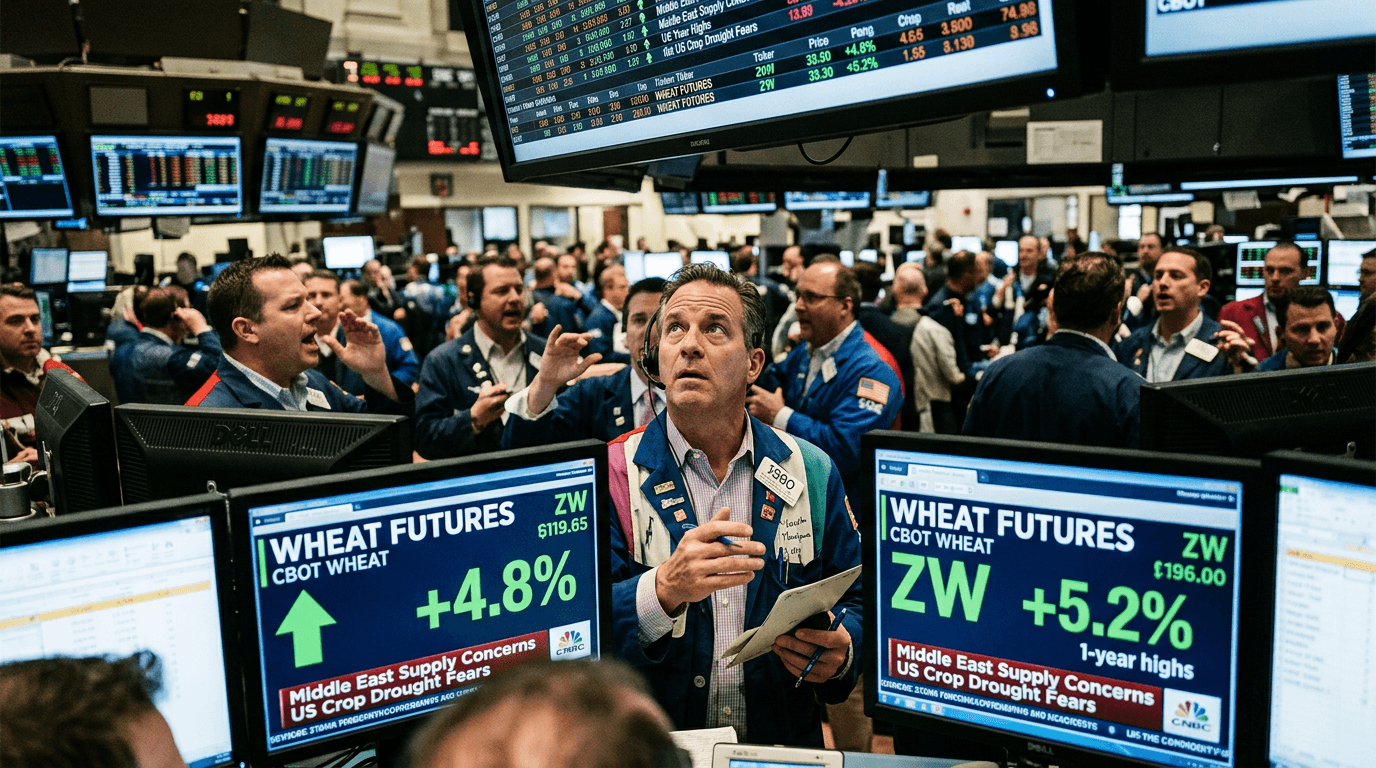
Wheat futures markets are sending a powerful signal about global instability and domestic supply challenges. Recent price surges to 1-year highs reflect a perfect storm of geopolitical tensions and agricultural headwinds, presenting both risks and opportunities for traders monitoring commodity markets. Understanding the drivers behind these moves is essential for anyone trading agricultural commodities or positioned in currency and inflation-sensitive assets.
The convergence of Middle East conflict escalation and tightening US grain supplies has created an environment where wheat prices move in tandem with crude oil volatility. When geopolitical risk increases, traders often view agricultural commodities as inflation hedges and scarce resource plays. This dynamic has intensified wheat's correlation with energy markets, meaning that headlines from conflict zones directly impact the price of a bushel of wheat in Chicago or Minneapolis. The relationship between oil and wheat isn't accidental—it reflects legitimate supply chain concerns and the energy-intensive nature of modern agricultural production and distribution.
Understanding The Geopolitical Premium
War-driven supply fears inject what traders call a geopolitical risk premium into wheat prices. This premium exists because global wheat supply is concentrated among a relatively small number of producers. Ukraine and Russia have historically supplied roughly 30 percent of global wheat exports. Any disruption to Middle Eastern oil supplies threatens to raise transportation and input costs, which eventually flow through to food producers and consumers worldwide. The market is pricing in the possibility that escalating Middle East tensions could disrupt shipping lanes, constrain global energy availability, or create cascading supply chain breakdowns.
Traders should recognize that this premium tends to be volatile and sentiment-driven. War concerns can spike dramatically on headlines but recede quickly when diplomatic progress emerges. For those trading wheat futures, this means watching geopolitical news flows just as closely as USDA crop reports. The 1-year high we're seeing reflects accumulation of this premium over months of rising tensions rather than a single shock event.
Us Grain Supply Tightening
Beyond international conflict, domestic supply issues are lending fundamental support to higher wheat prices. US grain inventories have been declining due to strong export demand and weather-related production challenges. When domestic supplies tighten, the US becomes less of a stabilizing force in global wheat markets, potentially amplifying price moves when international problems emerge. This creates a situation where US farmers have the leverage to hold grain longer, and buyers worldwide must compete more aggressively for limited supplies.
The combination of geopolitical premium and fundamental supply tightness explains why we're seeing 1-year highs rather than routine seasonal fluctuations. Each factor alone would be noteworthy; together, they're reshaping price expectations. For traders, this suggests that prices may remain elevated even if Middle East tensions ease, because the supply tightness issue persists through the growing season.
Commodity Currency And Inflation Implications
Wheat price movements cascade through commodity-linked currencies and inflation expectations. Countries dependent on wheat imports see their currencies depreciate when prices spike, as import costs rise and current account pressures increase. This makes wheat a barometer for emerging market currency stress and global inflation outlook. Central banks monitoring food prices as part of their inflation mandates will likely become more concerned if wheat remains elevated, potentially influencing monetary policy decisions.
For investors, the wheat spike signals that inflation pressures aren't confined to energy markets anymore. Food inflation reaches consumers directly and influences consumer behavior, spending patterns, and central bank response. This makes wheat futures valuable as a leading indicator for inflation expectations in the real economy beyond just headline energy prices.
Trading Implications And Risk Management
The current environment suggests several tactical considerations. First, wheat volatility is likely to remain elevated, with price action driven by news flow rather than typical seasonal patterns. Second, wheat correlations with broader markets are shifting—traditional hedging relationships may perform differently when geopolitical risk dominates. Third, the real assets story (commodities as inflation protection) remains intact, but execution requires careful risk management given the sentiment-driven nature of war premiums.
Position sizing becomes critical in this environment. The difference between a justified supply-driven rally and an overextended geopolitical spike can be difficult to assess in real time. Experienced traders often scale into positions gradually and use stop losses to protect against sudden reversals when headlines shift.
Looking Ahead
The 1-year high in wheat prices reflects a genuine confluence of supply and geopolitical factors rather than pure speculation. However, traders should remain alert to changes in both dynamics. Supply issues persist through the growing season, but geopolitical premiums can compress quickly if tensions ease. Smart trading requires monitoring both USDA reports and Middle East news with equal attention.