
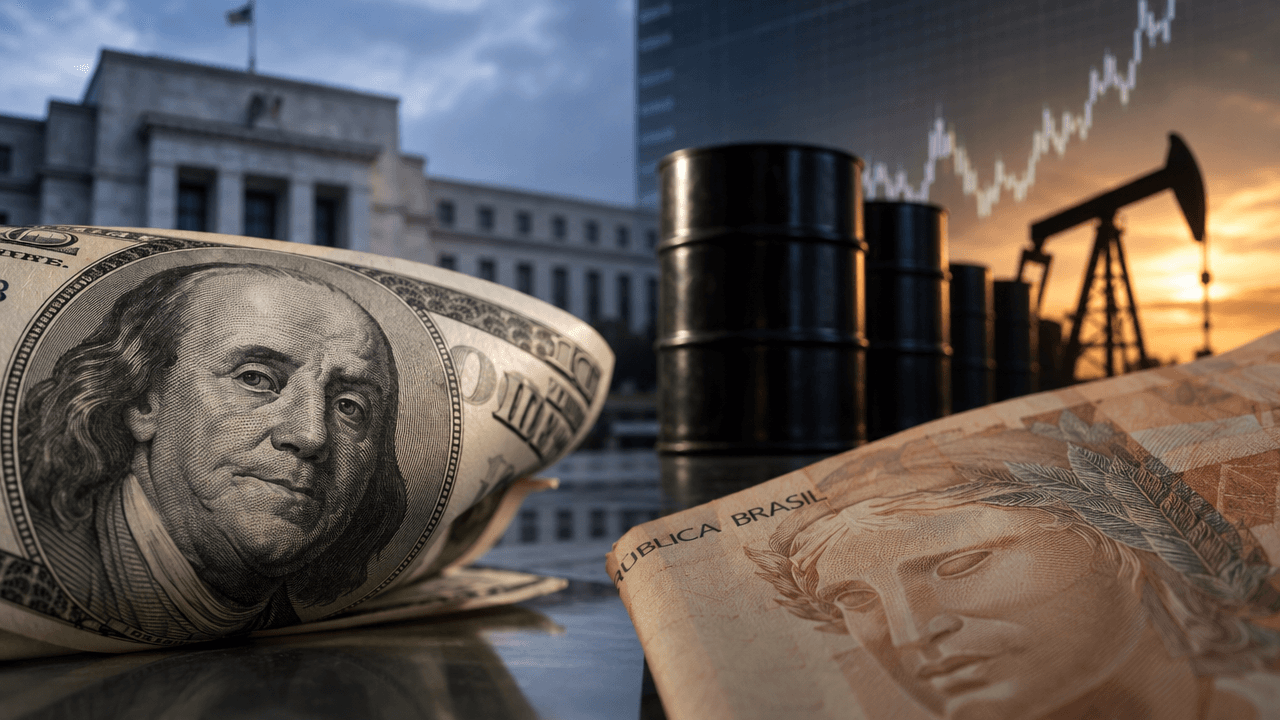
The U.S. dollar is holding broadly steady, but that apparent calm masks a more difficult environment for emerging-market currencies. The Dollar Index is trading near 101.65–101.79, showing little net movement, while elevated U.S. Treasury yields continue to make dollar assets attractive to global investors. At the same time, persistent energy-related inflation is increasing pressure on countries that rely heavily on imported fuel and other commodities.
For traders, the key message is that a stable dollar does not necessarily mean stable conditions across foreign-exchange markets. Currency performance depends not only on the direction of the dollar, but also on interest-rate differentials, inflation expectations, fiscal credibility, and investor risk appetite.
Why A Steady Dollar Still Creates Pressure
The Dollar Index measures the U.S. currency against a basket of major developed-market currencies. When the index is little changed, it can be tempting to assume that global currency markets are balanced. However, emerging-market currencies often react more sharply to changes in U.S. yields than to small daily movements in the index.
Higher Treasury yields raise the potential return available from holding U.S. government debt. They can also increase the opportunity cost of owning assets in countries with greater political, economic, or credit risk. Even when the dollar index moves sideways, international investors may reduce exposure to emerging markets and shift capital toward U.S. bonds and cash.
The latest market backdrop illustrates this dynamic. The dollar index was essentially flat near 101.647, while the U.S. 10-year yield remained above 5%, a level that keeps financing conditions restrictive for many developing economies. [1] The result is a market in which the dollar may not be surging, yet emerging-market currencies still face persistent selling pressure.
The Brazilian Real As A Case Study
Brazil’s real provides a useful example of how global and domestic forces interact. The currency has recently traded near 5.05 reais per U.S. dollar, after reaching a near five-month high around 4.98 earlier in October. On October 22, USD/BRL was reported at approximately 5.0321, up 0.16% from the previous session. [5][7]
The real is particularly sensitive to interest-rate expectations because Brazil has traditionally offered relatively high yields to attract foreign capital. That yield advantage can support the currency when investors are comfortable taking risk. But the advantage becomes less compelling when U.S. yields rise or when markets expect the Federal Reserve to maintain restrictive policy for longer.
Brazil’s central bank has also been cutting its Selic interest rate. Five consecutive Selic cuts have reduced the yield premium that previously helped attract funds into Brazilian assets, while expectations of a more hawkish Federal Reserve have strengthened the relative appeal of U.S. investments. [6]
This creates a challenging balancing act. Lower Brazilian interest rates can support economic activity, but they may also reduce demand for the real. If the currency weakens significantly, imported goods and energy become more expensive, potentially slowing the central bank’s easing cycle.
Energy Inflation Adds A Second Pressure
Energy prices are another important part of the currency equation. When oil, natural gas, or refined fuel prices rise, countries that import energy must spend more foreign currency to meet domestic demand. That can widen trade deficits and increase demand for U.S. dollars.
Higher energy costs can also feed directly into consumer inflation. A weaker local currency makes the problem more severe because imported fuel becomes even more expensive in local-currency terms. Central banks may then face pressure to keep interest rates high, even when domestic growth is slowing.
For commodity exporters, the impact is more complex. Higher prices for products such as crude oil, metals, or agricultural goods can improve export revenues and support the currency. But if energy inflation is broad and global risk appetite deteriorates, the benefits may be outweighed by capital outflows and higher funding costs.
What Traders Should Watch Next
The next major driver is likely to be the path of U.S. interest rates. Markets are reportedly expecting the Federal Reserve to remain on hold in October, with the federal funds target range at 3.75%–4%, while a possible December hike remains part of the discussion. [10] Any indication that U.S. rates will remain higher for longer could lift Treasury yields and renew pressure on emerging-market currencies.
Traders should monitor the U.S. 10-year yield alongside the Dollar Index rather than relying on either indicator alone. A rising yield and rising dollar combination would generally represent the most challenging environment for emerging-market assets. A stable dollar with falling yields, by contrast, could offer relief even if the index itself does not decline sharply.
Domestic developments also matter. In Brazil, fiscal policy, presidential runoff expectations, inflation data, and central-bank guidance may generate larger moves in the real than modest changes in the Dollar Index. Political uncertainty has already contributed to shifts in market expectations for the currency. [4][5]
Practical Takeaways For Simfi Traders
First, distinguish between dollar strength and dollar stability. A flat Dollar Index can coexist with significant weakness in individual emerging-market currencies.
Second, track interest-rate spreads. When U.S. yields rise faster than emerging-market yields, capital may move toward dollar assets and away from local bonds and currencies.
Third, account for imported inflation. Energy prices and exchange rates often reinforce each other, particularly in countries that rely on foreign fuel supplies.
Fourth, avoid treating high local yields as a guaranteed currency cushion. Attractive interest rates can support a currency, but they may not offset political risk, falling rate differentials, or broad risk aversion.
Finally, use scenario planning. A decline in U.S. yields could support the real and other emerging-market currencies, while a renewed rise in Treasury yields could quickly reverse recent gains.
Conclusion
The dollar’s current stability should not be mistaken for a neutral market environment. Elevated U.S. yields are continuing to pull investor attention toward dollar-denominated assets, while energy inflation is increasing the vulnerability of emerging-market economies. Brazil’s real illustrates the challenge clearly: domestic interest rates remain high, but a shrinking yield advantage and global uncertainty are limiting the currency’s protection.
For traders, the most reliable approach is to watch the interaction between the Dollar Index, Treasury yields, energy prices, and local policy developments. Those relationships will likely determine whether emerging-market currencies stabilize or face another wave of pressure.