
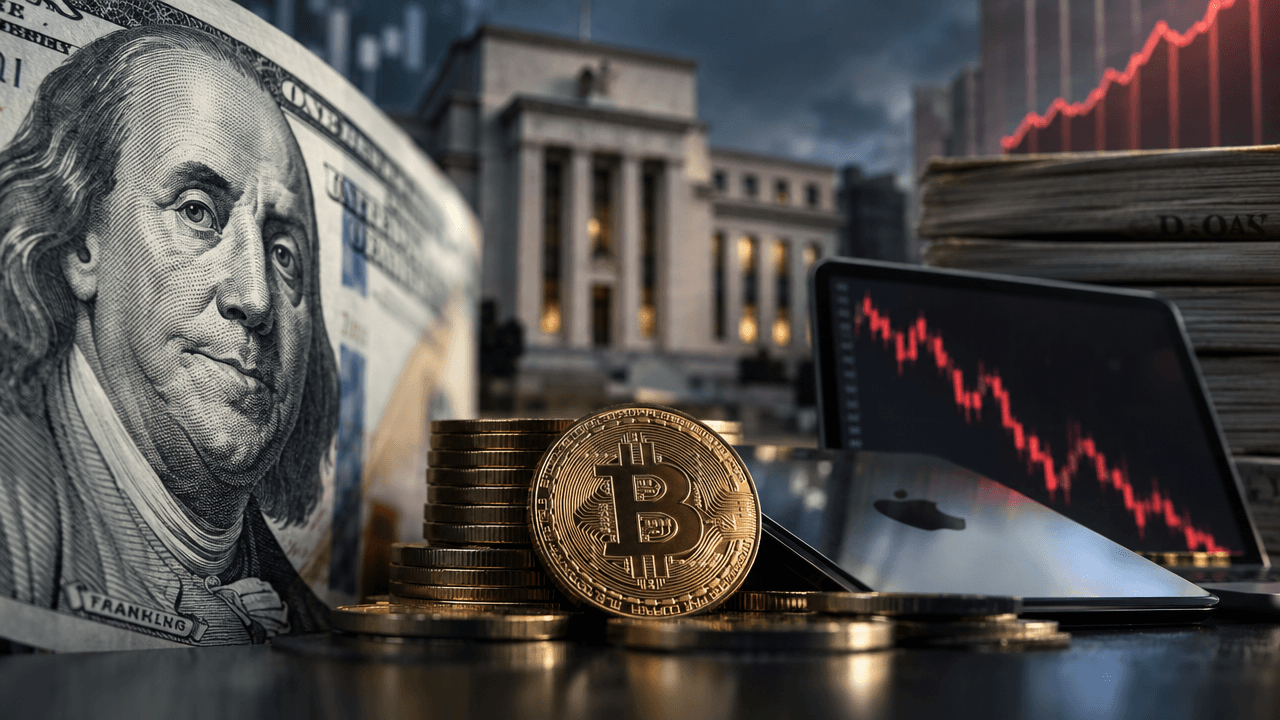
When the U.S. dollar strengthens at the same time that real yields rise, risk assets face a difficult combination of pressures. Cryptocurrencies, technology stocks, emerging-market assets and other speculative investments are especially sensitive because their valuations depend heavily on liquidity, leverage and expectations of future growth. Recent market conditions show how quickly investors can shift from risk-taking toward cash, short-term bonds and capital preservation when the financial backdrop becomes less supportive. [1]
Why The Dollar Matters
The U.S. dollar is more than a currency used for pricing assets. It is also the world’s primary funding currency. Companies, governments and financial institutions outside the United States often borrow in dollars or rely on dollar-based trade and liquidity.
When the dollar appreciates, those borrowers may face higher repayment costs in their local currencies. The effect can reduce spending, investment and risk-taking across global markets. A stronger dollar can also make dollar-priced commodities and assets more expensive for international buyers, potentially weighing on demand.
For investors, dollar strength often signals a preference for liquidity and relative safety. Capital may move toward U.S. cash instruments and government securities, while flows into emerging markets, commodities and cryptocurrencies weaken. This does not mean every asset must fall whenever the dollar rises, but the combination often creates a more restrictive environment for speculative positioning.
Real Yields Raise The Opportunity Cost
Real yields measure the return investors receive after accounting for expected inflation. They matter because they provide a clearer comparison between government bonds and assets that do not generate regular income.
When real yields increase, investors can earn a more attractive inflation-adjusted return from relatively low-risk government securities. That raises the opportunity cost of holding assets such as Bitcoin, gold and certain growth stocks. Recent market reporting indicated that two-year real rates moved above 2.4 percent, while longer-term real yields reached their highest levels in more than two decades. [13]
A higher real yield also affects asset valuations through the discount rate. Future earnings and cash flows become worth less in today’s terms when investors demand a higher return. This is particularly important for technology companies and other growth assets whose expected profits may arrive years in the future.
Cryptocurrencies face a related challenge. Digital assets do not provide traditional interest income in the same way as Treasury bills or bonds. Investors may still hold them for long-term appreciation, utility or diversification, but the hurdle for doing so rises when safer assets offer a more competitive real return.
Borrowing Costs And Leverage Amplify The Pressure
Higher yields influence markets not only through valuation but also through financing costs. As interest rates rise, borrowing becomes more expensive for businesses, households, funds and individual traders.
In leveraged markets, even a modest increase in funding costs can change the economics of a position. A trader who borrows to buy Bitcoin, technology shares or futures contracts must now overcome both the asset’s price risk and the higher cost of maintaining exposure. Some participants respond by reducing leverage, closing positions or moving into assets with lower volatility.
Crypto markets can be particularly vulnerable because leverage is widely used across futures, perpetual contracts and decentralized finance applications. Forced liquidations can accelerate declines when prices move against crowded positions. This creates a feedback loop: falling prices trigger liquidations, liquidations increase selling, and rising volatility encourages still more traders to cut exposure. Higher rates therefore affect risk assets directly and indirectly through market positioning. [10]
Why Volatility Can Stay Elevated
A stronger dollar and higher real yields do not automatically produce a straight-line decline. Markets are forward-looking, and prices can recover if inflation cools, central-bank expectations become less restrictive or economic growth remains resilient.
The challenge is that uncertainty itself can keep volatility high. Investors may react sharply to inflation data, employment reports, central-bank communications and Treasury-market moves. A small change in expectations for future interest rates can influence the dollar, bond yields, equity valuations and crypto prices almost simultaneously.
Bitcoin has also shown periods of closer movement with stocks, particularly technology shares. When both groups are treated as liquidity-sensitive assets, weakness in one market can reinforce caution in the other. Recent market coverage described Bitcoin as increasingly moving in tandem with stocks while stronger dollars, higher real yields and elevated volatility created additional headwinds. [3]
Practical Takeaways For Traders
The first priority is to monitor the dollar and real yields together rather than viewing either indicator in isolation. A rising Dollar Index combined with increasing inflation-adjusted Treasury yields generally represents a tougher backdrop for speculative assets. [1]
Second, traders should reassess leverage. Positions that appear manageable when funding is cheap can become dangerous when volatility and financing costs rise. Smaller position sizes, wider awareness of liquidation levels and predefined risk limits can help reduce the impact of sudden market moves.
Third, distinguish between a market pullback and a change in regime. If yields rise because economic growth is improving while inflation remains controlled, some risk assets may eventually absorb the move. If yields rise because inflation is persistent and central-bank policy is becoming more restrictive, the pressure may last longer.
Finally, avoid treating dollar strength or real yields as a standalone trading signal. They are part of a broader framework that includes liquidity, earnings expectations, positioning and policy guidance. Confirmation across several indicators is generally more useful than reacting to one daily move.
Conclusion
The stronger dollar and higher real-yield environment creates a meaningful headwind for risk assets by making safe returns more attractive, tightening global funding conditions and increasing the cost of leverage. Cryptocurrencies and high-growth assets may remain especially sensitive because they offer limited traditional income and depend heavily on future expectations.
For traders, the key lesson is not to predict every market move but to recognize when the odds have shifted. When liquidity is tightening, patience, disciplined sizing and careful monitoring of macroeconomic signals become as important as the trade idea itself.