
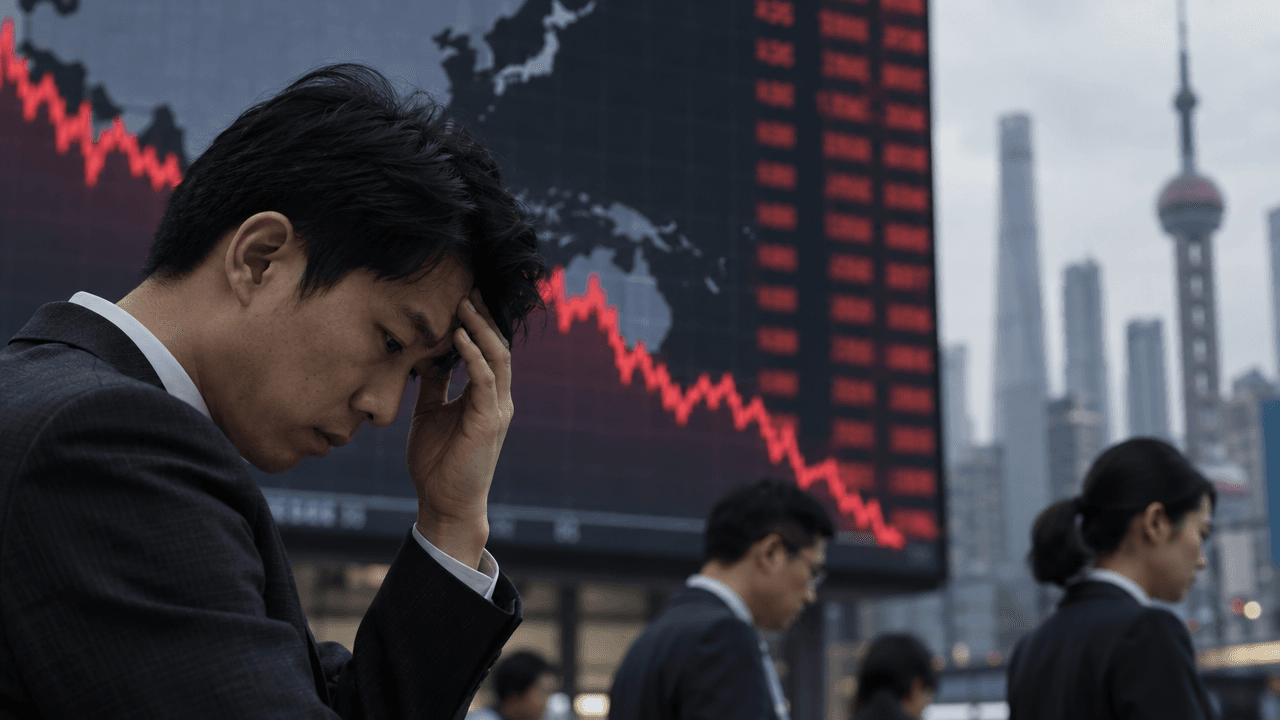
Asian markets are under renewed pressure as investors question whether the artificial-intelligence boom can justify the enormous cost of building the infrastructure behind it. The concern is no longer limited to whether demand for AI chips and cloud services will continue. Markets are now focused on a more difficult question: Can technology companies, data-centre operators and their financial partners fund the expansion long enough to generate acceptable returns?
Japan’s Nikkei fell about 2% on Monday after declining 5.4% the previous week. South Korea’s market also remained under pressure after suffering a much sharper weekly loss of more than 14%. [6][8] Semiconductor and technology shares led much of the weakness, reflecting their close connection to AI-related capital spending.
Why Ai Funding Has Become A Market Issue
AI infrastructure is highly capital-intensive. Data centres require advanced processors, networking equipment, cooling systems, electricity connections and substantial real estate. Companies must spend heavily before the resulting capacity produces revenue, creating a long period during which investors must finance construction and operating costs.
During the earlier phase of the AI rally, low funding costs and strong enthusiasm helped investors look beyond those expenses. Companies associated with the AI supply chain were valued on the assumption that future demand would remain powerful and that earnings would eventually catch up with investment.
That assumption is now being tested. Higher government bond yields and wider corporate credit spreads increase the cost of borrowing, refinancing and issuing new debt. Rising financing costs can make an otherwise attractive data-centre project less profitable because the required return becomes higher. [4][6]
Even a delay in construction spending could affect Asian suppliers. Chipmakers, memory manufacturers, equipment producers and technology exporters have benefited from expectations of continued orders. If hyperscalers or specialised cloud operators slow their investment plans, the impact could move through the supply chain well before a project is officially cancelled.
The Return-on-investment Question
The central debate is whether AI revenue will grow quickly enough to repay the infrastructure investment. Building capacity is only the first step. Operators must then keep that capacity highly utilised, charge sufficient prices and manage depreciation as equipment becomes outdated.
This creates several risks. If computing capacity expands faster than customer demand, prices for AI services could fall. If newer processors make existing equipment less competitive, infrastructure may need to be written down sooner than expected. And if revenue growth disappoints while interest expenses continue rising, heavily indebted companies could face pressure on cash flow.
Investors are therefore paying closer attention to cash generation rather than headline revenue growth. A company can report strong sales while still consuming large amounts of cash to build data centres and purchase equipment. In a higher-rate environment, that difference becomes increasingly important.
The market reaction does not necessarily mean that AI demand has disappeared. It indicates that investors are reassessing the price they are willing to pay for growth and the amount of financial risk they are willing to accept to obtain it.
Why Asia Is Particularly Exposed
Asia sits at the centre of the global AI hardware ecosystem. Japan has major semiconductor equipment and advanced manufacturing companies, while South Korea is home to globally important memory-chip producers. Taiwan and other regional markets also contain companies supplying processors, packaging, components and electronic manufacturing services.
That concentration has delivered substantial gains when AI spending accelerated. It also means the region can be vulnerable when expectations change. A reduction in projected orders can lower earnings forecasts, compress valuation multiples and weaken currencies or investor sentiment at the same time.
South Korea’s market illustrates the risk of concentrated exposure. Its large technology companies have been among the major beneficiaries of the AI investment cycle, but that leadership also makes the market sensitive to changes in chip demand, memory pricing and global technology valuations.
Japan faces an additional challenge because rising energy prices can intensify inflation concerns. Oil recently reached about $110 per barrel, adding to worries that interest rates could remain elevated and that financing conditions may not ease quickly. [3][14]
What Traders Should Watch Next
The next stage of the market adjustment will depend on corporate earnings, capital expenditure guidance and financing plans. Traders should look beyond quarterly revenue and examine whether companies are increasing or reducing planned investment in data centres, processors and power capacity.
Balance sheets will also matter. Companies with strong cash reserves, limited debt and established customer relationships may be better positioned than businesses that depend on continuous borrowing. Credit spreads and bond yields can provide an early indication of whether investors are becoming more concerned about refinancing risk.
Another important signal will be utilisation. If cloud providers report that AI capacity is being absorbed quickly, confidence in the spending cycle could recover. If they indicate that capacity is being built ahead of demand, expectations may weaken further.
For SimFi traders, this environment offers a useful lesson in separating a long-term theme from a short-term trade. AI may remain a major technological development while AI-related equities still experience sharp declines. A compelling industry narrative does not remove the importance of valuation, liquidity, debt levels or risk management.
Practical Takeaways For Market Participants
First, monitor financing conditions as closely as demand forecasts. Higher borrowing costs can change the economics of an investment project even when expected revenue remains unchanged.
Second, avoid treating the AI supply chain as a single trade. Chip designers, memory producers, equipment makers, utilities and data-centre operators have different balance sheets and exposure to the investment cycle.
Third, use scenario analysis. Consider what could happen if AI spending grows faster than expected, matches current forecasts or slows sharply. Defining those scenarios before entering a position can reduce emotional decisions during market volatility.
Finally, respect concentration risk. Large losses in a leading index or semiconductor group can spread quickly across related markets as investors reduce exposure and reassess valuations.
Conclusion
Asian markets are not simply reacting to weaker technology sentiment; they are questioning the financial foundation of the AI expansion. The scale of investment remains enormous, and higher funding costs have made the path to profitability more demanding.
For investors and traders, the most important issue is whether AI infrastructure spending produces durable cash flows rather than temporary revenue growth. Until that question becomes clearer, Asian technology markets may remain sensitive to bond yields, corporate borrowing plans, earnings guidance and every sign that the investment cycle is either accelerating or losing momentum.