
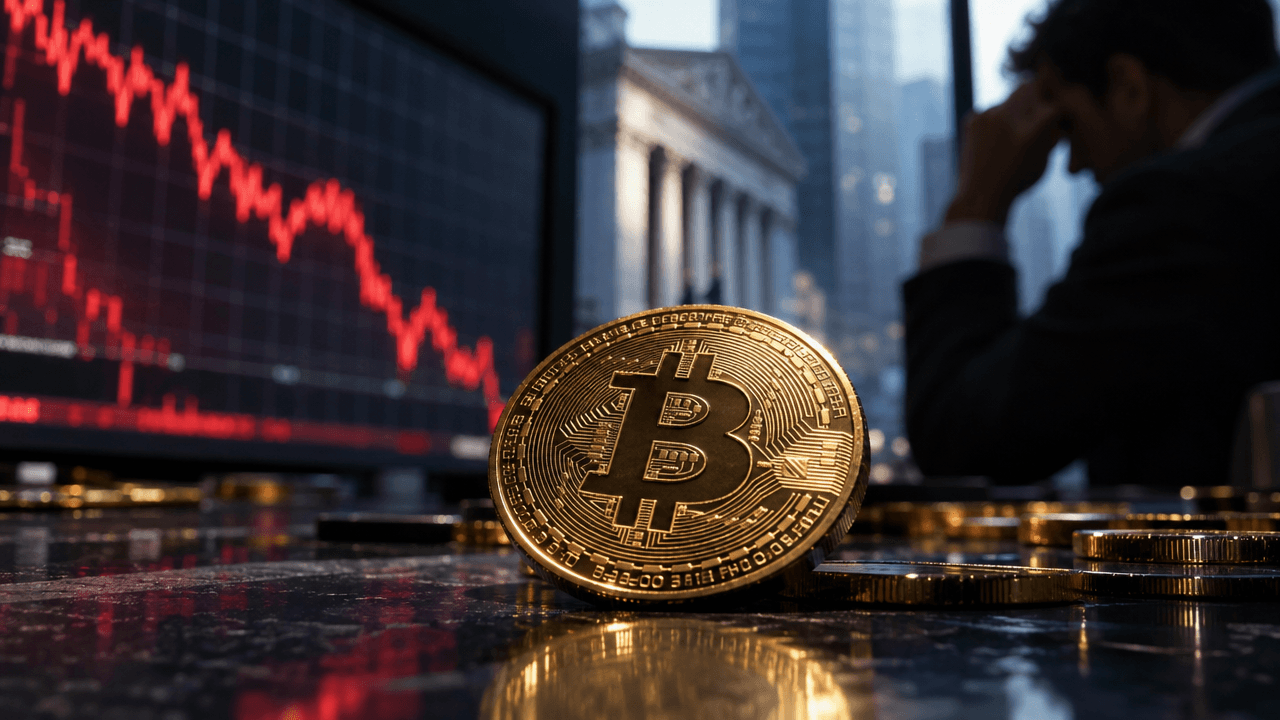
Bitcoin’s slide toward $74,000 shows how quickly cryptocurrency markets can reprice when expectations for monetary policy change. Bitcoin fell approximately 1.3% to around $74,080 after Federal Reserve Governor Christopher Waller backed a December interest-rate increase. At the same time, implied odds of a 25-basis-point hike reportedly jumped from roughly 76% to 96%, while U.S. equity futures also moved lower. [3][15]
The move was not simply a reaction to one official’s comments. It reflected a broader reassessment of liquidity, inflation risk, and the cost of holding risk assets. For traders, the episode offers a useful lesson: Bitcoin may operate independently of traditional financial institutions in design, but its short-term price is still heavily influenced by global interest rates and investor risk appetite.
Why Rate-hike Expectations Pressure Bitcoin
Interest rates affect markets through several channels. When central banks raise rates, cash and short-term government securities generally become more attractive relative to volatile assets. Higher rates can also increase borrowing costs, reduce leverage, and lower the present value investors assign to future growth.
Bitcoin does not generate traditional cash flows such as interest payments or corporate earnings. Its valuation is therefore particularly sensitive to shifts in liquidity and speculative demand. When traders expect tighter financial conditions, they may reduce exposure to assets viewed as higher risk, including cryptocurrencies, growth stocks, and commodities.
That relationship does not mean Bitcoin must fall every time rates rise. Market conditions, institutional flows, regulation, and Bitcoin-specific demand can offset macroeconomic pressure. However, the immediate reaction to Waller’s remarks demonstrated that interest-rate expectations remain a major short-term driver.
WHAT WALLER’S COMMENTS SIGNALLED
Waller indicated that he would support a quarter-point increase at the Federal Open Market Committee’s December meeting, even if inflation data were less severe than expected. He also suggested that stronger-than-anticipated inflation could justify considering a larger move. Reports indicated that markets responded by sharply increasing the implied probability of a 25-basis-point hike, from approximately 76.3% to 96.3%. [5]
This repricing matters because markets move on changes in expectations, not only on final policy decisions. If investors have already priced in a rate increase, the eventual hike may produce a limited reaction. But when the probability of that action rises suddenly, traders must adjust positions immediately.
The market’s focus also shifted from whether rates would increase to how large the increase might be. Some reports described a growing debate between a quarter-point and a half-point move, particularly after hotter inflation data increased concerns about continued price pressure. [6]
Why Bitcoin And Equities Moved Together
Bitcoin and technology stocks often respond similarly to changes in interest-rate expectations. Both can attract capital when liquidity is abundant and investors are willing to pay higher prices for future potential. Conversely, both may face pressure when real yields rise and financial conditions tighten.
The decline in U.S. equity futures alongside Bitcoin reinforced this connection. Nasdaq futures were reported to be down about 0.4% as Bitcoin traded near $74,080. [15] The synchronized move suggests that investors were reducing broader risk exposure rather than reacting only to developments within the cryptocurrency sector.
For traders, correlation is not permanent. Bitcoin can decouple from stocks during periods of strong crypto-specific news, large fund flows, or market stress. Still, monitoring equity indexes, bond yields, the dollar, and Federal Reserve expectations can provide valuable context for interpreting price action in BTC.
Practical Lessons For Simfi Traders
The first lesson is to distinguish between a headline and its market impact. “Bitcoin falls toward $74,000” describes the result, but the more important question is why the move happened. In this case, the catalyst was a shift in expected monetary policy.
The second lesson is to monitor event risk before entering a position. Central-bank speeches, inflation releases, employment reports, and policy meetings can produce sharp moves in both directions. A trader who enters with excessive leverage before such an event may be forced out by volatility even if the longer-term market view eventually proves correct.
The third lesson is to use position sizing rather than prediction alone. A well-designed trade plan should define the maximum acceptable loss, the level at which the thesis is invalidated, and the amount of capital exposed. Stop-loss orders can help, but traders should also account for slippage and rapid price gaps.
Finally, SimFi provides an environment for testing these habits without putting live capital at risk. Traders can create scenarios for a 25-basis-point hike, a 50-basis-point hike, or a pause, then compare how Bitcoin, equity indexes, and other instruments respond. The goal is not to predict every headline. It is to build a repeatable process for managing uncertainty.
What To Watch Next
The next major question is whether the market continues to price a December increase near current levels and whether expectations shift toward a larger move. Traders should watch incoming inflation data, Federal Reserve communication, Treasury yields, the U.S. dollar, equity futures, and crypto market liquidity.
Bitcoin’s behavior around $74,000 will also matter technically, but a single price level should not be treated as a guaranteed support zone. If macro pressure intensifies, previously important levels can fail quickly. If rate expectations stabilize or risk appetite improves, Bitcoin could recover just as rapidly.
The broader takeaway is that Bitcoin remains deeply connected to the macroeconomic cycle. A decentralized asset can still react strongly to decisions made by central banks because those decisions influence liquidity, leverage, and investor behavior. For SimFi traders, the most valuable response to this volatility is not a rushed prediction. It is disciplined preparation, controlled risk, and a clear understanding of the forces driving the market.