
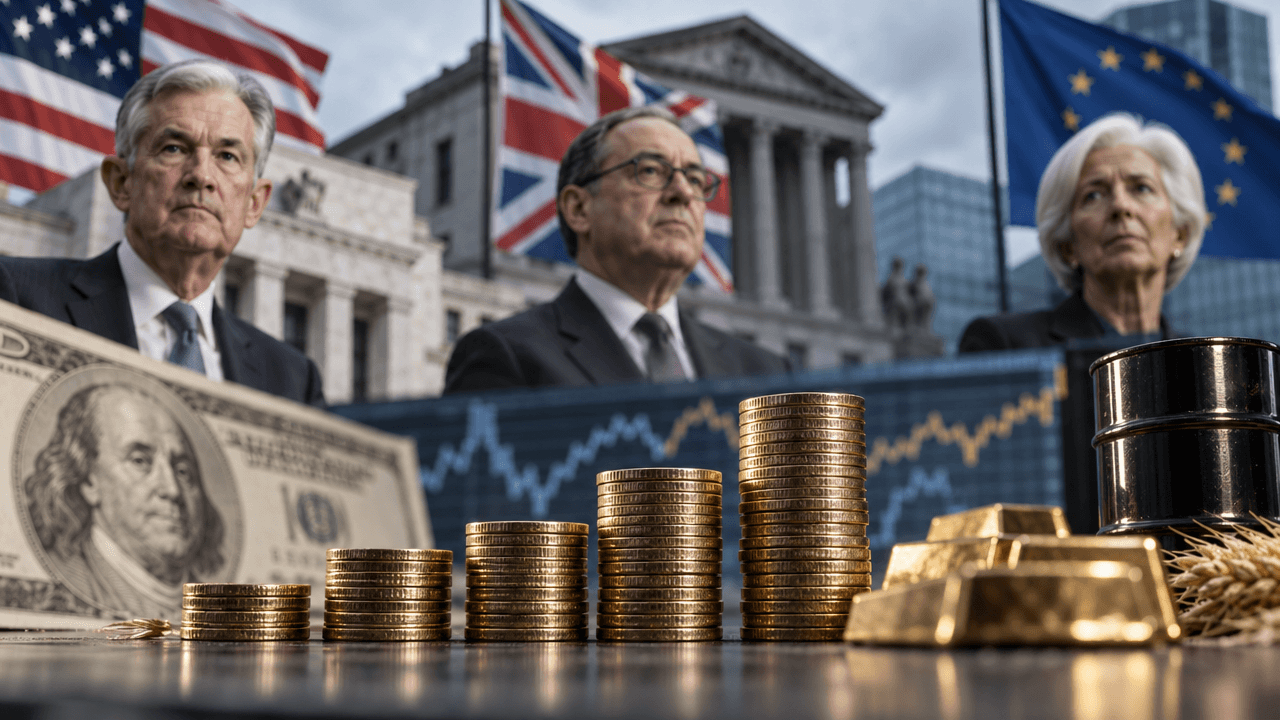
Inflation is forcing a rethink of the global interest-rate outlook. Officials from the United States, United Kingdom and eurozone have recently signaled that borrowing costs may need to remain higher for longer, and in some cases rise further, as price pressures remain above target. For traders, the message is clear: the era of rapid rate cuts has been replaced by a more uncertain environment in which central banks may prioritize inflation control over near-term economic growth.
The Hawkish Shift In Global Policy
A hawkish monetary-policy stance means a central bank is more willing to raise interest rates, maintain restrictive conditions, or delay rate cuts to prevent inflation from becoming entrenched. The latest signals do not necessarily guarantee a long sequence of rate increases, but they show that policymakers are increasingly concerned about the risks of doing too little.
In the United States, Federal Reserve officials have opened the door to a faster pace of tightening after inflation data showed renewed strength. Governor Christopher Waller indicated that a 50-basis-point increase could be considered if core inflation remained elevated, while Dallas Fed President Lorie Logan said the central bank may need to move more rapidly and raise rates by at least another half percentage point before pausing. [10]
This is important because markets had been focused on when rates might eventually decline. A shift toward discussing larger or faster hikes can quickly affect Treasury yields, equity valuations, the U.S. dollar and expectations for corporate borrowing costs.
The Bank Of England Leads With A Rate Increase
The Bank of England has already taken a decisive step. Its Monetary Policy Committee raised Bank Rate by 25 basis points to 4.00% in November, with an 8–1 majority supporting the move. The committee said inflationary pressure in the pipeline had become sufficient to justify higher rates. [1][6]
The decision reflected growing concern that energy costs could feed into wages, services and broader consumer prices. U.K. inflation had reached 3.5% in September, well above the Bank’s 2% target, while officials warned that existing economic slack might not be enough to prevent the latest energy shock from creating persistent inflation. [8]
Governor Andrew Bailey stressed that the increase should not be viewed as the beginning of an inevitable long tightening cycle. However, he also indicated that another 25-basis-point increase could be justified if the conflict affecting energy markets remained unresolved. [3][14]
For traders, the Bank of England’s challenge is particularly difficult. Higher rates may weaken housing, consumer spending and business investment, but failing to respond could allow inflation expectations to become embedded. This tension is likely to keep sterling and U.K. bond markets highly sensitive to wage data, energy prices and services inflation.
The Ecb Faces An Energy-inflation Trade-off
The European Central Bank has maintained its key rates for now, but its communication has become more cautious and increasingly focused on upside inflation risks. The ECB said rising energy prices were likely to push inflation higher in the near term and keep headline inflation above target over coming quarters. [16]
ECB President Christine Lagarde has emphasized that inflation may remain elevated for an extended period. Although underlying inflation and wages have not yet shown clear evidence of a dangerous second-round effect, policymakers are watching closely for signs that higher energy costs are spreading through the wider economy. [24]
Markets have consequently increased expectations for another rate increase before the end of the year. Some officials, including Bundesbank President Joachim Nagel and ECB Chief Economist Philip Lane, have suggested that additional tightening may be appropriate if the inflation outlook does not improve. [22][23]
The eurozone faces a particularly difficult trade-off because the same energy shock that raises inflation can also weaken economic activity. This creates a risk of stagflation, in which prices rise while growth slows. The ECB must therefore decide whether inflation requires additional rate increases even as households and businesses face weaker demand.
What This Means For Markets And Traders
A more hawkish global rates outlook can influence nearly every major asset class. Bond yields generally rise when investors anticipate higher policy rates, while longer-duration assets such as growth stocks and technology shares may come under pressure as future cash flows are discounted at a higher rate.
Currencies can also respond quickly. Expectations for tighter policy may support the dollar, pound or euro against currencies whose central banks appear more willing to cut rates. However, currency gains are not guaranteed. If investors believe rate increases will cause a severe recession, the currency may weaken despite higher yields.
Commodities add another layer of complexity. Energy prices are contributing to inflation, but higher rates can reduce economic demand and eventually weigh on commodity consumption. Traders should avoid treating inflation data, interest-rate expectations and energy markets as separate themes. They are increasingly connected.
In SimFi trading, this environment offers a useful opportunity to practice disciplined scenario analysis. Before entering a position, consider three possibilities: inflation remains high and rates rise; inflation cools and central banks pause; or growth weakens sharply and policymakers reverse course. For each scenario, define the expected effect on yields, currencies, equities and commodities.
Practical Takeaways
First, monitor central-bank language as closely as the rate decision itself. Words such as persistent, broadening, upside risks and further adjustment often signal how policymakers view the next meeting.
Second, track the data most relevant to inflation persistence. These include core inflation, wage growth, services prices, energy costs and inflation expectations.
Third, manage risk around policy announcements. Hawkish surprises can produce rapid movements across several markets at once, increasing the chance of slippage and oversized losses.
Finally, avoid assuming that higher rates automatically mean stronger currencies or weaker stocks. Market reactions depend on expectations, economic growth and whether the policy path is already priced in.
Conclusion
The global interest-rate outlook has become more hawkish because central banks are confronting inflation that remains uncomfortably high and vulnerable to further energy shocks. The Federal Reserve is considering a faster tightening pace, the Bank of England has already raised rates, and the ECB is warning that additional action may be needed.
For traders, the central lesson is flexibility. Monetary policy may remain restrictive for longer than expected, but the economic cost of higher rates could eventually change the direction of travel. The strongest approach is to follow the data, respect event risk and build trades around clearly defined scenarios rather than fixed predictions.