
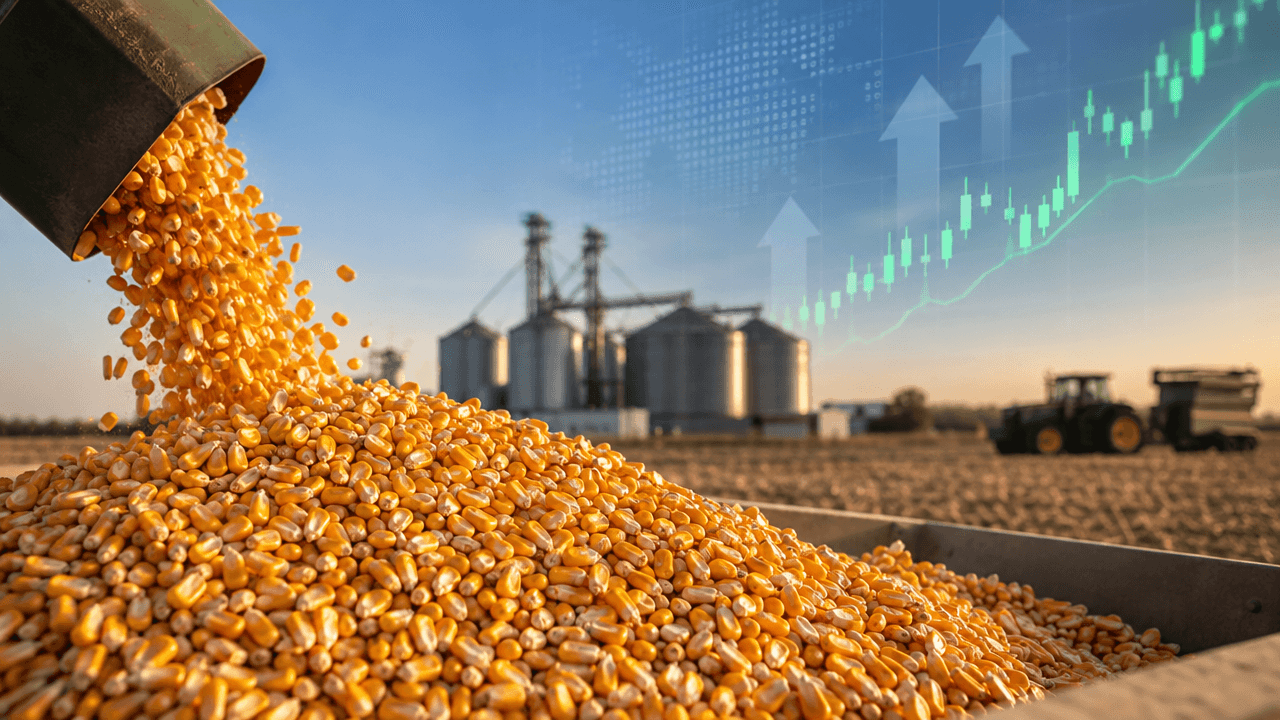
Corn futures jumped as much as 3.7% after the U.S. Department of Agriculture delivered a larger-than-expected cut to its forecast for the 2026/27 U.S. corn crop. The move shows how quickly agricultural markets can reprice when a major supply estimate falls below trader expectations. For futures participants, the report was a reminder that market reaction depends not only on whether a forecast changes, but also on how that change compares with what was already priced in.
The Usda Surprise
In its November World Agricultural Supply and Demand Estimates report, the USDA reduced its estimate of the average U.S. corn yield to 179.6 bushels per acre, down from 181.2 bushels in October. The new projection was also below the average trade expectation of approximately 180.6 bushels per acre. [1][4]
The difference may appear small on a per-acre basis, but it becomes significant when applied across millions of harvested acres. The USDA lowered projected U.S. corn production by 141 million bushels from the previous month, bringing the forecast to approximately 15.9 billion bushels. Harvested area was left unchanged at 88.5 million acres, meaning the reduction was driven primarily by weaker expected productivity rather than a smaller planted or harvested area. [2][3]
The USDA cited lower yield expectations in important producing states, including Illinois, Indiana and Nebraska. Those states are central to the U.S. corn supply, so revisions affecting them can have an outsized influence on national production expectations. [8]
Why The Market Reacted So Sharply
Commodity prices respond to surprises. Before the report, many traders expected some adjustment to the corn outlook, but the size and direction of the revision were more bullish than anticipated. A lower yield estimate reduces the amount of corn likely to enter the market, tightening the balance between supply and demand.
This is especially important because corn serves several major markets at once. It is used in animal feed, ethanol production, food ingredients and industrial applications. When projected supply declines, buyers may compete more aggressively for available inventories, pushing futures prices higher.
The report also reduced the USDA’s forecasts for domestic use, exports and ending stocks. Those reductions are generally bearish in isolation because they indicate weaker demand or less consumption. However, traders focused more heavily on the production cut and the surprise relative to expectations. The immediate price response demonstrated that the supply revision carried greater market weight than the reductions in projected usage. [3][15]
This distinction is useful for traders: markets often move on the balance of new information, not on one headline number. A report can contain both bullish and bearish details, while price action reflects which detail investors consider most important.
What It Means For Prices And Inflation
A smaller U.S. corn crop can create upside pressure across agricultural commodities, although the strength and duration of the move will depend on follow-up data. Corn futures may remain sensitive to harvest results, export demand, ethanol margins, currency movements and crop conditions in competing producing countries.
The November estimate is not necessarily the final word. USDA production forecasts can change as additional harvest information becomes available and as officials refine yield estimates. Traders will therefore monitor future reports for confirmation of the reduced productivity outlook. If subsequent data supports the lower estimate, the market may treat the November cut as the beginning of a tighter supply narrative. If yields recover or demand weakens, the initial rally could lose momentum.
The broader concern is food inflation. Corn is not the only factor influencing grocery prices, and futures prices do not move directly or immediately into supermarket prices. Transportation costs, energy prices, labor, processing, weather and retailer margins also matter. Still, higher corn prices can raise costs for livestock producers because corn is a major feed ingredient. They can also affect ethanol economics and prices for products containing corn-based inputs.
The effect on consumers is therefore indirect and uneven. A short-term futures rally does not guarantee an immediate rise in food prices, but sustained higher input costs can eventually filter through parts of the food supply chain.
Practical Lessons For Simfi Traders
The report offers several useful lessons for traders participating in simulated markets.
First, compare data with expectations, not only with the previous report. The yield estimate fell by 1.6 bushels per acre, but the market reaction was amplified because the number was below consensus forecasts. A smaller-than-expected change can be bullish if traders positioned for an even smaller revision.
Second, identify the market’s dominant variable. In this case, production and yield received more attention than the cuts to domestic use, exports and ending stocks. Traders should examine the full supply-and-demand balance rather than reacting to a single figure.
Third, respect volatility around scheduled agricultural reports. Major USDA releases can produce rapid price movements, wider spreads and sharp reversals. In a SimFi environment, traders should define risk before entering a position, use position sizes that match the volatility and avoid assuming that an initial move will continue.
Fourth, watch confirmation signals. Follow-up price action, export sales, ethanol demand, cash-market prices and later USDA revisions can determine whether the rally develops into a sustained trend or fades as a temporary reaction.
Conclusion
The USDA’s larger-than-expected cut to the U.S. corn yield forecast gave futures traders a clear bullish supply surprise. The reduction to 179.6 bushels per acre lowered projected production to roughly 15.9 billion bushels and triggered a rally of as much as 3.7% in Chicago corn futures. [1][8]
The next phase will depend on whether later data confirms tighter supplies and whether demand remains strong enough to absorb the reduced crop. For SimFi traders, the most important takeaway is broader than corn: price moves are shaped by expectations, positioning and the details behind a headline. Understanding those forces is essential for managing risk when markets react faster than forecasts can be updated.