
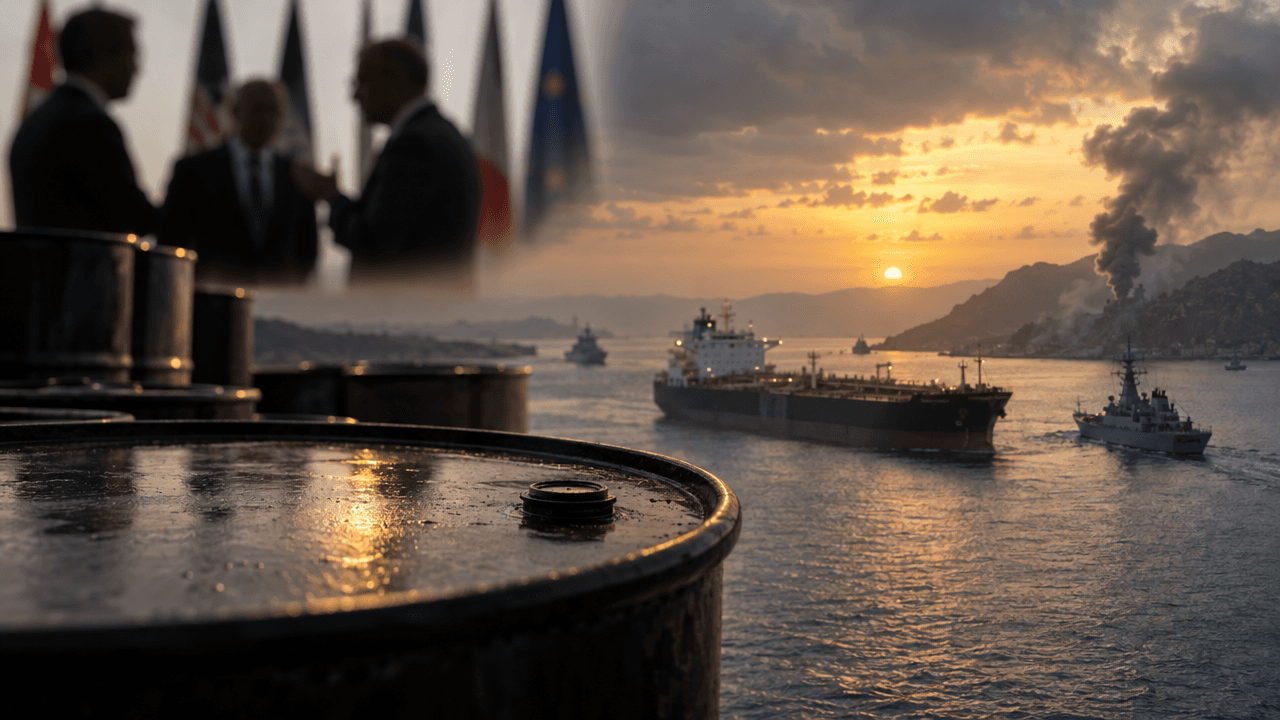
Brent crude is trading near the $100-per-barrel area after a sharp decline in the previous session, but the market is far from calm. Prices have been pulled in opposite directions by two powerful forces: renewed diplomatic efforts between Washington and Tehran and continuing military risks that threaten energy infrastructure and shipping routes. The result is a crude market where headlines can move prices several dollars in minutes.
On November 4, front-month Brent fell 1.9% to $101.65 per barrel during a volatile session. Traders were responding to reports that Qatar’s mediation between the United States and Iran was continuing, while threats to commercial shipping and the possibility of further military action kept a risk premium embedded in prices. [3]
Why Diplomacy Is Pressuring Oil
Diplomatic progress can reduce crude prices because oil markets price expected supply, not only barrels currently being produced. If investors believe negotiations could end hostilities, reopen transport routes, or prevent attacks on energy facilities, they may expect more reliable supply in the future.
That expectation encourages traders to remove some of the geopolitical premium from futures contracts. The effect was visible earlier in the week, when Brent crude fell more than 7% to settle at $104.77 after talks involving Iranian and Qatari officials raised hopes that Middle Eastern supply disruptions could ease. [5]
A successful agreement could produce several bearish effects. Shipping through the Strait of Hormuz could become more predictable, insurance costs could decline, and buyers might feel less pressure to secure emergency cargoes. Refiners could also become more confident that regional exports will arrive on schedule.
However, reported talks do not equal a completed agreement. Qatar has been mediating between the two sides, but no breakthrough has been announced. Until negotiators reach a durable arrangement and markets see evidence that it is being implemented, traders are likely to treat each diplomatic headline as provisional. [1]
Why Military Risk Is Keeping Prices Elevated
The same market that sells oil on peace hopes can quickly buy it back on signs of escalation. Military activity creates uncertainty about production, exports, pipelines, ports, tankers, and insurance availability. Even when physical supply has not yet been lost, traders may bid prices higher to account for the possibility of disruption.
Recent developments illustrate this tension. Reports of continued attacks on commercial shipping have kept supply concerns alive, while military action and threats of renewed operations have offset some of the relief generated by negotiations. The market is therefore balancing the possibility of de-escalation against the risk that talks fail or hostilities intensify. [1][3]
The Strait of Hormuz is especially important to this risk calculation. Any sustained disruption to the waterway could affect the movement of a significant volume of global energy supplies. Traders do not need a complete closure to react: delays, rerouting, tanker shortages, or higher insurance premiums can all raise the delivered cost of crude.
This explains why oil can remain close to $100 even after a major one-day decline. A lower price may reflect reduced immediate fear, while the elevated level reflects the market’s continuing concern that conditions could deteriorate again.
How Traders Should Read The Volatility
The key lesson is that crude oil is responding to changing probabilities rather than a single confirmed event. A headline suggesting negotiations are progressing may trigger a rapid selloff. A report of military action, a shipping incident, or a failed diplomatic meeting can reverse that move.
This creates several practical challenges. Stop-loss orders may be triggered during sharp intraday swings, while futures traders can face rapidly changing margin requirements. Technical levels may also be less reliable when political headlines are driving the market. A breakout or reversal can be genuine, but it can also reflect temporary positioning before the next announcement.
Traders should distinguish between headline volatility and trend confirmation. One price move is not enough to establish a lasting direction. Stronger evidence may include several sessions of consistent movement, changes in the futures curve, declining or rising implied volatility, and confirmation from physical market indicators.
For example, falling prices accompanied by improving shipping conditions and narrowing regional supply concerns would provide a stronger bearish signal than a one-day decline alone. Conversely, rising prices supported by disrupted exports, higher freight costs, or falling inventories would suggest that the risk premium is becoming more deeply embedded.
What To Watch Next
The first indicator is the substance of U.S.-Iran negotiations. Traders will look for confirmation that discussions have moved beyond indirect messages and toward a framework capable of reducing military risk. Statements from mediators matter, but concrete changes in shipping activity and security conditions may matter more.
The second is the Strait of Hormuz. Any improvement in tanker movements, insurance availability, or port operations could reinforce the bearish impact of diplomacy. Fresh attacks or restrictions would likely have the opposite effect.
The third is U.S. inventory data. A reported 5.27-million-barrel decline in U.S. crude inventories recently provided additional support to prices, demonstrating that geopolitical developments are not the only force shaping the market. [4] Inventories, refinery demand, exports, and seasonal consumption can amplify or weaken the effect of political news.
Finally, traders should monitor the reaction of Brent and West Texas Intermediate separately. Brent has greater exposure to international supply and shipping risks, while WTI reflects U.S. production, inventories, and domestic infrastructure. Divergence between the benchmarks can reveal where the market sees the greatest pressure.
Conclusion
Crude volatility remains elevated because diplomacy and conflict are both influencing the same price at the same time. Negotiations between Washington and Tehran have reduced some fears of immediate supply disruption, but unresolved military and shipping risks continue to support oil prices near the $100-per-barrel area.
For traders, the most important takeaway is to avoid treating a single headline as a complete market thesis. Diplomatic progress must be confirmed, military risks must be monitored, and physical supply data should be used to distinguish temporary sentiment shifts from durable changes in the oil market. In an environment this sensitive, disciplined risk management is as important as forecasting the next move.