
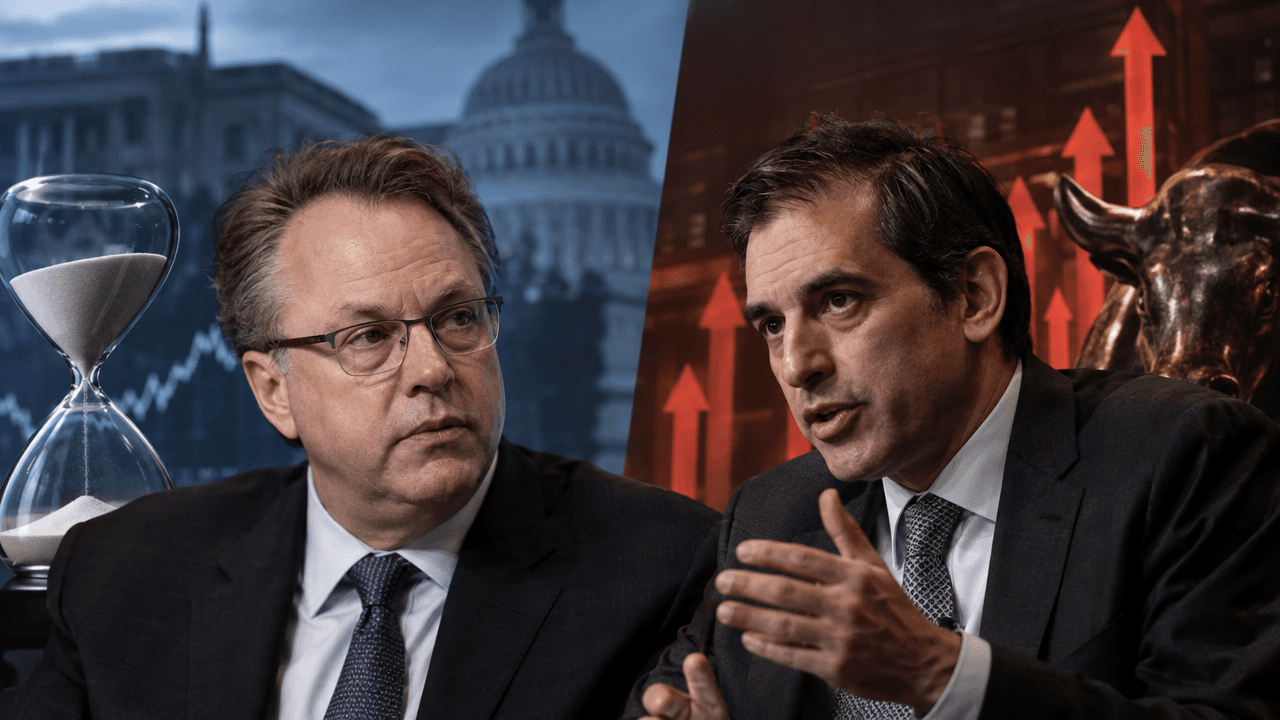
Federal Reserve officials are not disputing the need to bring inflation back to 2%. Their disagreement is about timing: should policymakers raise interest rates again soon, or wait for more evidence that inflation is staying too high? That distinction matters to borrowers, businesses and markets because even without a rate change, expectations about the Fed’s next move can influence financial conditions.
The contrast was clear in comments from New York Fed President John Williams and St. Louis Fed President Alberto Musalem. Williams said there was no need to act urgently and that policymakers could assess incoming data. Musalem argued that further monetary tightening would be needed to return inflation to target in a timely way. Together, their views show why one speech rarely settles the question of where rates are headed. [1][4]
Two Views, One Inflation Goal
Williams’s message was patient, but not necessarily dovish in the sense of ruling out further increases. He said one more upward adjustment could be appropriate later in the year if the economy developed as he expected, while emphasizing that policymakers had time to gather information. His point was about avoiding a rushed decision before the outlook became clearer. [4]
Musalem’s emphasis was on the risk of leaving policy insufficiently restrictive for too long. He said more monetary policy firming would be required to bring inflation back to target in a timely manner, but did not specify what the Fed should do at its next meeting. That leaves room for data and the views of other policymakers to influence the decision. [1]
The difference is a familiar tension in central banking. Moving too slowly can allow inflation to remain elevated and become harder to bring down. Tightening too aggressively can weaken economic activity and hiring more than intended. Fed officials must weigh both risks, and their public remarks reveal how they assess that balance.
Why Markets Care About The Signals
When traders change their estimate of the next rate move, the effects can reach beyond short-term interest-rate markets. Expectations may influence Treasury yields, the dollar, equity valuations and the cost of financing for households and companies. A more likely hike can put upward pressure on borrowing costs and weigh on assets whose valuations depend on lower rates. A more patient outlook can have the opposite effect, although those reactions also depend on economic data and other market forces.
Markets reportedly had priced close to an even chance of an October hike after earlier signals. That estimate has shifted as officials spoke and investors reassessed the outlook; other recent reporting put the implied odds considerably lower. The figures are snapshots, not commitments from the Fed, and can move quickly as new information arrives. [5][15]
The policy backdrop is important, too. The Fed raised its target range to 3.75%–4.00% in September, and traders broadly expected the central bank to hold that range at its October meeting, according to Reuters reporting. A pause at one meeting would not, by itself, mean the tightening cycle was over. [1]
What Traders And Investors Should Watch
Rather than treating one official’s comments as a forecast, consider the signals in combination:
Inflation: Is price growth easing broadly, or are persistent components keeping pressure on the Fed? The central bank’s 2% goal provides a reference point, but policymakers also consider how inflation is evolving and whether progress is durable.
Employment and demand: A resilient economy may give officials more room to keep rates high or raise them. Evidence of weakening demand or labor conditions could strengthen the case for waiting.
The full range of Fed views: Williams and Musalem are influential voices, but policy is set by the Federal Open Market Committee. Speeches, meeting statements and minutes help show whether an opinion is widely shared or represents one side of an active debate.
Market pricing: Futures-implied probabilities can help describe what investors currently expect. They are not guarantees, and a change in odds does not mean policymakers have made a decision.
For traders, a practical response is to build scenarios instead of betting everything on a single outcome. Ask how a hold, a hike or a shift in the Fed’s guidance could affect the instruments you trade. Review position size, potential volatility and exit plans ahead of major data releases or policy announcements. In a SimFi environment, these decisions offer a low-stakes way to practise managing uncertainty and separating a news headline from a complete trading plan.
Read The Debate, Not Just The Headline
Conflicting remarks do not necessarily signal confusion at the Fed. They can reflect genuine uncertainty about inflation, the economy and the appropriate pace of policy. Williams’s call to wait for more information and Musalem’s warning that further firming may be necessary describe different risks within the same challenge: getting inflation back to target without causing avoidable economic damage.
The most useful takeaway is that another hike remains possible, but its timing depends on how the evidence develops. For market participants, disciplined preparation matters more than trying to guess which official will prevail. Watch the data, update scenarios and treat rate probabilities as changing estimates—not promises.