
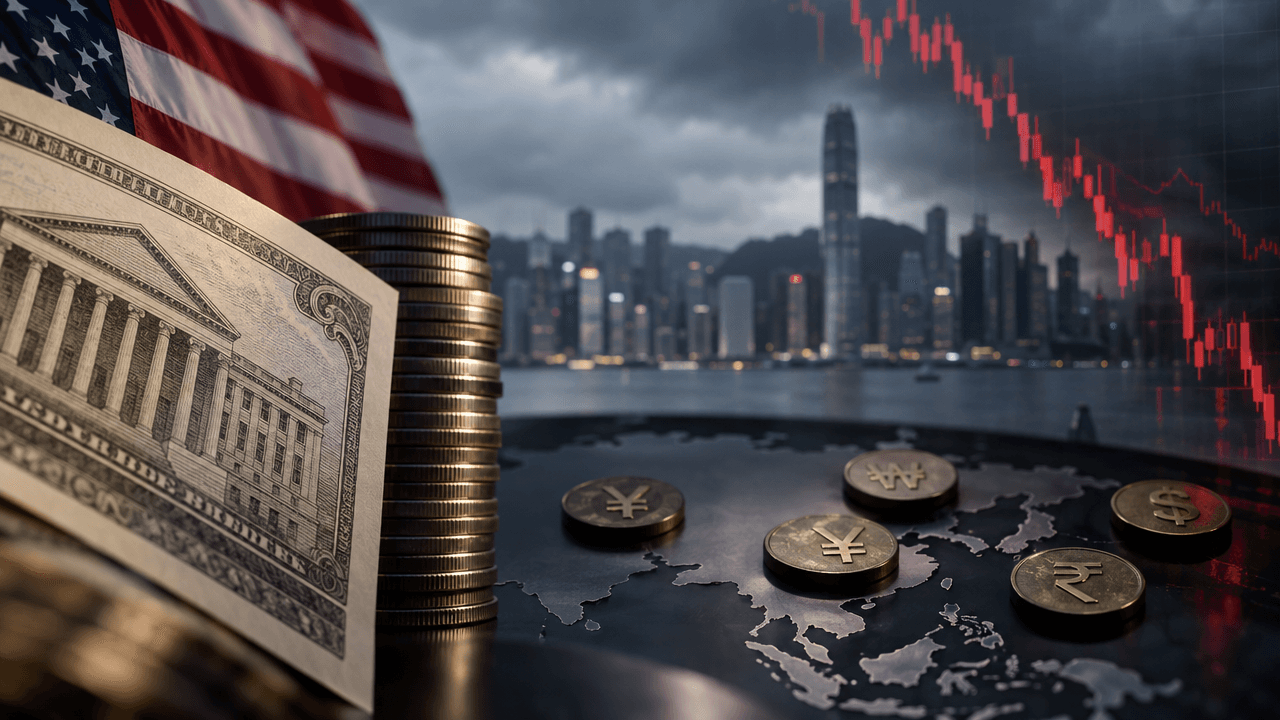
Foreign investors withdrew $23.49 billion from Asian equities in September, marking a sharp reversal from the approximately $4.72 billion they invested in August. The selling reflects a broader shift away from riskier emerging-market assets as U.S. Treasury yields climbed, inflation concerns intensified and expectations for tighter monetary policy strengthened. [1]
For investors, the move is more than a monthly flow statistic. It shows how quickly global capital can move when the relative appeal of U.S. assets improves. Higher Treasury yields can draw money away from Asian stocks, strengthen the U.S. dollar and increase pressure on regional currencies, corporate borrowers and central banks.
What Drove The Selling
The primary catalyst was a sharp rise in U.S. bond yields. The benchmark 10-year Treasury yield increased by 53.5 basis points during September and reached 5.3645%, its highest level since April 2002, according to the reported market data. Rising oil prices added to concerns that inflation could remain elevated for longer. [1]
When Treasury yields rise, investors often reassess the reward available from holding emerging-market equities. U.S. government bonds are widely viewed as relatively liquid and lower-risk assets. If they offer higher returns, investors may require a larger risk premium to remain invested in countries with greater currency, political and economic uncertainty.
Monetary-policy expectations also played a major role. The Federal Reserve and European Central Bank raised interest rates as policymakers responded to persistent inflation pressures, including energy-related costs. Tighter policy generally reduces liquidity and makes speculative or high-growth investments less attractive. [7]
This environment can be particularly challenging for Asian markets that had benefited from strong international inflows and optimistic growth expectations. Once the macroeconomic backdrop changed, portfolio managers had an incentive to lock in profits, reduce exposure and wait for greater clarity.
South Korea And India Bear The Brunt
South Korea accounted for more than 70% of the regional outflows. The country’s technology-heavy market had experienced a powerful rally tied partly to enthusiasm for artificial-intelligence-related stocks. After a strong advance, foreign investors appeared more willing to reduce positions when higher yields made richly valued growth shares more vulnerable. [1]
Technology companies are often valued on expectations of future earnings. Higher interest rates increase the discount rate applied to those future cash flows, which can place downward pressure on valuations even when a company’s underlying business remains strong. This does not necessarily mean the long-term AI investment theme has ended, but it does mean that market participants may demand more attractive prices.
Indian equities also experienced significant selling. Foreign investors withdrew $3.75 billion from Indian stocks in September, reversing two consecutive months of inflows. India’s market has attracted substantial international interest because of its economic growth potential, but high valuations can make it sensitive to changes in global interest rates and investor positioning. [1]
The concentration of selling in South Korea and India also highlights an important distinction: foreign outflows do not affect every Asian market equally. Countries with large technology sectors, elevated valuations or heavy foreign ownership may experience greater short-term volatility when global risk appetite deteriorates.
The Currency And Economic Effect
Equity selling can place pressure on regional currencies when foreign investors convert local proceeds back into dollars or other major currencies. A stronger dollar raises the local-currency cost of imported energy, raw materials and foreign-currency debt. It can also complicate the decisions facing Asian central banks.
Policymakers may hesitate to cut interest rates if currency weakness threatens to intensify inflation. At the same time, maintaining higher rates to support a currency can weigh on domestic borrowing, business investment and consumer spending. This creates a difficult balance between defending financial stability and supporting economic growth.
The pressure may be especially noticeable in economies that rely heavily on external financing. Companies with dollar-denominated liabilities can face higher repayment costs when their domestic currency weakens. Governments and businesses may also see international funding become more expensive as global bond yields rise.
However, an equity outflow does not automatically signal an economic crisis. Foreign investors can sell for portfolio-allocation reasons even when local companies remain profitable. Domestic institutions and individual investors may absorb some of the selling, while currency movements may be orderly rather than disruptive. The key question is whether outflows remain temporary or develop into a sustained trend.
What Traders Should Watch
Traders should monitor U.S. Treasury yields, the dollar, energy prices and central-bank guidance together rather than viewing Asian equity performance in isolation. A continued rise in Treasury yields would likely keep pressure on emerging-market assets, while a stabilization or decline could improve sentiment.
Market breadth is another useful signal. If selling is concentrated in a few technology-heavy markets, the move may represent profit-taking after a rally. If withdrawals spread across banks, industrial companies, consumer shares and multiple countries, it could indicate a deeper reduction in regional risk appetite.
Investors should also track foreign-exchange volatility and credit spreads. Widening corporate borrowing costs, falling currencies and persistent equity outflows would suggest that financial conditions are tightening more broadly. By contrast, stable currencies and resilient local bond markets could indicate that investors are rotating rather than abandoning Asian exposure entirely.
For SimFi traders, this episode offers a practical risk-management lesson. Avoid relying on a single bullish theme, size positions according to volatility and consider how a change in U.S. rates could affect several markets at once. A trade that appears diversified across Asian equities may still carry substantial exposure to the same global factor: the direction of U.S. yields.
A Shift In Global Risk Appetite
The $23.49 billion withdrawal is a notable warning that international capital remains highly sensitive to interest rates, inflation and currency risk. It also demonstrates how strong rallies, particularly in technology stocks, can become vulnerable when the global cost of money rises.
The immediate outlook will depend on whether inflation pressures ease, Treasury yields stabilize and central banks become less restrictive. Until those conditions improve, Asian equities may face a more selective investment environment, with investors favoring companies that have strong balance sheets, dependable cash flow and reasonable valuations.
For traders and investors, the central takeaway is clear: capital flows are not merely a measure of sentiment after the fact. They can influence currencies, valuations and market liquidity in real time. Understanding the connection between U.S. rates and Asian assets can help market participants prepare for volatility rather than react to it after the move has already begun.