
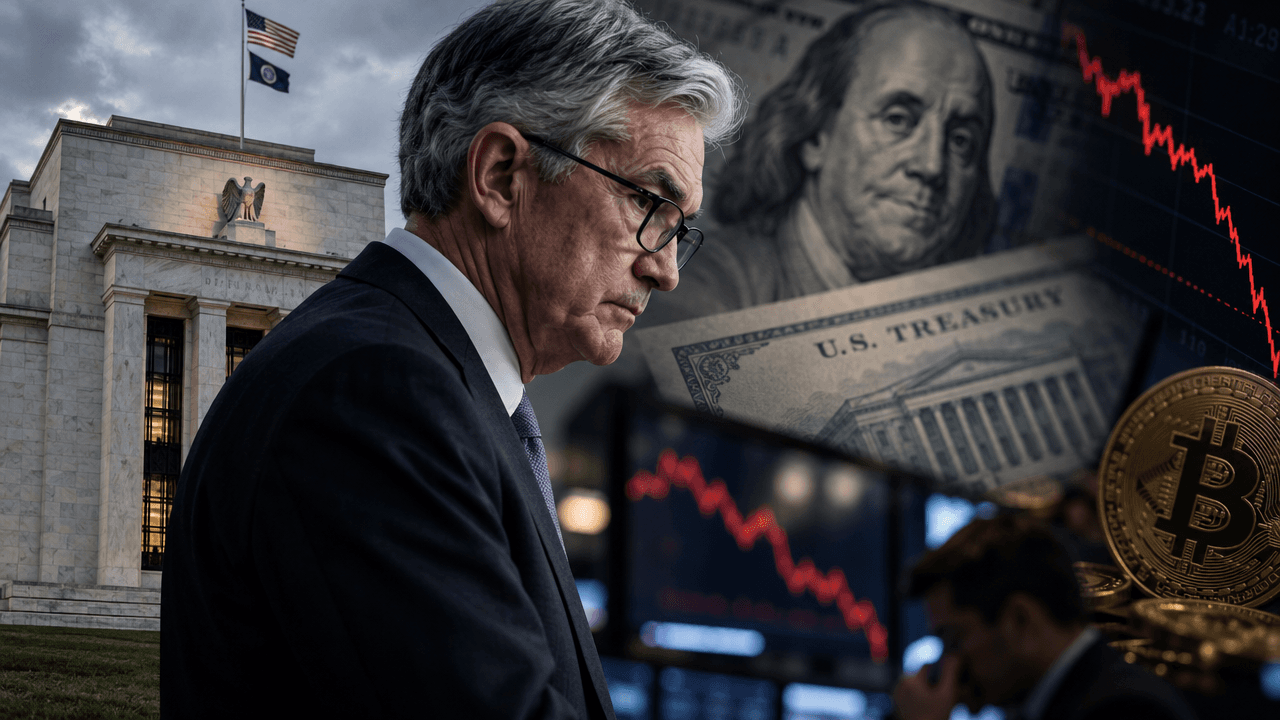
Markets are assigning a high probability to a Federal Reserve rate hike at its December meeting, putting monetary policy back at the center of the trading landscape. Earlier pricing indicated an 88.6% probability of a 25-basis-point increase and an 11.4% probability that policymakers would leave rates unchanged. The odds reflect a market preparing for tighter financial conditions, but they do not eliminate the possibility of a surprise. [5]
The expected move matters because interest rates influence nearly every major asset class. The dollar, Treasury yields, equity futures, commodities, and cryptocurrencies can all react as traders reassess the cost of money and the future path of policy. For SimFi traders, this creates an important opportunity to study how expectations—not just official decisions—can drive volatility.
Why Markets Expect A December Hike
The Federal Reserve’s current target range is 3.75% to 4.00%. Market pricing has increasingly pointed toward a 25-basis-point increase at the December 8–9 meeting, with the larger question becoming whether the move will be a standard quarter-point hike or something more aggressive. [3]
Rate expectations have strengthened as traders respond to concerns that inflation may not be cooling quickly enough. Recent commentary from Fed officials has also kept attention on the possibility of further tightening. Governor Christopher Waller, for example, has indicated that policymakers may need to consider a 50-basis-point move if inflation remains persistent. [7]
However, futures pricing should not be confused with certainty. Implied probabilities represent the market’s current estimate based on available information. New inflation data, employment figures, financial conditions, or central-bank speeches can change those estimates quickly.
This distinction is essential. When a hike is already widely expected, the announcement itself may produce a limited reaction. The larger move may come from the Fed’s statement, updated projections, or press conference—especially if officials signal that additional increases could follow in 2027.
The Dollar And Treasury Yields
A higher federal funds rate generally makes dollar-denominated assets more attractive. Cash, Treasury bills, and other short-term instruments can offer improved returns, encouraging demand for the U.S. dollar. A stronger dollar can then affect global markets by making dollar-priced commodities more expensive for overseas buyers and tightening financial conditions for borrowers with dollar debt.
Treasury yields are another major transmission channel. Short-term yields tend to respond closely to expectations for Fed policy, while longer-term yields reflect broader views about inflation, growth, government borrowing, and future interest rates. Recent market reporting showed the two-year Treasury yield near 4.80%, while the 10-year yield was around 5.06%, illustrating how elevated yields can influence both borrowing costs and asset valuations. [2]
Traders should watch the yield curve rather than focusing on a single Treasury maturity. A rise in front-end yields may indicate expectations for more immediate Fed tightening. A rise in longer-term yields may point to concerns about inflation or fiscal conditions. The difference can offer useful information about how markets interpret the policy outlook.
Equities And Crypto Face A Higher Bar
Higher interest rates can pressure equities in two ways. First, they increase financing costs for companies and consumers. Second, they reduce the present value of future corporate earnings, which can weigh most heavily on growth stocks whose valuations depend on profits expected far into the future.
That does not mean every stock must decline when rate expectations rise. Banks and some value-oriented sectors can respond differently, while strong earnings or improving economic data may offset rate concerns. The key issue is whether markets view the Fed as delivering a controlled adjustment or beginning a prolonged tightening cycle.
Crypto markets are particularly sensitive to changes in liquidity and risk appetite. When yields rise and the dollar strengthens, investors may become less willing to hold volatile assets that do not generate conventional income. Recent market coverage linked Fed rate concerns with pressure on Bitcoin, gold, and equities. [10]
Crypto traders should therefore monitor both traditional and digital-market indicators. A declining dollar and falling Treasury yields may support risk appetite, while a sharp rise in real yields and renewed dollar strength can create headwinds. Correlation is not constant, but macroeconomic pressure often increases during major policy repricing.
What Simfi Traders Should Watch
The first priority is the difference between expectations and reality. If the Fed delivers the widely anticipated 25-basis-point hike, the initial reaction could be muted. The more significant question may be whether policymakers sound concerned about inflation and open to additional increases.
The second priority is volatility around economic data. Inflation reports, employment releases, and consumer-spending figures can alter rate expectations before the Fed meeting. Traders should identify these event risks in advance and avoid treating a high-probability outcome as a guaranteed one.
The third priority is position sizing. A market may move sharply even when the direction appears obvious, particularly if the statement or press conference differs from what traders have priced in. Defined risk, realistic stop placement, and reduced leverage can help prevent a single announcement from dominating a trading account.
A practical framework is to build scenarios
If the Fed hikes and signals more increases, the dollar and front-end Treasury yields could strengthen, while equities and crypto may face pressure.
If the Fed hikes but emphasizes that policy is nearing its peak, risk assets could stabilize or rebound.
If the Fed holds unexpectedly, markets may rapidly reverse recent moves, with the dollar and yields potentially falling while equities and crypto rally.
The Bigger Market Lesson
The December decision is important, but the broader lesson is that markets trade the path of policy, not simply one meeting. A quarter-point hike can be manageable if investors believe it is isolated. The same hike can become disruptive if it marks the beginning of a longer tightening cycle.
With markets assigning an 88.6% probability to a December increase, much of the basic decision appears reflected in prices. That shifts attention toward guidance, inflation risks, and the possibility of further hikes. Traders who focus on those details—and prepare for multiple outcomes—will be better positioned than those who rely on the headline alone.
For SimFi participants, the event offers a valuable exercise in macro-driven trading: track expectations, compare them with incoming data, and manage risk when volatility is likely to rise. The most important trade may not be predicting the exact Fed decision, but understanding how much of that decision the market has already priced in.