
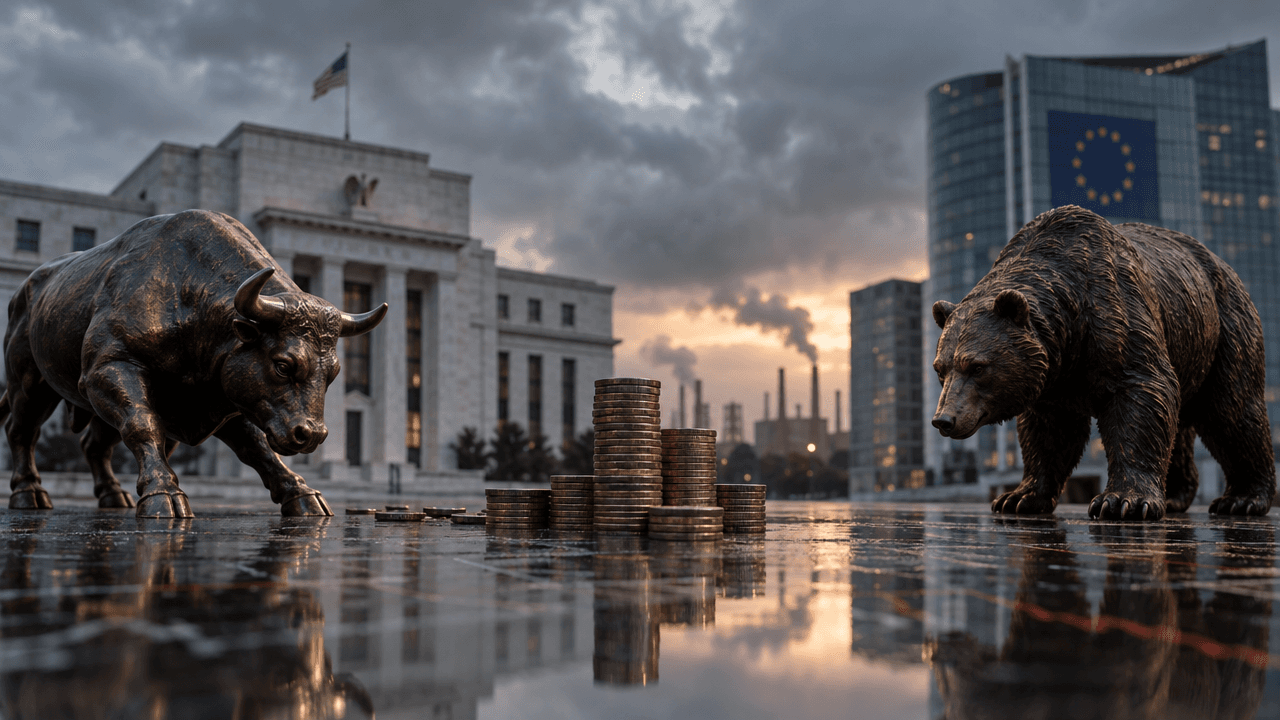
Rate-hike expectations are shifting quickly as traders weigh two competing forces: persistent inflation from higher energy prices and the possibility that tighter financial conditions will weaken economic growth. Markets had recently assigned strong odds to December increases from both the Federal Reserve and European Central Bank. Those expectations have now eased, signaling that investors are becoming less confident in a straightforward global tightening cycle.
The probability of a December Federal Reserve rate hike has reportedly fallen to approximately 70%, down from above 80% the previous week. Expectations for an ECB increase have also declined, moving from roughly 75% to around 60%. [4][6] These figures are not guarantees or official forecasts. They are market-based estimates derived from interest-rate futures and can change rapidly as economic data, central-bank guidance and risk sentiment evolve.
Why Markets Are Reassessing The Outlook
The central issue is whether energy-driven inflation will remain strong enough to justify higher interest rates if economic activity is losing momentum.
Higher oil and natural-gas prices can raise inflation directly by increasing household energy bills. They can also push up transportation, manufacturing and operating costs, creating pressure across the wider economy. This gives policymakers a reason to remain vigilant, particularly if businesses begin passing those costs on to consumers.
However, energy shocks can also weaken demand. Households may spend more on fuel and utilities while cutting purchases elsewhere. Companies facing higher costs and expensive borrowing may delay investment, reduce hiring or lower production. The ECB has explicitly warned that rising energy prices create upside risks for inflation while also presenting downside risks for growth. [11]
That combination creates a difficult policy dilemma. Raising rates may help prevent inflation expectations from becoming entrenched, but it may also intensify the economic slowdown caused by the original energy shock.
THE FED’S GROWTH-INFLATION BALANCING ACT
For the Federal Reserve, the market shift suggests that traders are paying closer attention to growth risks rather than focusing solely on elevated inflation. A rate increase would make borrowing more expensive for households, businesses and financial institutions. It could support the currency and restrain demand, but it would also add pressure to interest-sensitive areas such as housing, business investment and highly valued equities.
The Fed must also distinguish between temporary and persistent inflation. A short-lived increase caused by energy prices may not require an aggressive policy response if underlying price pressures are moderating. A sustained rise in wages, services prices and inflation expectations would be more concerning because it could become embedded in everyday economic decisions.
For traders, the important question is not simply whether the Fed hikes in December. It is whether policymakers signal additional increases afterward. A single move followed by a pause could produce a very different market reaction from a hike accompanied by guidance that rates will remain restrictive for an extended period.
What The Ecb Signal Is Telling Investors
The ECB faces a particularly complicated environment because energy costs are weighing on an economy that is already sensitive to borrowing conditions. The central bank held rates unchanged at its October meeting but warned that the energy shock could increase inflation and reduce growth. Market participants initially viewed the decision as a hawkish pause, with expectations for a December increase rising sharply after the meeting. [3][11]
The subsequent decline in December expectations indicates that traders are reassessing how sustainable that tightening path may be. Higher bond yields themselves can tighten financial conditions, potentially slowing credit growth and weakening consumption and investment. ECB estimates circulated before the October meeting suggested that the recent rise in yields could materially reduce future growth while also lowering inflation. [2]
This matters because central banks do not control energy prices directly. They can influence demand and expectations, but they cannot immediately increase energy supply. If policymakers respond too aggressively to a supply-driven inflation shock, they risk causing unnecessary economic damage.
Market Consequences
Changing rate expectations can affect nearly every major asset class. Government bond yields may fall when traders reduce expectations for future hikes, although long-term yields can behave differently if investors remain concerned about inflation or government borrowing. Currency movements may also become more volatile as interest-rate differentials change between the United States, Europe and other economies.
Equity markets often respond positively to lower rate expectations because discounted future earnings become more valuable and financing conditions may improve. Yet falling hike expectations can also reflect worsening growth prospects. That means a perceived policy relief rally may be limited if investors begin to fear a recession.
Commodity-linked assets present another complication. Energy prices may continue rising even while rate expectations decline. In that environment, inflation-sensitive assets can outperform while sectors dependent on consumer spending or cheap credit face greater pressure.
Practical Takeaways For Simfi Traders
First, treat interest-rate probabilities as moving information rather than fixed facts. A probability near 70% still leaves meaningful room for the outcome to change before the meeting.
Second, monitor the data that could shift expectations most sharply: inflation reports, employment figures, wage growth, business surveys, consumer spending and energy prices. Central banks are likely to focus on whether inflation is broadening beyond energy.
Third, separate the decision from the guidance. The immediate rate move may be less important than the projected path for the following meetings.
Fourth, manage exposure around central-bank events. Volatility can rise in currencies, indices and bonds when markets are heavily positioned for one outcome. A well-defined risk limit is more reliable than trying to predict every headline.
Finally, consider multiple scenarios. A hike with hawkish guidance, a hike followed by a pause, and no hike because of growth concerns could each produce different reactions across markets.
The Bigger Picture
The retreat in rate-hike expectations does not mean inflation risks have disappeared. It shows that markets are placing greater weight on the economic cost of combating inflation, especially when the source of price pressure is energy. The Fed and ECB must now navigate a narrow path between protecting price stability and avoiding an unnecessarily deep slowdown.
For traders, the central lesson is to watch the interaction between inflation and growth rather than treating either variable in isolation. Monetary policy expectations can change quickly when new evidence alters that balance. In the current environment, flexibility, scenario planning and disciplined risk management may matter more than confidence in a single forecast.