
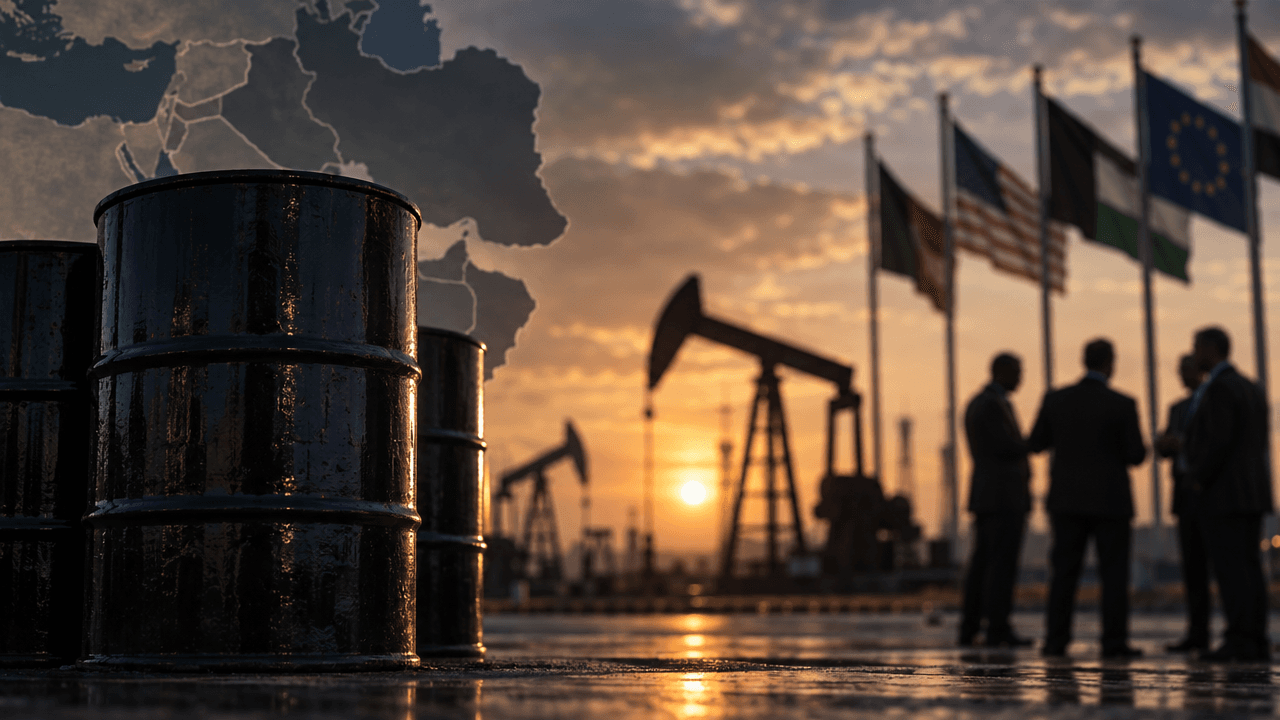
Oil remains highly sensitive to Middle East developments because the market is pricing not only barrels produced today, but also the risk that future supplies, shipping routes, and energy infrastructure could be disrupted. As traders assess diplomatic efforts alongside renewed attacks and uncertainty around regional security, crude prices continue to move sharply in response to each headline. Recent indications placed Brent near $114 per barrel and West Texas Intermediate near or above $100, keeping energy costs, inflation, and interest-rate expectations firmly in focus. [11]
Why Geopolitical Risk Matters
The Middle East remains central to global energy markets because it accounts for a substantial share of worldwide oil production and exports. Even when physical supply has not yet been materially lost, the possibility of disruption can add a geopolitical risk premium to futures prices.
That premium reflects several concerns. Conflict could damage production facilities, interrupt pipelines, threaten tankers, or restrict access to strategic waterways. The Strait of Hormuz is especially important because large volumes of crude and refined products pass through it. Any threat to shipping in or around the strait can quickly influence prices, freight costs, insurance premiums, and delivery schedules.
Recent market action illustrates how quickly sentiment can change. Oil prices eased when diplomatic discussions involving Iran raised hopes of de-escalation, but ongoing attacks and concerns about regional infrastructure limited the decline. Brent fell to approximately $114.81 while WTI traded around $100.88, leaving both benchmarks close to elevated levels. [11]
This is why oil can react to information before a measurable supply shortage appears. Traders are constantly estimating the probability of future disruption and adjusting prices accordingly.
Diplomacy And Escalation Create Two-way Volatility
Oil markets are currently being pulled in opposite directions. On one side, diplomatic negotiations could reduce the risk of a wider conflict, restore shipping confidence, and allow disrupted supplies to return. A credible ceasefire or agreement could therefore remove part of the risk premium and pressure crude prices lower.
On the other side, failed negotiations, attacks on energy facilities, or a wider military confrontation could produce another rapid price surge. The market does not need a complete shutdown of exports to become disorderly. Even delays, rerouted cargoes, and precautionary reductions in production can tighten near-term availability.
This creates a headline-driven environment in which price movements may be larger than the immediate change in physical supply. Traders may see crude fall on reports of diplomatic progress, only to reverse direction after news of an attack or a breakdown in negotiations. The European Central Bank has identified renewed disruption, particularly around the Strait of Hormuz, as a prominent upside risk to inflation expectations. [2]
For market participants, the lesson is clear: geopolitical news should be evaluated as a changing range of possible outcomes rather than treated as a simple bullish or bearish signal.
From Crude Prices To Inflation And Interest Rates
Higher oil prices affect the economy through several channels. The most immediate impact appears at fuel pumps and in transportation costs. Airlines, delivery companies, manufacturers, farmers, and other energy-intensive businesses may face higher operating expenses. Those costs can eventually pass through to consumers.
Energy prices can also influence inflation expectations. If households and businesses believe elevated fuel prices will persist, they may adjust spending, wage, and pricing decisions. This can create broader inflation pressure beyond the initial energy shock.
Central banks must then balance two competing risks. Raising interest rates may help contain second-round inflation effects, but tighter policy can also weaken economic growth and consumer demand. This is why an oil rally can push bond yields and rate expectations higher even if the original catalyst is geopolitical rather than economic.
The IMF has warned that Middle East-related commodity shocks can raise global inflation while slowing growth. Its regional outlook projected that global headline inflation would increase in 2026 before declining, with higher energy prices slowing the disinflation process. [1] Financial market analysis has similarly linked oil gains to higher inflation expectations and upward revisions in monetary-policy expectations. [7]
What Traders Should Watch
First, monitor the spread between Brent and WTI, but avoid viewing either benchmark in isolation. Brent reflects international pricing and is particularly sensitive to seaborne supply risks, while WTI is more closely tied to North American production, inventories, and infrastructure.
Second, watch futures-market structure. A market in backwardation, where near-term contracts trade above later deliveries, can indicate strong immediate demand or concern about prompt supply. A shift toward contango may suggest that traders expect conditions to improve or inventories to rebuild.
Third, follow shipping developments, refinery outages, official production guidance, and inventory data. Headlines about diplomacy matter, but their lasting influence depends on whether they change the physical outlook.
Fourth, manage exposure carefully. Oil’s volatility can create opportunities, but leverage can turn a relatively small price move into a substantial loss. Traders should define risk before entering a position, account for overnight gaps, and avoid assuming that a familiar technical pattern will override a major geopolitical headline.
The Bigger Market Takeaway
Oil’s current behavior demonstrates how financial markets translate uncertainty into prices. Brent near $114 and WTI around $100 reflect more than present-day consumption; they also capture concerns about future availability, transportation security, and the economic consequences of prolonged tension. [11]
The most important variable is whether diplomatic efforts produce a durable reduction in risk or merely a temporary pause. De-escalation could remove the premium embedded in crude prices, while renewed attacks or disruptions could push the market higher and intensify inflation concerns.
For traders and investors, the best approach is to combine geopolitical awareness with disciplined risk management. Oil can respond violently to political developments, but its longer-term direction will ultimately depend on the interaction between supply, demand, inventories, economic growth, and central-bank policy. Understanding those connections is more valuable than reacting to any single headline.