
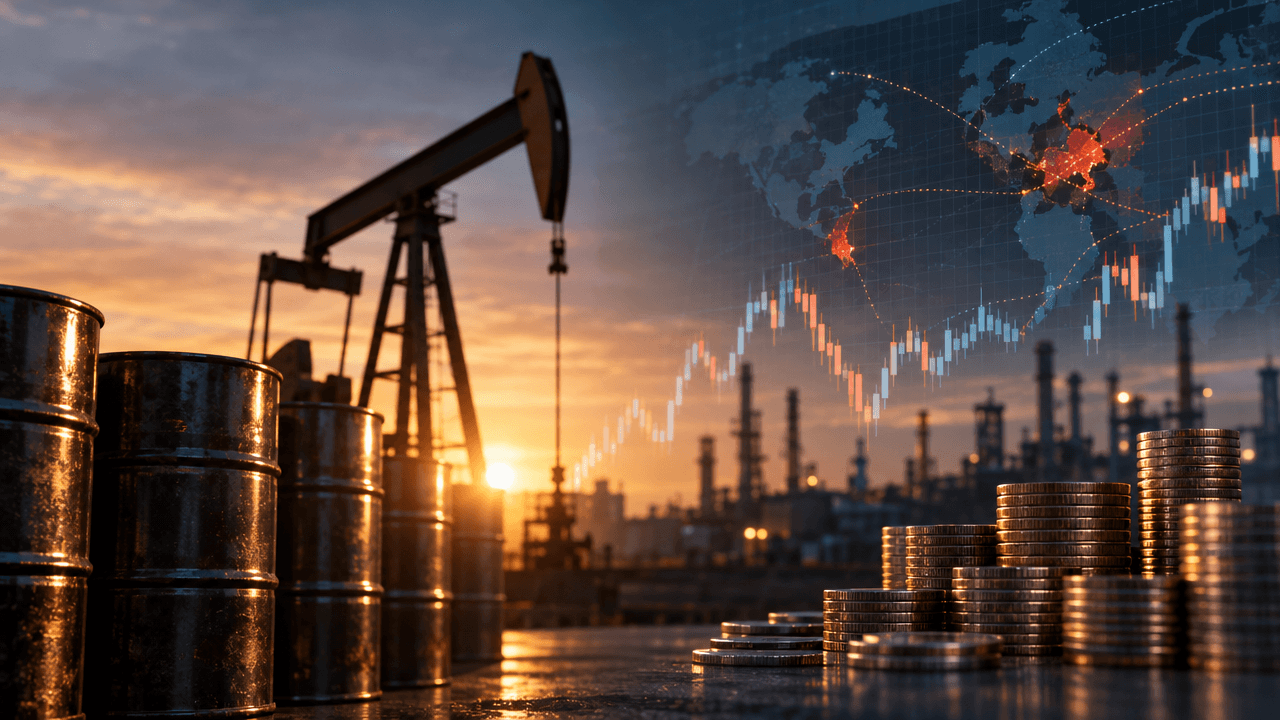
Oil has become the market’s pressure point once again. Developments involving Ukraine, the Middle East and global production are forcing traders to balance two competing possibilities: supply could gradually recover, or a fresh disruption could send prices sharply higher. Brent crude futures recently climbed to approximately $107 per barrel, up 13% since the start of September, as attacks on energy infrastructure and uncertainty around shipping routes kept a geopolitical risk premium embedded in prices. [2]
For financial markets, the concern extends well beyond the energy sector. Higher oil prices can lift transportation, manufacturing and household energy costs, making it more difficult for central banks to bring inflation back to target. At the same time, rising input costs can reduce corporate profits, weaken consumer spending and pressure equity valuations. The result is an unusually sensitive environment for futures traders, where a single headline can change expectations for oil, interest rates, currencies and risk assets within minutes.
The Geopolitical Risk Premium
Oil prices do not respond only to barrels currently missing from the market. They also reflect the possibility that future supplies may be interrupted. This additional cost is known as the geopolitical risk premium.
Ukraine’s renewed attacks on Russian refineries have raised concerns about the availability of refined products, while continuing uncertainty in the Middle East has focused attention on regional oil infrastructure and tanker traffic. Markets have also watched the Strait of Hormuz, a critical shipping chokepoint where any sustained disruption could affect crude and liquefied natural gas flows. [1][13]
Even when physical supplies continue moving, the threat of disruption can encourage buyers to secure cargoes early. That behavior increases immediate demand and can push prices higher. Airlines, manufacturers and other energy-intensive businesses may also hedge more aggressively, adding further buying pressure to futures contracts.
The opposite is true when diplomatic progress appears credible. Reports of a possible Russia-Ukraine energy ceasefire recently eased fears surrounding Russian refinery and export disruptions, briefly reducing oil’s risk premium. [14] The market reaction illustrates why geopolitical news can matter even before any agreement changes actual production.
Supply Is Improving, But The Market Remains Fragile
The latest data presents a mixed picture. The International Energy Agency reported that global oil supply increased by 2.5 million barrels per day month over month in September, reaching 102.3 million barrels per day. Gulf producers, particularly Saudi Arabia, accounted for much of the increase. The agency expects supply to rise further in 2027 as Middle Eastern exports recover. [2]
That improvement should normally reduce prices. However, oil markets are not judged only by total annual production. Traders also examine inventories, spare capacity, shipping availability and the location of available barrels. A global market can appear adequately supplied while particular regions face immediate shortages.
Inventory drawdowns make that vulnerability more important. Reports indicate that global reserves have been declining by roughly 2.7 million barrels per day and moving toward stress levels. Lower inventories provide less protection against refinery outages, attacks, extreme weather or shipping disruptions. [8]
For futures traders, this creates a market that can remain calm until a new shock arrives. The supply outlook may look better several months ahead, while near-term contracts rise because prompt barrels are scarce. A backwardated futures curve, in which near-term contracts trade above later deliveries, is often consistent with tight immediate supply. [3]
How Oil Feeds Inflation And Interest-rate Expectations
Energy prices affect inflation directly and indirectly. Direct effects appear through gasoline, diesel, heating fuel and utility bills. Indirect effects spread through freight, food production, air travel, packaging and nearly every business that uses transportation or machinery.
This transmission process creates a difficult challenge for central banks. If higher oil prices push headline inflation upward but weaken economic growth, policymakers must decide whether price pressures are temporary or likely to spread into wages and services. A prolonged energy shock could encourage central banks to keep interest rates higher for longer, even as economic activity slows.
That possibility has consequences across futures markets. Interest-rate futures may reduce expectations for near-term policy easing, while bond yields rise as investors demand compensation for greater inflation uncertainty. Equity index futures can come under pressure because higher yields make future corporate earnings less valuable and energy costs threaten profit margins.
Not every sector reacts negatively. Energy producers, refiners and some commodity-linked currencies may benefit from higher prices. However, broad market risk appetite often deteriorates when oil rises because energy is a cost for most households and companies.
A Practical Framework For Simfi Traders
SimFi traders should avoid treating every oil headline as an automatic buy or sell signal. A more reliable approach is to evaluate four questions.
First, is the news affecting physical supply, or is it only changing expectations? A confirmed export interruption usually carries more weight than an unverified threat.
Second, which part of the futures curve is moving? A sharp rise in front-month contracts suggests immediate supply stress, while gains farther out may indicate a more persistent shift in expectations.
Third, are inflation-sensitive markets confirming the oil move? Watch interest-rate futures, bond yields, the U.S. dollar and equity index futures. When several markets react in the same direction, the headline may have broader significance.
Fourth, has volatility changed? Wider ranges and faster price swings require smaller position sizes, clearer stop-loss rules and less leverage. Traders should also account for overnight gaps, especially when geopolitical developments occur outside major market hours.
Conclusion
Oil and geopolitical risk are keeping inflation expectations and futures markets on edge because the market is balancing improving supply against unusually fragile conditions. A ceasefire, restored shipping route or additional production could ease prices quickly. Conversely, another attack on energy infrastructure or a serious disruption in a major chokepoint could send crude higher and revive concerns about inflation and interest rates.
The most valuable response is not to predict every headline. It is to understand the transmission process from geopolitics to oil, from oil to inflation, and from inflation to financial conditions. Traders who monitor that chain, respect volatility and manage exposure carefully are better prepared for both sudden shocks and gradual market normalization.