
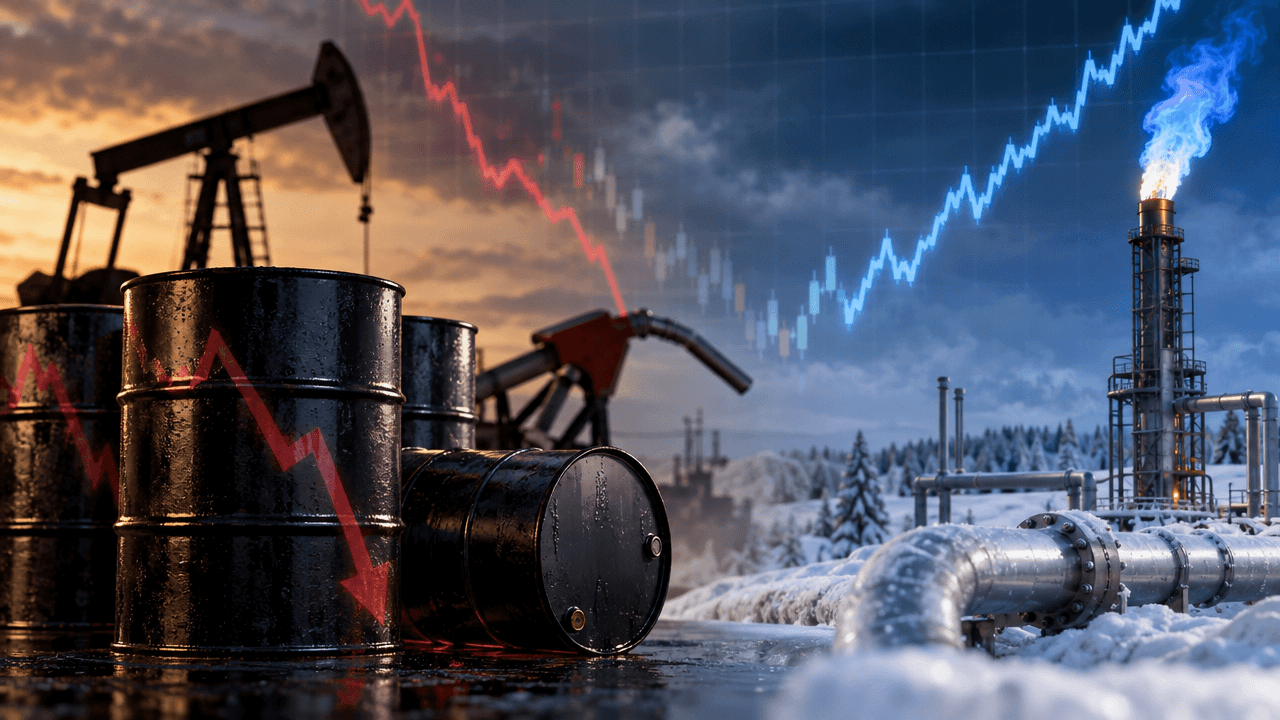
Oil futures remain under pressure while natural gas rallies, creating one of the clearest divergences in the energy market this month. WTI and Brent crude were on track for weekly losses of approximately 2.5% to 2.9%, while gasoline futures declined more sharply. At the same time, U.S. natural gas futures gained about 8%, supported by colder-weather expectations, stronger liquefied natural gas demand, and changing supply outlooks. [1][4]
This split matters because it shows that “energy prices” are not moving as one unified market. Crude oil, gasoline, and natural gas respond to different balances of supply, demand, weather, inventories, transportation capacity, and geopolitical risk. For traders, understanding those distinctions is more useful than simply assuming that a rally in one energy contract should lift the entire sector.
Crude Oil Faces A Supply-and-demand Test
The recent weakness in WTI and Brent reflects growing concern that available oil supply could outpace demand. Rising exports from the Middle East and signs of improving supply conditions have encouraged traders to reduce the geopolitical premium embedded in crude prices. Brent and WTI have also faced pressure from expectations that the global market could move toward a surplus. [12][15]
That shift in sentiment can be powerful. When traders believe disruption risks are rising, they may bid crude higher even before physical supplies are affected. When those risks appear to ease, prices can fall as speculative positions are reduced. This can produce sharp moves, particularly after a sustained rally.
U.S. inventory data has added to the bearish tone. Larger-than-expected crude stocks, combined with rising gasoline and distillate inventories, have suggested that refiners and consumers may not be absorbing supply as quickly as previously expected. [7] For oil traders, the key question is whether inventory growth represents temporary seasonal weakness or the beginning of a broader demand slowdown.
Refined Fuels Signal Weaker Consumption
Gasoline futures have performed worse than crude, an important warning for the downstream portion of the energy market. Refined products often provide a more direct view of near-term consumption because they reflect both the cost of crude and the demand for fuel from motorists, businesses, and other end users.
When gasoline prices decline faster than crude, refining margins can come under pressure. Refiners may respond by reducing operating rates, delaying maintenance decisions, or purchasing less crude. That feedback loop can place additional pressure on oil prices if it persists.
Seasonality is also relevant. Gasoline demand typically changes as driving patterns shift after the summer travel season. At the same time, traders monitor inventories closely because elevated product stocks can indicate that refiners produced more fuel than the market needed. The recent drop in gasoline futures therefore points to more than a simple price correction; it suggests the market is questioning the strength of fuel demand.
Natural Gas Moves To Its Own Rhythm
Natural gas has moved in the opposite direction, with futures gaining roughly 8% during the week. Colder weather forecasts have increased expectations for residential and commercial heating demand, while strong LNG exports have provided another source of support. [7][9]
Weather is one of the most important short-term drivers of natural gas. A relatively small change in temperature forecasts can significantly alter estimates for heating consumption and storage withdrawals. This makes natural gas more sensitive to forecast revisions than crude oil, where demand is influenced by broader economic and transportation trends.
The LNG market adds a structural layer to the outlook. Export terminals draw gas from the U.S. domestic system, connecting Henry Hub prices more closely to global demand. When export demand is strong, domestic supplies can tighten even if production remains healthy.
However, the rally should be viewed in context. The U.S. Energy Information Administration expects Henry Hub spot prices to average $2.87 per million British thermal units from November through March, 16% below its previous forecast for that period. The agency also expects more natural gas in storage during the winter. [5][14] This means the recent jump may reflect a change in short-term expectations rather than a confirmed long-term supply shortage.
What Traders Should Watch Next
The next stage of the move will depend on whether the underlying fundamentals confirm the price action. In crude oil, traders should monitor weekly U.S. inventory reports, refinery utilization, global export flows, and the spread between front-month and later-dated futures contracts.
A market in contango, where near-term prices trade below later contracts, can signal comfortable supply and weaker immediate demand. Backwardation, where near-term prices are higher, often indicates tighter prompt conditions. These structures can provide information that is not visible from the headline price alone.
For natural gas, weather models and storage data deserve priority. Traders should also follow LNG feed-gas demand and production trends. A colder forecast can support prices quickly, but that rally may fade if temperatures moderate or storage remains comfortably above seasonal norms.
SimFi traders can use this divergence as a practical exercise in risk management. Rather than taking a broad bullish or bearish position on energy, compare each market’s specific drivers. A crude oil trade may depend on inventories and geopolitical developments, while a natural gas trade may depend primarily on weather. Position size, stop placement, and contract volatility should reflect those differences.
The Bigger Market Lesson
The current energy split demonstrates why correlation-based trading can be dangerous. Oil weakness does not automatically mean natural gas weakness, and a natural gas rally does not necessarily confirm improving demand across the entire energy complex.
For now, crude oil and gasoline remain vulnerable to supply concerns and softer refined-fuel pricing, while natural gas benefits from weather and LNG momentum. The most important takeaway is not simply which contract is rising or falling. It is whether traders can identify the fundamental story behind each move and adjust their strategy accordingly.
In a market shaped by shifting inventories, seasonal demand, weather forecasts, and geopolitical headlines, flexibility is often more valuable than conviction. Tracking the relationships between crude, refined products, and natural gas can help traders distinguish a temporary price reaction from a more durable trend.