
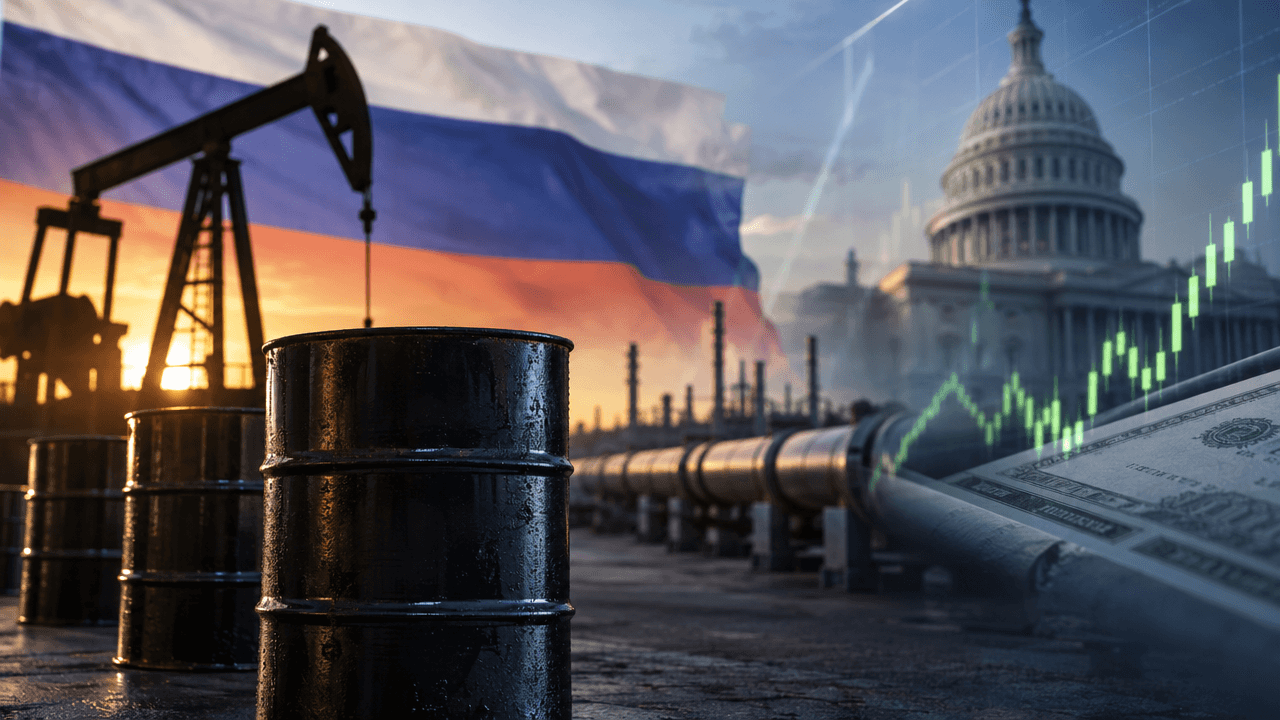
Oil prices fell on Monday as traders reassessed the global supply outlook after the United States waived certain sanctions, restrictions, and tariffs affecting Russian energy. December Brent crude declined roughly 1.8% to about $107.86 a barrel, while West Texas Intermediate futures dropped approximately 1.7% to $97.37. [2]
The decline came after oil had climbed to multi-month highs, making the market especially sensitive to any development that could add barrels to global supply. Although the U.S. action does not remove every existing restriction on Russia, it reduced concerns that additional measures would further limit Russian fuel exports. The immediate reaction was lower crude prices, firmer Treasury prices, and higher U.S. equity futures.
Why The Sanctions Waiver Matters
Russia remains one of the world’s most important energy producers, so even a partial change in its ability to sell fuel can influence global price expectations. The U.S. executive order temporarily waived certain sanctions and tariffs introduced under new legislation targeting Russia. The measure potentially allows more Russian energy products to reach international buyers and reduces the risk of a sudden supply shortfall. [2]
Oil prices reflect expectations as much as current physical supply. Traders do not need to see a large increase in shipments immediately to adjust prices. If they believe more Russian crude or refined products may become available in coming weeks, the expected balance between supply and demand changes today.
That is why the market response was swift. Brent fell by nearly 2% in several trading updates, while WTI also moved lower, even though Middle Eastern supply disruptions continued to create significant uncertainty. [4]
Supply Relief Versus Geopolitical Risk
The sanctions waiver is constructive for supply, but it does not eliminate the risks supporting oil prices. Ongoing disruptions in the Middle East remain a concern for traders, particularly because the region is central to global crude production and shipping routes. Any escalation could offset the effect of additional Russian exports.
This creates a two-sided market. On one side, a greater flow of Russian energy could ease tightness and place downward pressure on crude. On the other, disruptions to Middle Eastern production or transportation could remove supply much faster than Russia can replace it.
The result may be increased volatility rather than a straight-line decline. Traders must evaluate whether the sanctions change represents a lasting improvement in supply conditions or merely a temporary policy adjustment. The answer will depend on the duration of the waiver, the response of buyers and sellers, and whether Russian shipments actually increase.
Why Lower Oil Prices Supported Treasuries
The decline in crude prices also affected expectations for inflation and interest rates. Energy is a major component of household and business costs. When oil falls, investors may expect less pressure on gasoline, transportation, manufacturing, and other prices.
That can support Treasury securities because lower expected inflation may reduce the need for interest rates to remain elevated. Bond prices and yields move in opposite directions, so buying pressure in Treasuries can push yields lower.
The relationship is not automatic. Falling oil prices can also signal weaker global demand, which may create concerns about economic growth. However, in this episode, the market appears to have focused more heavily on the possibility that increased Russian energy availability could ease inflationary pressure.
Equity Futures And Market Transmission
U.S. equity futures moved higher alongside the decline in oil. Lower energy costs can benefit industries that consume significant amounts of fuel, including transportation, logistics, chemicals, airlines, and manufacturing.
Cheaper oil may also improve consumer purchasing power if it eventually translates into lower prices at the pump. For companies, reduced fuel and operating costs can support profit margins. These effects help explain why equity markets often welcome moderate oil-price declines.
Energy producers can be an exception. Lower crude prices may reduce expected revenue for exploration and production companies, oilfield-service firms, and other businesses tied directly to commodity prices. Investors therefore need to distinguish between the broad market effect and the impact on individual sectors.
What Traders Should Watch Next
The first priority is whether Russian exports increase in practice. Announcements can move markets, but physical flows, tanker activity, refinery operations, and purchasing behavior will determine whether the supply effect lasts.
Traders should also monitor the details of the waiver. Its scope, expiration date, and treatment of existing sanctions will determine how much additional energy can reach the market. Reports indicate that the action does not affect all earlier sanctions, meaning restrictions remain part of the market’s risk calculation. [2]
Middle Eastern developments are equally important. A new disruption could quickly reverse the initial price decline, particularly while Brent remains above $100 a barrel in current trading reports. [3]
For SimFi traders, this event offers a useful lesson: analyze the first move, but do not assume it is the final trend. A sanctions waiver can create an immediate bearish impulse for oil, while geopolitical risk, technical levels, inventory data, and central-bank expectations continue influencing prices.
Conclusion
Oil prices fell because markets interpreted the U.S. decision to ease certain Russia-related energy restrictions as a potential increase in global fuel supply. Brent and WTI both declined roughly 1.5% to 1.8% in the reported session, while Treasuries and U.S. equity futures benefited from lower inflation concerns and reduced energy-cost pressure. [2]
The broader outlook remains uncertain. The waiver may provide meaningful supply relief, but it does not remove existing sanctions or resolve Middle Eastern risks. The most informed approach is to track policy details, physical export data, geopolitical developments, and cross-market signals together.
For traders, the key takeaway is simple: when energy policy changes, oil is only the first market to react. Bonds, equities, currencies, inflation expectations, and sector performance can all shift as investors reassess the consequences.