
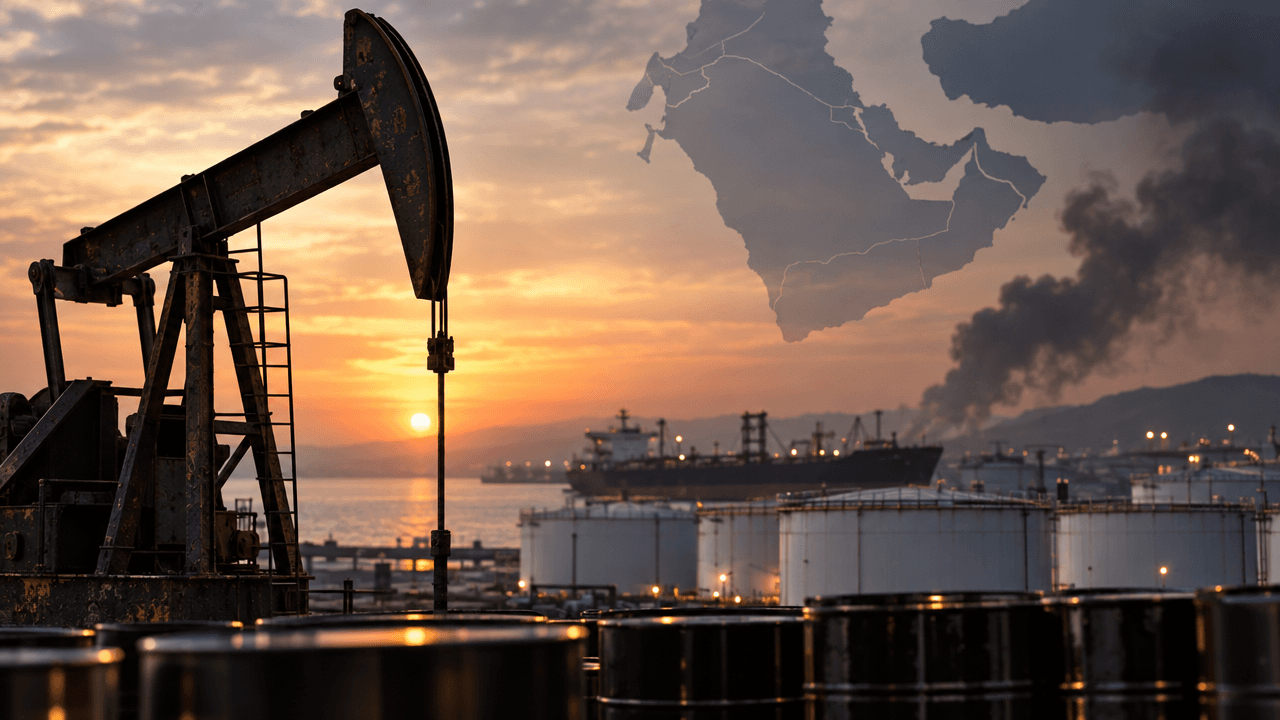
Oil remains elevated as traders weigh two opposing forces: renewed security threats in the Middle East and growing evidence that global crude supply may be more comfortable than previously expected. Brent crude recently held near $92.60 a barrel, while U.S. West Texas Intermediate traded around $83.70. Fresh attacks and tanker disruptions have revived fears that a wider conflict could interrupt production or shipping through critical export routes. [4][13]
The price action shows how quickly geopolitical risk can return to the oil market. Even when physical supplies continue moving, the possibility of disruption can add a risk premium to crude futures. For traders, the central question is whether security concerns will develop into an actual supply interruption—or remain a temporary source of volatility.
What Is Supporting Oil Prices
Reports of Houthi missile attacks targeting Riyadh have increased concern about the safety of Saudi Arabia’s infrastructure and energy network. At the same time, reported tanker incidents and possible damage near the Strait of Hormuz have placed maritime security back at the center of market discussions. [7][8]
The Strait of Hormuz is one of the world’s most important energy chokepoints. A significant share of global oil exports passes through the waterway, making even limited disruption capable of affecting freight costs, delivery schedules, insurance premiums, and crude prices.
Markets do not need to lose millions of barrels immediately for prices to rise. Traders often react first to the possibility that supply could be delayed or rerouted. Refiners and commercial buyers may also seek additional barrels as a precaution, reinforcing short-term demand.
This helps explain why Brent remains close to $93 despite signs that the market may be heading toward a surplus. Security concerns are supporting prices even as broader fundamentals limit the upside.
Why The Upside Is Still Limited
The latest rally should not be interpreted as proof that the oil market is facing an immediate shortage. Crude shipments through the Strait of Hormuz have reportedly returned to roughly pre-conflict levels, reducing the evidence of a sustained physical disruption. Meanwhile, expectations of a supply surplus have weighed on both benchmarks. [1][13]
U.S. inventories are another factor for traders to monitor. Commercial crude stocks increased by 3.4 million barrels to 417.8 million barrels in the week ending November 13, a sign that domestic supply conditions may be loosening. [2]
A surplus outlook can cap rallies because buyers have less incentive to pay a premium when production and inventories are ample. If exports remain stable and non-Middle Eastern producers continue supplying the market, geopolitical gains may fade as the immediate threat becomes less urgent.
This tension has already appeared in weekly performance. Although crude prices rose during the latest session, Brent was on track for a weekly decline of nearly 4%, while the December WTI contract was set for a drop of approximately 5%. [1][13]
In other words, the market is pricing elevated risk without fully abandoning its expectation of abundant supply.
What Traders Should Watch Next
The most important development will be whether attacks expand from isolated incidents into a sustained threat to oil production, pipelines, ports, or shipping lanes. A single security event can create volatility, but repeated disruptions are more likely to produce a lasting change in the physical market.
Traders should also follow vessel traffic through the Strait of Hormuz. If shipments continue near normal levels, the market may gradually remove some of its geopolitical premium. If tankers are delayed, rerouted, or damaged, prices could respond sharply even before official supply data confirms a decline.
Inventory reports will remain equally important. Rising U.S. crude stocks would reinforce the surplus narrative and potentially pressure WTI. Drawdowns, particularly if accompanied by stronger refinery demand, could provide additional support.
The relationship between Brent and WTI also deserves attention. Brent is more directly exposed to international supply and shipping risks, while WTI reflects U.S. production, inventories, and domestic logistics. A widening spread between the benchmarks could signal that geopolitical risk is affecting global barrels more than U.S. supply.
Practical Lessons For Simfi Traders
For SimFi traders, the current market is a useful example of why price direction and market risk are not the same thing. Oil can rise on geopolitical headlines while still carrying a bearish medium-term outlook based on inventories and projected production.
Avoid treating every headline as a complete trend reversal. Instead, separate the news into three questions: Has physical supply been interrupted? Is the disruption likely to last? Are inventories confirming scarcity or abundance?
Position sizing is especially important in event-driven markets. Crude can move quickly when headlines involve energy infrastructure or major shipping routes. Traders using leverage should define risk before entering a position and avoid placing stops so tightly that normal volatility triggers an unnecessary exit.
It is also useful to watch confirmation across multiple markets. A durable supply shock may appear through stronger Brent prices, higher freight rates, widening Brent-WTI spreads, and increased volatility. If crude rises but inventories remain comfortable and shipping flows normalize, the move may be more headline-driven than fundamentally supported.
The Bigger Market Picture
Oil’s current strength reflects a contest between geopolitical risk and surplus expectations. Middle East attacks and maritime threats are keeping buyers cautious, but normalizing export flows and higher U.S. inventories are preventing a straightforward price surge.
The next major move will depend on which force gains control. Escalation affecting production or shipping could push Brent decisively above recent levels. A period of calmer markets, stable exports, and continued inventory growth could send prices lower as the risk premium unwinds.
For traders, the key takeaway is to remain flexible. Elevated oil prices do not guarantee a lasting bull market, just as a projected surplus does not eliminate the danger of sudden rallies. In a market shaped by both security headlines and physical fundamentals, disciplined risk management is as important as correctly reading the direction of prices.