
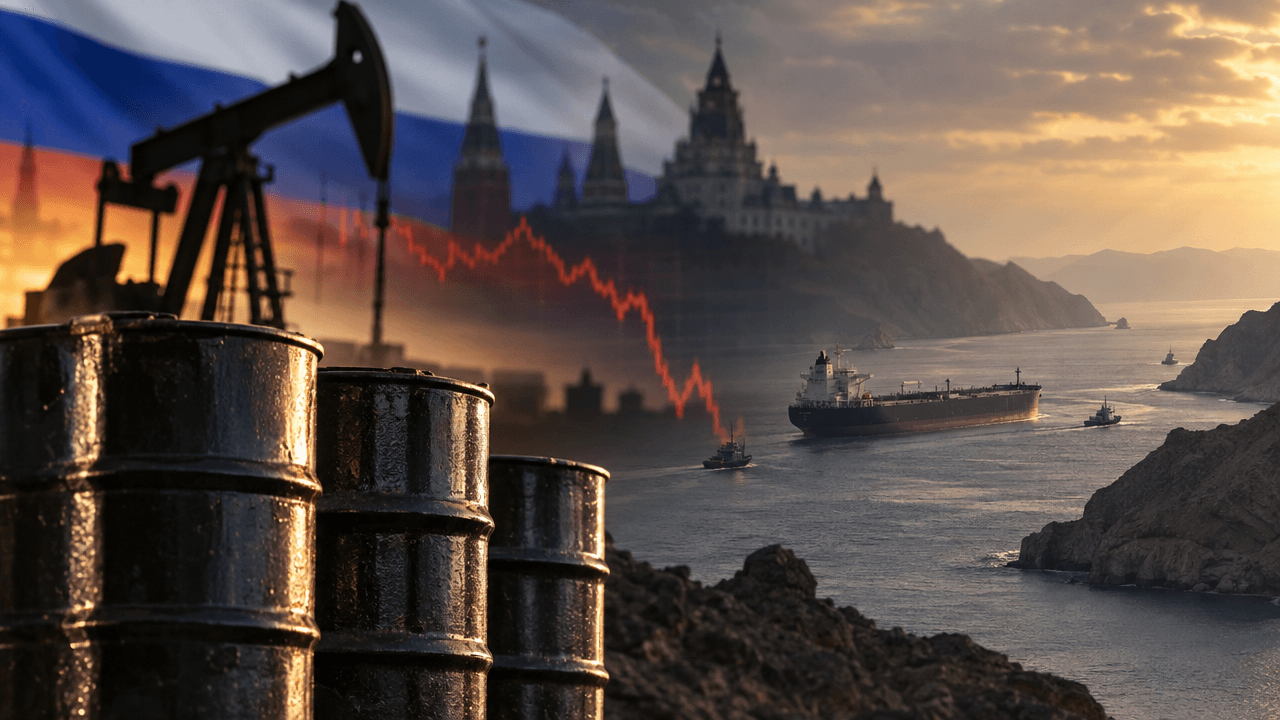
Oil futures slipped as traders weighed two opposing forces: the prospect of more Russian energy reaching global markets and renewed danger around the Strait of Hormuz. The market reaction shows how quickly crude prices can change when policy decisions improve supply expectations while geopolitical risks threaten to disrupt physical flows. Reports said the United States waived key sanctions, restrictions, and tariffs targeting Russian energy, while an oil tanker explosion linked by Iranian authorities to a naval mine kept the threat of a wider supply shock firmly in focus. [2][7]
Russia Sanctions Relief Eases Supply Pressure
The immediate bearish influence came from Washington’s decision to waive measures that could have sharply restricted Russia’s energy exports and penalized major buyers. The legislation reportedly allowed duties of up to 100% on buyers of Russian oil and gas, creating the possibility of reduced trade, higher shipping costs, and a further tightening of global supply. By suspending those measures, the administration reduced the risk of an abrupt disruption to Russian crude flows. [7][10]
For oil traders, the significance extends beyond Russia itself. Russian barrels are already deeply embedded in the global energy system, even when they move through complex shipping routes and intermediaries. Sanctions relief can expand the number of available buyers, vessels, insurers, and financial channels involved in those transactions.
That matters because oil prices reflect expected availability, not simply current production. If traders believe more Russian crude and refined products can move efficiently, they may price in fewer supply shortages over the coming weeks. The result can be lower futures prices even when another region is experiencing a serious security event.
Reports earlier in the week showed Brent crude falling more than 2%, to approximately $103.75 per barrel, as potential sanctions relief offset concerns over disruptions near Hormuz. [5] The latest waiver strengthened that same market narrative: additional Russian supply may help compensate for barrels threatened elsewhere.
Hormuz Risk Keeps The Market On Edge
The bearish effect of sanctions relief was limited by renewed concern over the Strait of Hormuz, one of the world’s most important energy chokepoints. Iranian authorities said a supertanker carrying more than two million barrels of crude struck a naval mine and caught fire while attempting to pass through the strait. [2][3]
The incident’s precise circumstances remain disputed. Reports have differed over whether vessels were hit by mines or projectiles, and some claims have not been independently confirmed. That uncertainty is itself important for markets because traders must evaluate not only the immediate loss of cargo but also the possibility of repeated attacks, tighter security controls, or a prolonged interruption to shipping.
Hormuz is especially sensitive because a large share of globally traded oil traditionally passes through the waterway. Even if only one tanker is damaged, the market may react to the possibility that shipowners will avoid the route, insurers will increase premiums, and vessels will face longer journeys around alternative waterways.
Those costs can lift the delivered price of crude without any immediate decline in global production. A barrel may still exist in the ground, but it becomes more expensive and difficult to transport to the refinery that needs it.
Why Oil Prices Can Fall During A Supply Scare
At first glance, lower oil prices appear inconsistent with a tanker explosion and ongoing shipping risks. The explanation lies in the difference between a confirmed supply outage and a perceived future threat.
A damaged tanker removes some cargo from the market, but it does not necessarily eliminate a large volume of global production. By contrast, sanctions relief can influence the broader flow of oil by improving access to shipping and commercial infrastructure. Traders may therefore judge the Russian policy change to have a wider, more immediate effect than the individual maritime incident.
Positioning also matters. If investors had already bought crude futures in anticipation of escalating geopolitical risk, a policy development that reduces one source of supply pressure can prompt profit-taking. Futures prices may decline even while physical-market participants continue paying more for freight, insurance, or nearby cargoes.
The futures curve can provide additional clues. A market in backwardation, where near-term prices exceed later prices, often signals immediate supply tightness. A flatter curve may suggest that traders expect disruption risks to ease or that additional supply will become available. Traders should examine the entire curve rather than focusing only on the headline price.
Implications For Inflation And Traders
Oil’s competing signals are important well beyond energy markets. Crude prices influence gasoline, diesel, jet fuel, shipping expenses, and the cost of producing and transporting goods. If Hormuz disruptions worsen, higher fuel costs could reinforce inflation expectations and complicate decisions for central banks.
If Russian exports normalize instead, the reduction in energy pressure could support lower inflation expectations. That would potentially improve the outlook for consumers and energy-intensive businesses, although the effect would depend on how long the sanctions waiver remains in place and whether it changes actual physical shipments.
For traders, the key lesson is to separate policy headlines from confirmed supply data. Monitor export volumes, tanker movements, freight rates, insurance costs, inventory reports, and refinery demand. Watch Brent and WTI spreads, since regional logistics can cause them to move differently. Also track the dollar and interest-rate expectations, both of which can influence commodity prices independently of supply news.
Risk management is particularly important in this environment. Geopolitical headlines can produce large moves outside normal trading hours, while futures leverage can magnify both gains and losses. Smaller position sizes, predefined exit levels, and a clear understanding of contract specifications are more valuable than attempting to predict every headline.
Conclusion
Oil futures moved lower because sanctions relief for Russian energy reduced expectations of a broad supply squeeze, outweighing—at least temporarily—the danger associated with a tanker explosion near the Strait of Hormuz. The decline does not mean geopolitical risk has disappeared. It reflects the market’s current judgment that expanded Russian trade may provide more immediate support to supply than the reported maritime incident removes.
The outlook remains highly sensitive to confirmation. Additional tanker attacks, a prolonged closure of Hormuz, or tighter enforcement of sanctions could quickly reverse the move. Conversely, sustained Russian exports and calmer shipping conditions could keep pressure on prices. For market participants, the most useful approach is to follow the interaction between policy, physical flows, and transportation costs rather than treating any single headline as the complete story.