
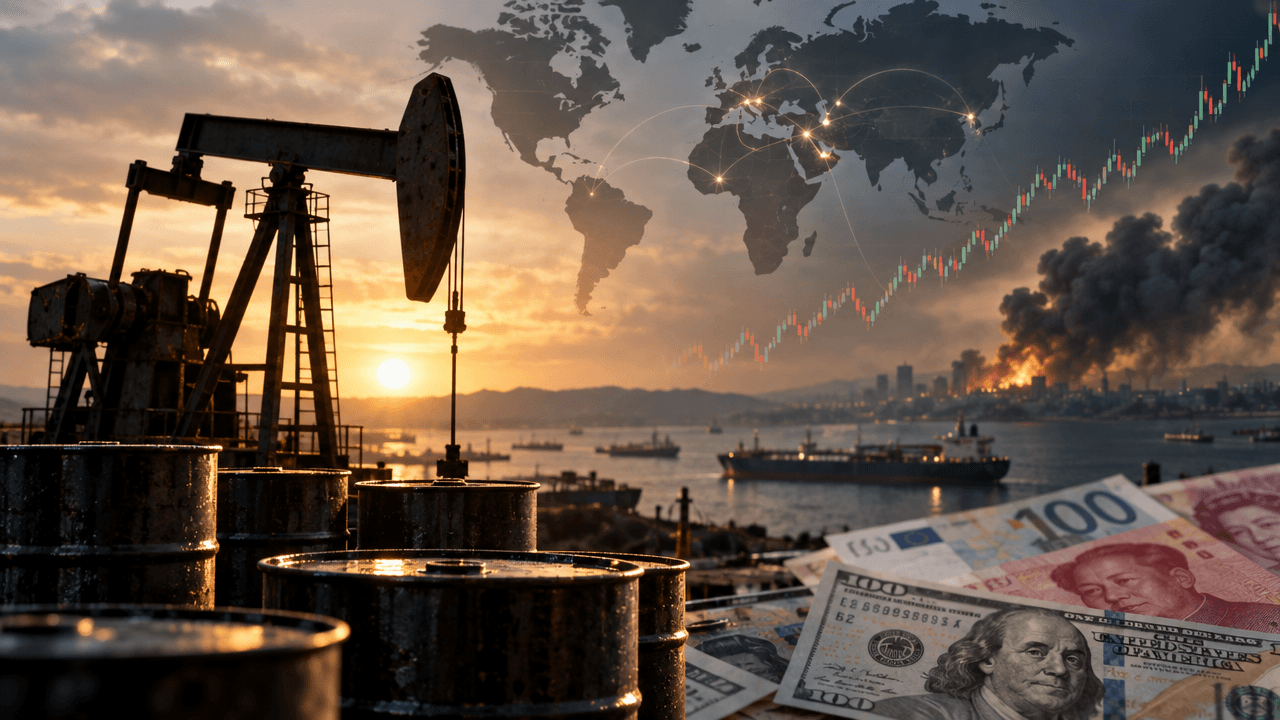
Crude oil markets are being driven less by ordinary supply-and-demand data than by the possibility that supply routes could suddenly become unavailable. Brent crude recently settled at $116.72 per barrel, its highest close in nearly six months, after attacks in Saudi Arabia and an oil spill reported by the United Arab Emirates intensified concerns about disruption to Middle Eastern energy flows. [1]
That surge highlights why oil-supply risk keeps crude futures highly volatile. Prices can rise sharply when traders anticipate a shortage, even before a meaningful volume of oil is actually removed from the market. Equally, prices can fall quickly when attacks ease, shipping resumes or governments announce emergency measures. For traders, the central challenge is distinguishing a temporary risk premium from a lasting change in physical supply.
SUPPLY RISK IS NOW THE MARKET’S PRIMARY PRICE DRIVER
Oil prices normally respond to inventories, production targets, refinery demand and economic growth. Geopolitical risk, however, can overwhelm these fundamentals. When energy infrastructure, tankers or export routes come under threat, market participants immediately reassess how much crude can reach refineries and how reliably it can arrive.
The Strait of Hormuz is especially important because it connects the Persian Gulf with the Gulf of Oman and offers limited alternative export routes for several producers. Any prolonged disruption could reduce available supply, increase shipping costs and amplify price volatility. [12]
This creates a risk premium: the additional amount traders are willing to pay for oil because a future disruption is possible. The premium can remain elevated even while shipments continue, as recent market action suggests. Oil prices staying near multi-month highs despite a recovery in some Gulf flows indicates that traders are pricing uncertainty, not simply current barrels. [7]
The result is a market that can react violently to headlines. A new attack, tanker incident or warning about export infrastructure may trigger an immediate rally. Conversely, evidence that shipping lanes are secure can produce a rapid pullback as traders unwind defensive positions.
Why Futures Are Moving So Sharply
Crude futures reflect expectations about future availability rather than only today’s production. This makes them particularly sensitive to changes in perceived risk. When traders fear that supply could tighten, nearby futures often rise faster than longer-dated contracts. This pattern is known as backwardation and can signal urgency for physical barrels.
If the market begins to believe that disruption will last for months, longer-dated contracts also move higher. Recent pricing has shown that concern extending beyond immediate delivery periods: December 2027 crude contracts have risen more than 13% since early September, reaching approximately $86 per barrel. [6]
Options markets can intensify the move. Businesses that depend on fuel may buy call options to protect against higher prices, while investors may purchase volatility protection. As demand for this insurance increases, implied volatility rises. Producers and consumers then adjust their hedges, creating additional buying or selling pressure.
This is why crude can remain unstable even when official production data changes very little. Futures markets are continuously recalculating the probability, timing and duration of a potential supply shock.
The Macroeconomic Consequences
Higher oil prices affect far more than gasoline. Energy is an input into transportation, manufacturing, agriculture, chemicals and logistics. If crude remains expensive, companies may pass higher costs to consumers, making inflation harder to control.
The economic risk is particularly uncomfortable for central banks. A supply-driven oil rally can lift headline inflation while weakening consumer purchasing power and business confidence. Policymakers may face pressure to keep interest rates higher even as economic growth slows. That combination is often described as stagflation.
Currencies also respond. Oil-importing countries may see their trade balances deteriorate as more money flows abroad to pay for energy. Their currencies can weaken, increasing the domestic cost of imported fuel and creating another source of inflation. Oil exporters may receive stronger foreign-currency revenues, potentially supporting their currencies and government finances.
Equity markets can feel the effect through several channels. Energy producers may benefit from higher prices, while airlines, transportation companies, manufacturers and consumer businesses may face margin pressure. Bond yields can rise if investors expect inflation to persist, adding to financing costs across the economy.
What Traders Should Watch Next
The most useful approach is to monitor both physical-market evidence and geopolitical developments. Headlines matter, but they should be compared with measurable changes in supply.
First, watch tanker traffic and loading activity around major export terminals. A genuine disruption is more significant when it affects actual shipments rather than only threatened infrastructure. Second, follow inventory data. Falling commercial inventories can confirm that the market is absorbing a real supply shortfall, while stable or rising inventories may suggest that the initial fear is being overstated.
Third, monitor the futures curve. A sharp rise in nearby contracts with limited movement farther out may indicate immediate logistical stress. A broad rally across the curve suggests that traders expect a more persistent change in supply or demand.
Finally, risk management is essential. Volatility can make an apparently attractive trade move against a position within minutes. Traders should define risk before entering, avoid excessive leverage and consider position sizes that remain manageable during headline-driven price gaps. Scenario planning can help: what happens if exports are uninterrupted, partially restricted or severely disrupted?
Conclusion
Oil-supply risk has turned crude futures into a market of probabilities. Brent’s move above $116 demonstrates how quickly geopolitical threats can reshape prices, while the subsequent pullbacks show that uncertainty cuts both ways. [2]
The key lesson is that traders should not focus only on the latest price. They should evaluate whether the underlying event is affecting physical barrels, how long the disruption could last and whether inflation, currencies and economic growth are beginning to respond. Until the security of Gulf infrastructure and export routes becomes clearer, crude is likely to remain highly sensitive to every new development.