
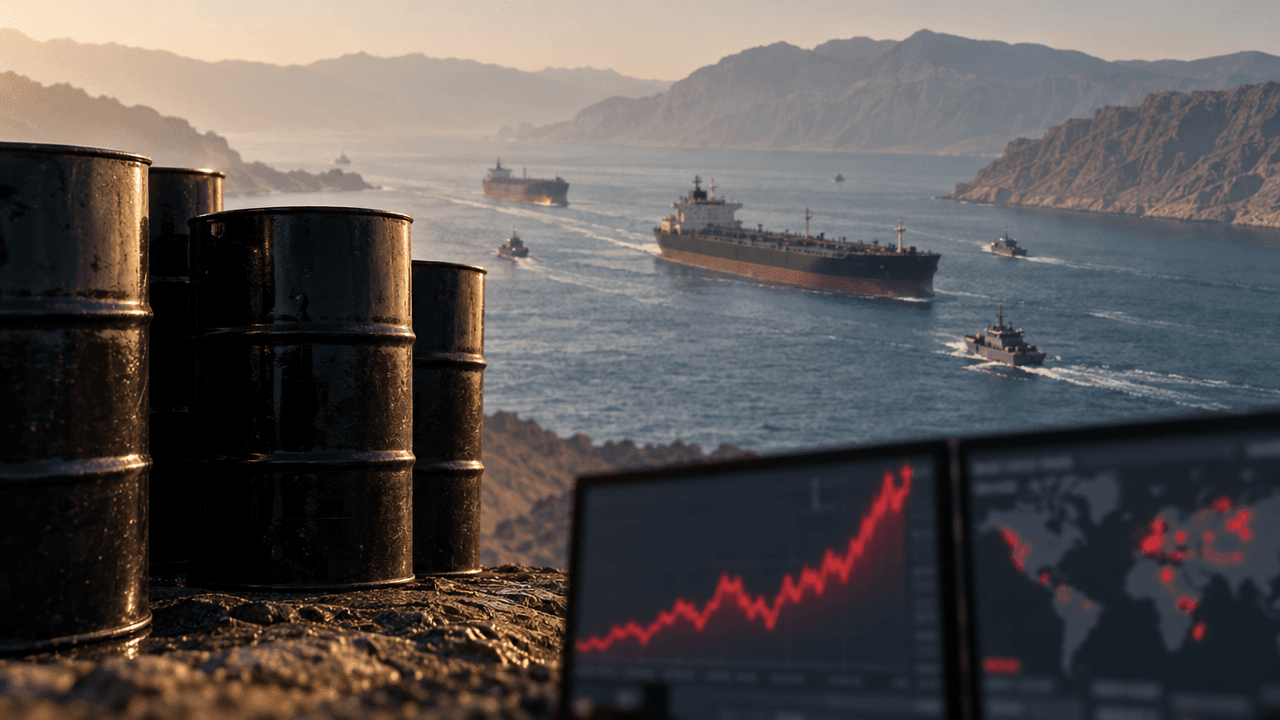
Oil prices are rising as attacks on commercial vessels near the Strait of Hormuz intensify concerns about the security of one of the world’s most important energy corridors. Brent crude moved above $106 a barrel in recent trading, while West Texas Intermediate also advanced as traders priced in a larger geopolitical and supply-risk premium. [4]
The market reaction is not based only on the barrels already lost. It reflects the possibility that shipping disruptions could become more severe, insurance costs could rise further, and vessels could avoid the waterway altogether. For traders, the central question is whether the attacks remain isolated incidents or develop into a prolonged threat to energy flows.
Why The Strait Of Hormuz Matters
The Strait of Hormuz connects the Persian Gulf with the Gulf of Oman and the wider Arabian Sea. It is a narrow maritime passage used by major oil and gas exporters, including Saudi Arabia, Iraq, Kuwait, the United Arab Emirates, Qatar and Iran.
Before the current conflict, approximately one-fifth of global oil and fuel shipments passed through the strait. Recent flows have fallen sharply as vessel operators reassess the risks. Kpler data showed that about 12.6 million barrels per day moved through the waterway on October 13, below the roughly 15 million barrels reported at the end of September. [1]
That reduction is significant because oil markets are highly sensitive to disruptions in available supply. Even when physical inventories remain adequate, the prospect of fewer future deliveries can lift futures prices immediately.
The latest attacks have added to that uncertainty. Maritime authorities and security sources reported a sharp increase in incidents involving tankers and other commercial ships. Twelve vessels were attacked between October 5 and October 11, while separate reporting identified multiple additional incidents in the following days. [1]
The Risk Premium Behind The Price Move
Crude prices include more than the immediate balance between supply and demand. They also incorporate a risk premium: an additional amount buyers are willing to pay because future supply has become less certain.
Attacks near a major shipping chokepoint can increase this premium in several ways. Tanker owners may delay voyages, reroute ships, or demand higher compensation for operating in dangerous waters. Insurers can raise war-risk premiums, increasing the cost of transporting each cargo. Argus reported that additional war-risk charges and elevated fuel costs were already discouraging some vessels from operating in the region. [12]
If fewer tankers are willing to sail, exporters may struggle to move cargo even when crude remains available at the loading terminal. This creates a difference between oil that exists physically and oil that can reach refiners on schedule.
The market response can therefore be swift. On October 14, Brent futures gained about 1% and briefly moved above $107 a barrel, while WTI also climbed. [4] Prices may continue to fluctuate sharply because traders are balancing supply fears against the possibility that diplomatic or military action could restore safe passage.
What Higher Oil Means For Other Markets
The first major spillover is inflation. Energy is a direct cost for households and businesses, and it also affects transportation, manufacturing, agriculture and logistics. More expensive crude can push up gasoline, diesel, jet fuel and petrochemical prices.
That creates a difficult environment for central banks. If inflation expectations rise, policymakers may be less willing to reduce interest rates, even if higher energy costs weaken consumer spending. Bond futures could therefore come under pressure as traders reduce expectations for near-term rate cuts. Longer-term yields may also rise if markets begin to anticipate persistent inflation.
Currencies are another important channel. Oil-importing economies can face deteriorating trade balances when crude becomes more expensive. That may weigh on their currencies, particularly if they already have weak growth or elevated external financing needs.
Oil exporters may experience the opposite effect. Higher energy revenues can support their fiscal positions and strengthen their currencies, although the benefit depends on whether exports can continue without major disruption.
Equity markets are also likely to diverge. Energy producers and service companies may benefit from higher prices, while airlines, transportation firms, chemical manufacturers and other fuel-intensive businesses face margin pressure.
What Traders Should Watch Next
The most important indicator is the volume of oil and refined products successfully passing through the strait. Price headlines can be dramatic, but sustained supply stress requires a measurable decline in physical flows.
Traders should also monitor tanker rates, war-risk insurance premiums, vessel rerouting and inventory data. A continuing rise in shipping costs would suggest that the disruption is affecting the broader energy system rather than only a handful of individual vessels.
The response of Gulf producers will matter as well. Some exporters may attempt to increase shipments before conditions deteriorate further, while alternative pipelines could provide limited relief. However, pipeline capacity cannot fully replace the scale of traffic normally handled by the Strait of Hormuz.
Finally, market participants should track diplomatic statements and naval-security developments. A credible agreement that improves vessel safety could quickly remove part of the risk premium. Conversely, further attacks, sinking incidents or a formal interruption of shipping could produce a much larger price shock.
Practical Takeaways For Simfi Traders
Treat oil volatility as a cross-market event rather than an isolated commodity move. A bullish crude position may be supported by geopolitical headlines, but the same event can create bearish pressure in airline stocks, bond futures and oil-importing currencies.
Use position sizing carefully. Geopolitical markets can reverse suddenly when new information arrives, and overnight gaps may be larger than normal. Traders should define risk before entering a position instead of relying on a stop-loss placed after volatility accelerates.
Watch confirmation signals. Rising crude accompanied by stronger energy equities and higher inflation expectations indicates broad market conviction. A brief price spike without falling flows or worsening shipping data may be more vulnerable to reversal.
Conclusion
The latest rise in oil prices reflects a growing concern that attacks near the Strait of Hormuz could disrupt not only individual shipments but the reliability of a critical global supply route. The immediate market premium will depend on whether vessel traffic continues to decline, whether insurance and freight costs keep rising, and whether diplomatic efforts can restore confidence.
For traders, the lesson is clear: geopolitical risk travels quickly through energy, inflation, interest rates and currencies. Monitoring those connections can provide a more complete view of the opportunity—and the risk—created by the latest shock to the oil market.