
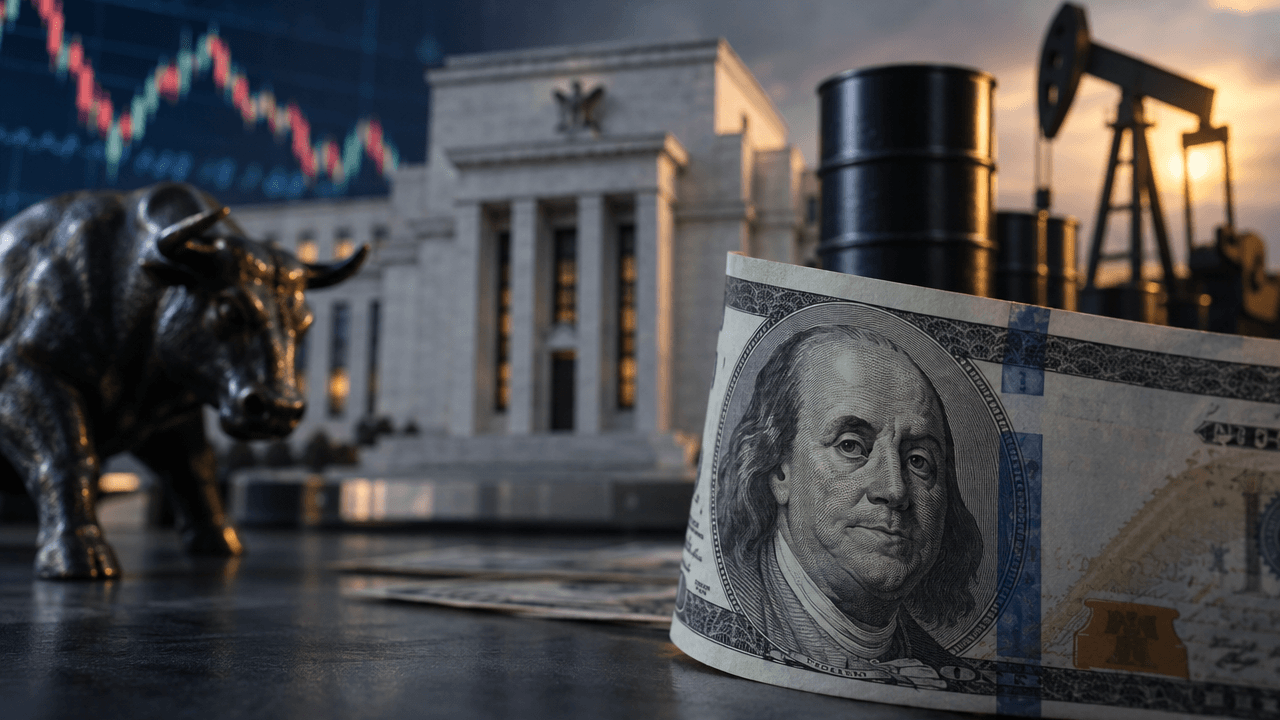
The dollar remains firm as traders recalibrate expectations for Federal Reserve policy, persistent inflation, and the economic impact of elevated oil prices. The US Dollar Index has recently traded near 101.5, a level that reflects continued demand for the greenback even as investors have reduced the probability of an immediate rate increase. The central question for markets is no longer simply whether the Fed will raise rates at its next meeting, but how long interest rates may need to remain restrictive. [1][13]
Fed Policy Expectations Take Center Stage
Markets are increasingly leaning toward a pause at the Federal Reserve’s October 27–28 meeting. Recent pricing indicated roughly an 85% probability that policymakers would leave the federal funds rate unchanged in a range of 3.75% to 4%. That expectation has strengthened as Fed officials have signaled a preference for evaluating additional economic data before making another move. [4][7]
However, a pause does not necessarily mean that the tightening cycle is over. Persistent price pressure, strong economic activity, or renewed energy inflation could keep a later rate increase on the table. Market participants have continued to price meaningful odds of another hike before the end of the year, particularly if upcoming inflation figures remain above the Fed’s comfort zone. [9][12]
For currency traders, this creates a supportive backdrop for the dollar. Even when the Fed does not raise rates immediately, the prospect of higher rates in the future can lift Treasury yields and increase the return available on US-denominated assets. That can encourage global investors to hold dollars, especially when other major economies face weaker growth or more cautious central banks.
Inflation And Oil Create A Complicated Outlook
Energy prices are an important part of the current market narrative. Elevated oil prices raise costs for transportation, manufacturing, and consumers, potentially slowing economic growth while simultaneously pushing inflation higher. This combination makes monetary policy decisions more difficult because the Fed must balance price stability against the risk of weakening demand.
Recent reporting linked oil prices above $100 per barrel with renewed concerns about energy-driven inflation. When oil rises sharply, traders may assume that inflation will remain persistent for longer, increasing the chance that the Fed keeps rates elevated. That expectation can support the dollar by widening the potential interest-rate advantage between the United States and other economies. [3][11]
The relationship is not always straightforward. Higher oil prices can also damage consumer purchasing power and corporate profitability, raising concerns about future US growth. If markets begin to focus more heavily on recession risks, Treasury yields could fall and reduce some of the dollar’s support. As a result, traders are watching both the direction of oil prices and the market’s interpretation of their economic consequences.
Why The Dollar Can Stay Strong During Uncertainty
The dollar’s resilience is also connected to its role as a global reserve currency. During periods of geopolitical tension, volatile financial markets, or uncertainty surrounding economic policy, investors often increase exposure to highly liquid US assets. This safe-haven demand can reinforce the currency even when the outlook for US growth is mixed.
At the same time, the dollar’s recent strength should not be interpreted as a one-way trend. The index has moved below 102 after reaching an 18-month high near 102.6 earlier in October, and it has recently traded close to a three-week low. This shows that the currency remains sensitive to changes in Treasury yields, oil prices, economic data, and Fed communication. [5][11][13]
A firm dollar can also create challenges for multinational US companies. When the dollar appreciates, overseas revenue converts into fewer dollars, while American exports become more expensive for foreign buyers. For traders, this means currency strength can influence equity-sector performance as well as foreign exchange markets.
What Traders Should Watch Next
The next major catalysts are inflation data, labor-market indicators, Treasury yields, and the language used by Federal Reserve officials. The Fed’s preferred inflation gauge will be particularly important because a hotter-than-expected reading could revive expectations for another rate increase. A softer result, by contrast, could encourage traders to price a longer pause and push yields lower.
Traders should also monitor the dollar against individual currencies rather than relying exclusively on the broad index. The euro may respond to differences between US and European monetary policy, while the Japanese yen remains highly sensitive to Treasury yields and risk sentiment. Commodity-linked currencies such as the Australian and Canadian dollars may react more directly to changes in energy and global growth expectations.
For SimFi traders, this environment offers a useful lesson in scenario planning. Instead of assuming that a strong dollar will continue indefinitely, build separate plans for three possibilities: a Fed pause with hawkish guidance, a clearly dovish pause, and a renewed inflation shock that increases the probability of a later hike. Define entry levels, invalidation points, and maximum risk before volatility increases around major announcements.
Conclusion
The dollar remains firm because markets still see a meaningful possibility that US interest rates will stay higher for longer. A likely October pause has reduced the immediate pressure for another hike, but persistent inflation and elevated oil prices have kept future tightening expectations alive.
That balance can produce choppy trading rather than a clean directional move. The most important signal will be whether incoming data confirms that inflation is easing or shows that energy and demand pressures are becoming more persistent. Traders who combine Fed expectations with Treasury yields, oil prices, and risk sentiment will be better positioned to understand the dollar’s next move.