
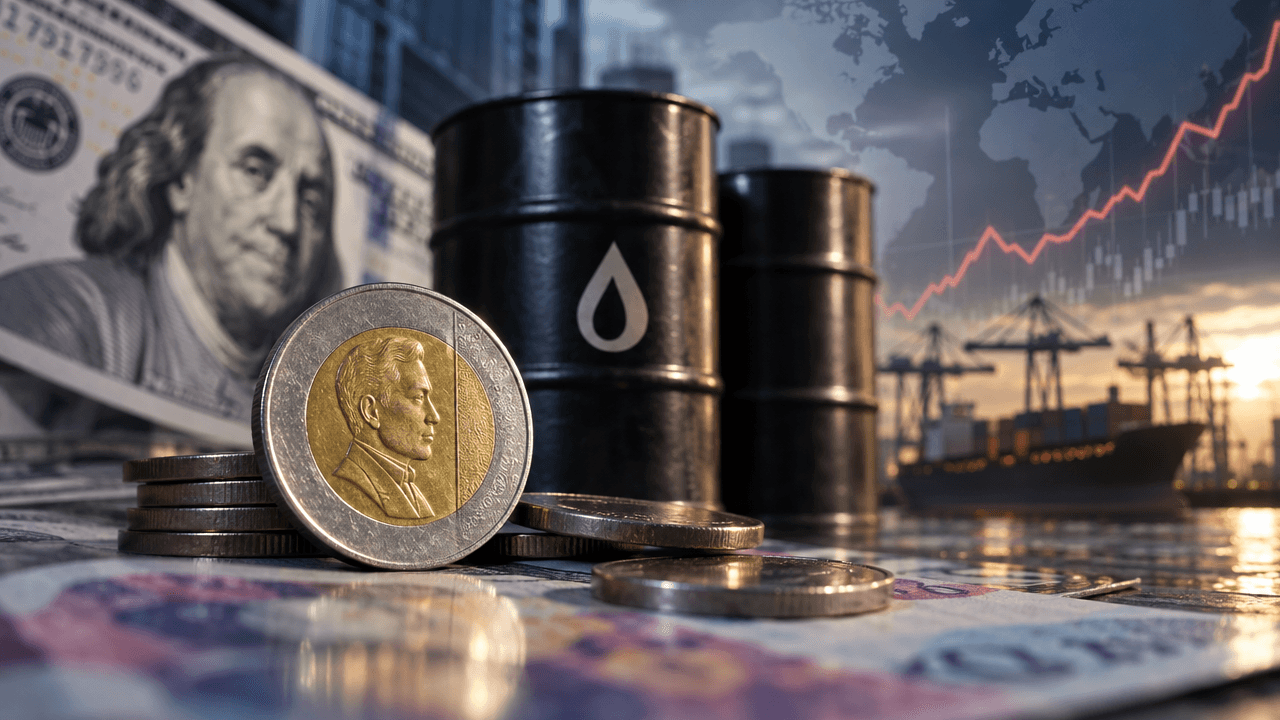
The Philippine peso’s slide beyond ₱64 per US dollar is more than a symbolic exchange-rate milestone. It is a warning about how global dollar strength, rising energy costs and domestic supply pressures can combine to squeeze households, businesses and financial markets at the same time. The peso closed at a record-low ₱64.17 against the dollar after breaching the ₱64 level for the first time. [6]
For consumers, the immediate concern is purchasing power. For policymakers, the challenge is preventing currency weakness from becoming a wider inflation problem. For traders, the move offers a practical lesson in how foreign exchange markets connect global events with everyday prices.
What Is Driving The Peso Lower
Several forces are pressuring the Philippine currency. The US dollar has remained strong as investors favor dollar-denominated assets during periods of uncertainty. When demand for dollars rises, emerging-market currencies such as the peso often weaken, particularly if investors are reducing exposure to riskier markets.
Oil prices are another major factor. The Philippines imports much of the fuel it consumes, so higher global oil prices increase the country’s demand for dollars. Importers must exchange more pesos for the same volume of crude oil, refined fuel or other energy products. That additional dollar demand can weigh on the peso.
President Ferdinand Marcos Jr. attributed the currency’s decline partly to rising oil prices and the strength of the US currency. He also said the government had sufficient foreign-exchange reserves and other tools to help defend the peso. [1][14]
The timing is especially important because the economy is already facing supply-side inflation. Recent reporting indicated that Philippine inflation accelerated to 7.2 percent in September from 6.1 percent in August, with food, transport and housing-related costs contributing to the increase. [6]
How A Weaker Peso Affects Households
A weaker peso makes imported goods more expensive in local-currency terms. The effect is most visible in fuel, but it can extend to electricity, transportation, medicines, machinery, electronics and imported food products.
Consider a simple example. If an imported product costs $100, it would cost ₱6,000 at an exchange rate of ₱60 per dollar, before taxes and other expenses. At ₱64.17 per dollar, the same product costs approximately ₱6,417. That difference may eventually appear in retail prices, particularly when businesses cannot absorb higher costs through lower margins.
Fuel is particularly influential because it affects the cost of transporting goods throughout the country. Higher diesel and gasoline prices can raise delivery expenses for food, agricultural products and manufactured goods. Businesses may then pass those costs to consumers, creating a second-round inflation effect.
The impact is not entirely negative for everyone. Philippine exporters, overseas Filipino workers and businesses receiving dollar revenues may benefit when their earnings are converted into pesos. A weaker currency can also improve the price competitiveness of some Philippine exports. However, these benefits may take time to appear, while higher import costs can reach consumers quickly.
The Policy Response And Its Limits
Marcos has urged Filipinos not to panic and pledged that the government would use available measures to defend the currency and limit the impact on food prices. He has also distinguished between problems the government can influence directly and those it cannot. Global oil prices are largely outside the country’s control, while food supply chains, import procedures and domestic distribution are areas where policymakers have more room to intervene. [5][7]
This distinction matters because monetary policy cannot solve every type of inflation. Higher interest rates may support the peso by making local assets more attractive and reducing demand, but they cannot produce more rice, lower international oil prices or immediately repair disrupted supply chains.
The government has considered supply-side measures to ease food pressures. One reported example is Executive Order No. 129, which increases the minimum access volume for maize imports to 500,000 metric tons amid concerns about a yellow-corn supply gap linked to El Niño conditions. [10]
Currency intervention also has trade-offs. Selling foreign-exchange reserves can help meet dollar demand and smooth excessive volatility, but reserves are finite. A credible policy response therefore usually combines measured intervention with sound fiscal management, clear communication and steps that improve the supply of essential goods.
What Traders Should Watch
The peso’s next direction will depend on more than one headline. Traders should monitor the US dollar index, global oil prices, US interest-rate expectations, Philippine inflation data, foreign-exchange reserves and the policy signals of the Bangko Sentral ng Pilipinas.
Market participants should also distinguish between a temporary overshoot and a sustained trend. A sharp move through a psychological level such as ₱64 can attract attention and trigger hedging, but the exchange rate may stabilize if dollar demand eases or policymakers convince investors that inflation risks are manageable.
For SimFi traders, this is a useful scenario for disciplined risk management. A trader could build a watchlist around USD/PHP, oil prices and Philippine inflation, then map possible outcomes before entering a position. The key questions are straightforward: What happens if oil rises further? What if the US dollar strengthens again? What if the central bank signals tighter policy? What if government intervention temporarily reverses the peso’s decline?
Position sizing and stop-loss planning matter because emerging-market currencies can move quickly when liquidity thins or new policy information arrives. Traders should avoid treating a record low as an automatic signal to buy or sell. Instead, they should analyze momentum, catalysts and the potential cost of being wrong.
The Broader Lesson
The peso’s move beyond ₱64 demonstrates how exchange rates transmit global stress into local economies. Dollar strength and higher oil prices can raise import costs, worsen inflation and complicate policy decisions even when domestic authorities are actively responding.
For Philippine households, the priority is protecting purchasing power and monitoring essential expenses. For businesses, it is managing currency exposure and reviewing import costs. For traders, it is understanding the connection between macroeconomic data, central-bank policy and market sentiment.
The peso may stabilize, but the pressures behind its decline will not disappear overnight. The most important signal will be whether policymakers can contain inflation expectations while maintaining confidence in the currency. Until then, the ₱64 level should be viewed not as an isolated number, but as a measure of the broader challenge facing the Philippine economy.