
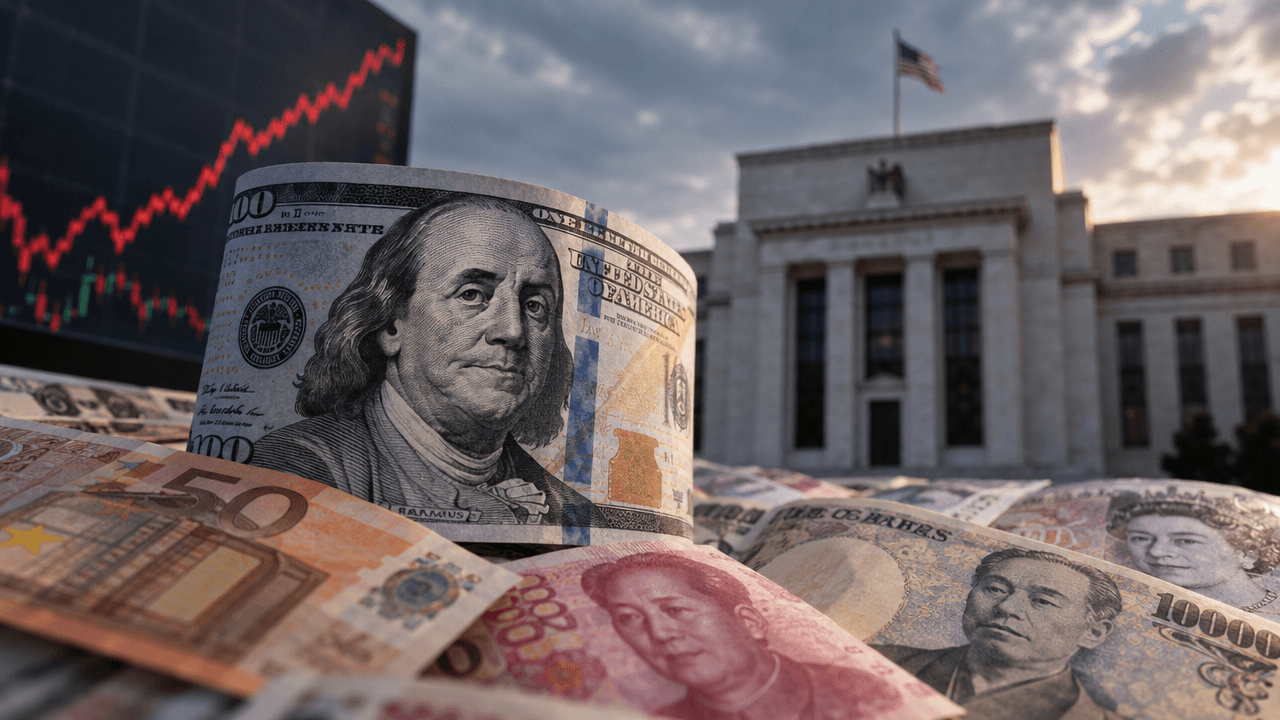
The US dollar has climbed to its strongest level since April 2025, marking a significant shift in foreign-exchange markets as investors reassess the outlook for US interest rates. The dollar index rose 0.16% to 103.58, supported by stronger-than-expected inflation data and increasingly hawkish commentary from Federal Reserve officials. A Reuters market update placed the index at approximately 103.50, also its highest level since April 2, 2025. [1]
The move matters because the dollar is not rising in isolation. It reflects a broad repricing of monetary policy expectations, higher Treasury yields, and growing confidence that the Federal Reserve may need to keep interest rates restrictive for longer—or potentially raise them further—to contain persistent inflation.
Why The Dollar Is Rising
The latest rally was triggered by US consumer-price data showing that inflation increased more than economists expected in October. Strong inflation tends to support a currency when it leads markets to anticipate higher interest rates. Higher rates can attract international capital toward US assets, increasing demand for dollars.
Federal Reserve commentary added momentum to the move. Officials have warned that price pressures remain stubborn and have left open the possibility of a larger rate increase if inflation fails to moderate. Fed Governor Christopher Waller indicated that a 50-basis-point increase could be necessary under certain conditions, while Dallas Fed President Lorie Logan supported additional tightening if inflationary pressures continue. [12]
This combination of firm economic data and hawkish central-bank communication has changed the market narrative. Instead of focusing primarily on when rate cuts might begin, traders are now considering whether the Fed could deliver another increase and how long borrowing costs may remain elevated.
Why Interest Rates Matter For Currency Markets
Currency values are heavily influenced by relative interest-rate expectations. If investors believe US rates will remain higher than rates in Europe, Japan, or other major economies, dollar-denominated assets may offer a more attractive return.
This relationship can be seen through the US Treasury market. As traders adjusted their expectations for Fed policy, short-term Treasury yields moved higher. Higher yields increased the appeal of dollar assets and helped push the greenback to a roughly 19-month high. [3]
For traders, the key issue is not simply the current level of US interest rates. It is the difference between current expectations and what markets had previously priced in. A sudden shift from expected easing to possible tightening can create strong momentum in the dollar, even before the Federal Reserve formally changes policy.
Impact On Major Currency Pairs
A stronger dollar places pressure on major currency pairs in which the greenback is the quoted or base currency. EUR/USD, for example, may decline when investors believe US rates will outperform euro-area rates. The euro can also face additional pressure if European economic data weakens or if the European Central Bank is perceived as closer to easing.
USD/JPY is another important pair to watch. Rising US yields typically support the dollar against the yen, especially when Japanese interest rates remain comparatively low. The yen has already been vulnerable as the dollar approaches psychologically important levels, increasing the risk of official concern or intervention if currency weakness becomes disorderly.
GBP/USD can also be affected by changing rate expectations. Even when the Bank of England maintains a relatively firm stance, the pound may struggle if US yields rise more quickly than British yields. In each case, traders should evaluate both sides of the pair rather than treating dollar strength as the only variable.
Pressure On Emerging Markets
The dollar’s advance can be even more consequential for emerging-market currencies. Many governments and companies in these economies borrow in US dollars. When the dollar appreciates, the local-currency cost of servicing that debt rises.
A stronger dollar can also encourage investors to move capital away from riskier markets and toward US assets. That can weaken emerging-market currencies, increase imported inflation, and make it more expensive for central banks to support economic growth.
Commodity markets may also feel the effect. Oil, metals, and agricultural products are commonly priced in dollars. When the dollar rises, these commodities become more expensive for buyers using other currencies, potentially reducing demand. At the same time, countries that export commodities may receive some protection through stronger dollar revenues, creating a mixed impact across the developing world.
What Traders Should Watch Next
The dollar’s next move will depend on whether incoming data confirms or challenges the hawkish Fed outlook. Traders should monitor future inflation releases, employment reports, consumer spending figures, and comments from Federal Reserve policymakers.
Market participants should also track Treasury yields and interest-rate futures. If yields continue to rise, the dollar may retain upward momentum. However, a sharp reversal in yields could signal that traders are taking profits or becoming less confident in additional Fed tightening.
Technical levels matter as well. The 103 area on the dollar index has become an important reference point after the recent breakout. Sustained trading above that level could encourage trend-following strategies, while a move back below it might suggest that the rally is losing momentum.
For SimFi traders, this environment provides a useful lesson in risk management. A strong macroeconomic narrative can create attractive opportunities, but it can also produce rapid reversals when new data surprises the market. Position sizing, predefined stop-loss levels, and awareness of correlated exposure are essential. Holding long positions across several dollar pairs may create more concentration than expected if the dollar suddenly weakens.
Conclusion
The US dollar’s rise to its highest level since April 2025 reflects a significant change in interest-rate expectations. Strong inflation data and hawkish Federal Reserve commentary have encouraged investors to price in a more restrictive US monetary-policy path, lifting Treasury yields and supporting the greenback.
The rally creates pressure for the euro, yen, pound, and emerging-market currencies while increasing the importance of upcoming economic data. Traders should focus not only on the dollar’s direction but also on the interest-rate differentials, yield movements, and policy signals driving that direction.
The central question is whether inflation will remain strong enough to justify further tightening. If it does, the dollar may have room to extend its advance. If inflation cools and rate expectations reverse, the current rally could lose momentum quickly. For now, the dollar remains one of the clearest expressions of the market’s renewed concern about persistent US price pressures.