
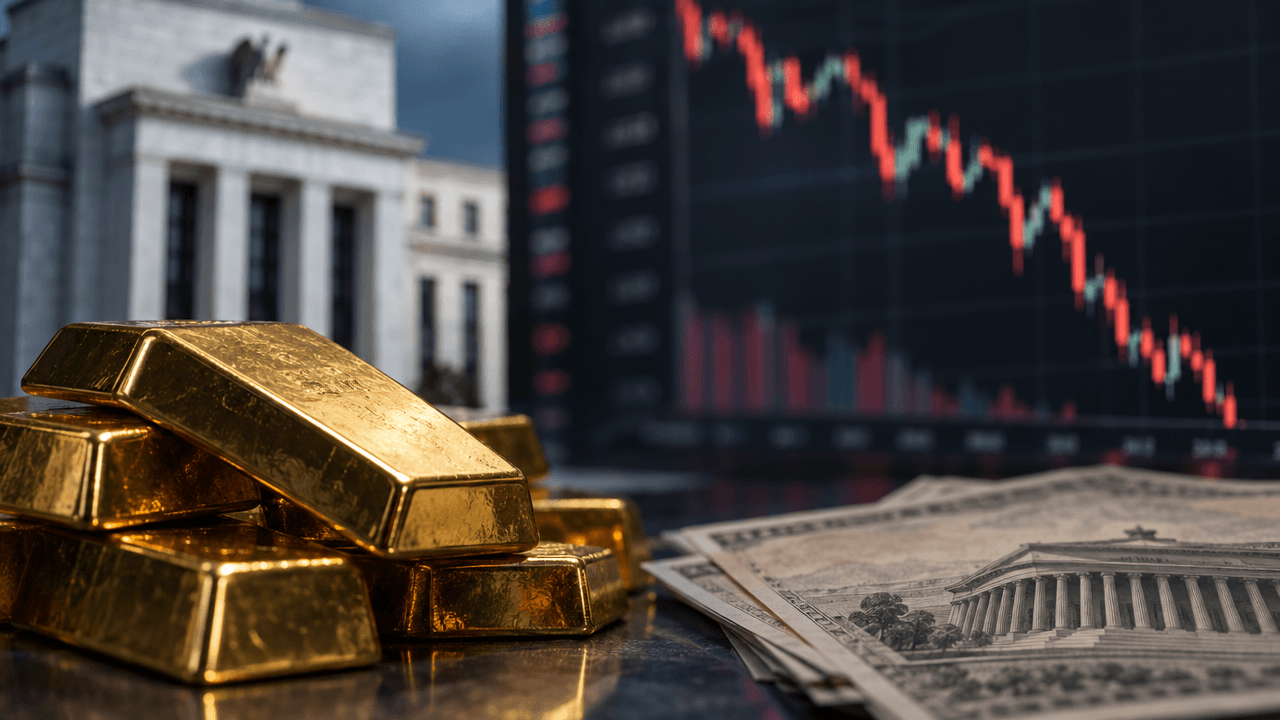
U.S. Treasury futures weakened as traders increased their expectations for additional Federal Reserve rate hikes, highlighting how quickly inflation data can reshape interest-rate markets. The move pushed Treasury yields higher and pressured gold below the psychologically important $4,000-per-ounce threshold. For traders, the latest price action offers a clear reminder that monetary-policy expectations often matter more than the current policy rate itself.
Rate Expectations Drive Treasury Futures Lower
Treasury futures prices generally move inversely to yields. When traders anticipate higher interest rates, existing bonds become less attractive because newly issued securities may offer better returns. Bond prices then decline, and futures contracts linked to those bonds typically weaken as well.
Recent market pressure followed stronger-than-expected U.S. inflation data and hawkish signals from Federal Reserve officials. Markets are now pricing a high probability of a December rate increase, with some participants also considering the possibility of a larger 50-basis-point move. CME-linked estimates put the probability of a 25-basis-point December hike above 90%, while the probability of a 50-basis-point increase was considerably smaller but still meaningful. [3]
The reaction was particularly visible in shorter-dated Treasuries. The two-year yield, which is highly sensitive to expectations for near-term Fed policy, rose sharply after the inflation release. Longer-term yields also moved higher, with the 10-year yield approaching 5%. [2][3]
For futures traders, this creates a market defined by repricing risk. A small change in expectations about the timing or size of a Fed move can produce a significant reaction in Treasury futures, especially when positioning is already concentrated on one side of the market.
Why Inflation Matters
Inflation is central to the current market narrative because persistent price pressures make it more difficult for the Federal Reserve to ease policy. If consumer prices remain elevated, officials may need to keep rates higher for longer or raise them further to bring inflation back toward their target.
October core consumer inflation reportedly increased 0.4% month over month, adding to concerns that underlying price pressures remain sticky. The data strengthened expectations for another rate increase and helped lift the U.S. dollar and Treasury yields. [3]
The key issue for markets is not simply whether inflation is high. Traders are also assessing whether inflation is accelerating, broadening across categories, or proving resistant to restrictive policy. A single report can therefore trigger a major adjustment when it challenges the consensus outlook.
This is why economic releases such as consumer inflation, employment data, and wage growth deserve close attention. They can influence Treasury futures before the Federal Reserve makes any formal announcement. Traders who wait for the policy decision itself may find that much of the move has already occurred.
Gold Feels The Pressure From Higher Yields
Gold’s decline below $4,000 per ounce illustrates how interest-rate expectations extend beyond the bond market. Unlike Treasury securities, gold does not pay interest. When yields rise, the opportunity cost of holding bullion increases because investors can earn more income from cash and government debt.
A stronger U.S. dollar added another headwind. Gold is priced internationally in dollars, so a rising dollar can make the metal more expensive for buyers using other currencies. The combination of higher yields and a stronger dollar contributed to gold’s decline below $4,000, with spot prices falling toward the high-$3,900s. [1][2]
The $4,000 level is also technically and psychologically important. A sustained break below that area could encourage additional selling, particularly if Treasury yields continue rising. However, support can still emerge from central-bank purchases, physical demand, geopolitical uncertainty, or concerns about economic growth.
The broader lesson is that gold is not always a direct hedge against every form of market stress. When the dominant concern is inflation combined with aggressive monetary tightening, higher real yields can temporarily outweigh safe-haven demand.
Practical Takeaways For Simfi Traders
First, monitor the relationship between Treasury futures and yields rather than looking at either market in isolation. A falling futures price generally confirms that yields are rising, while an unexpected futures rally may signal that traders are reducing rate-hike expectations.
Second, pay close attention to the yield curve. If two-year yields rise faster than 10-year yields, markets may be focusing on immediate Fed tightening. If longer-term yields rise more sharply, traders may be reassessing inflation, government borrowing, or long-run growth expectations.
Third, avoid treating probability estimates as guarantees. A market that prices a high chance of a rate hike can still move sharply if the decision, guidance, or press conference differs from expectations. Position size and risk limits matter especially during central-bank and inflation events.
Finally, consider cross-market confirmation. Rising Treasury yields, a stronger dollar, and falling gold can reinforce the same tightening narrative. If those relationships begin to diverge, it may indicate that positioning is becoming crowded or that another factor, such as recession risk or geopolitical demand, is taking control.
The Bigger Market Picture
Treasury futures are weakening because traders are adjusting to the possibility that U.S. interest rates may need to move higher before they can eventually fall. That repricing has lifted yields, supported the dollar, and reduced demand for non-yielding gold.
The immediate focus will remain on upcoming inflation readings, labor-market data, and Federal Reserve communication. A continuation of strong economic data could keep pressure on Treasury futures and gold. Conversely, signs of cooling inflation or weakening growth could reverse rate-hike expectations quickly.
For traders, the most important discipline is to follow the reaction function rather than a single headline. Markets move when expectations change. Understanding what data would make traders more hawkish or dovish is often more valuable than predicting the next price tick.