
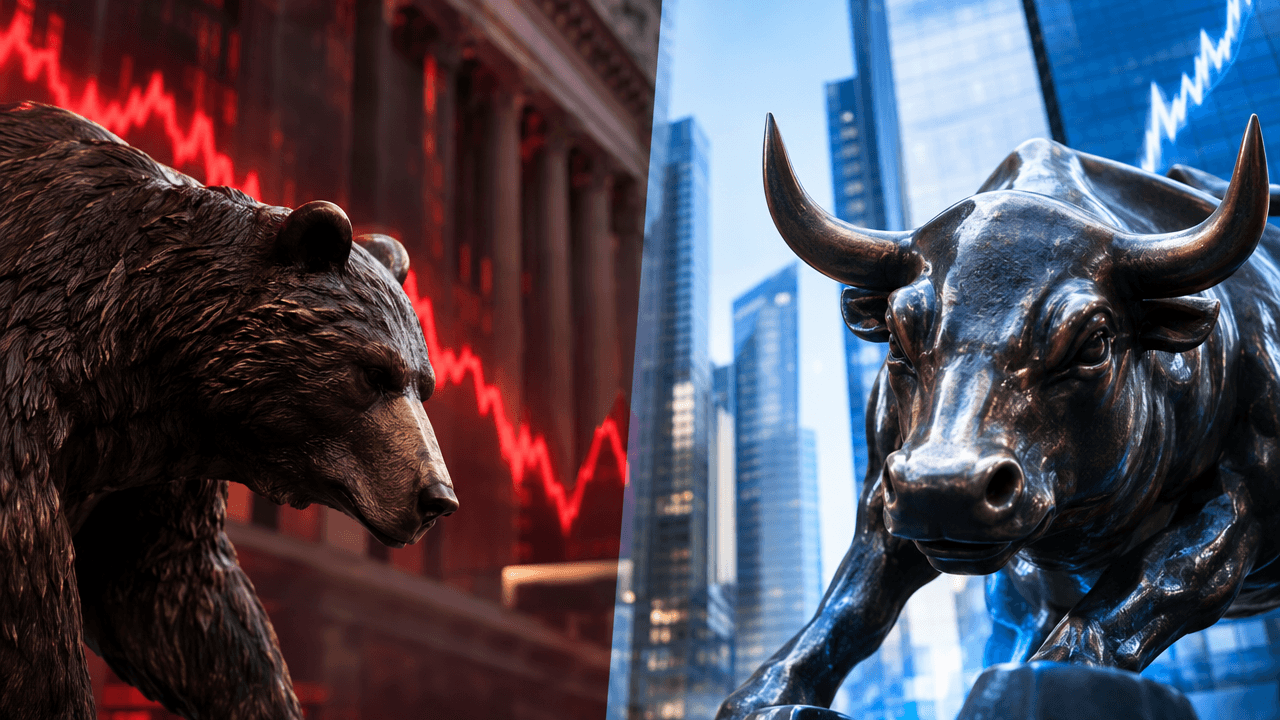
U.S. equity futures are sending a divided message to investors. Dow futures fell approximately 550 points, while Nasdaq 100 futures gained roughly 100 points, highlighting a sharp contrast between economically sensitive companies and technology shares. The move suggests that traders are not responding to rate concerns with a simple “risk-on” or “risk-off” decision. Instead, they are reallocating capital toward businesses viewed as more resilient, innovative, or capable of producing strong growth despite higher borrowing costs.
This split comes as markets digest signals that the Federal Reserve may keep additional interest-rate increases on the table. Recent meeting minutes indicated that almost all policymakers considered further hikes appropriate if inflation and economic activity developed as expected. A few officials also left open the possibility of a larger increase if price pressures proved persistent. [9]
Rate Concerns Reshape Market Leadership
Higher interest rates affect different parts of the stock market in different ways. When bond yields rise, future corporate earnings become less valuable in today’s dollars. That pressure is especially important for growth companies whose valuations depend on profits expected several years from now.
At first glance, this would normally create a challenging environment for technology shares. Yet the Nasdaq 100’s gain shows that investors may be distinguishing between technology companies rather than selling the sector indiscriminately. Firms with strong balance sheets, recurring revenue, dominant market positions, and exposure to artificial intelligence may still attract buyers, even when rates rise.
The Dow, by contrast, contains greater exposure to mature industrial, financial, consumer, and healthcare businesses. These companies can be more closely tied to economic growth, credit conditions, consumer demand, and corporate investment. A sharp decline in Dow futures therefore suggests concern that higher rates could slow the broader economy or reduce the willingness of businesses and households to spend.
The market is effectively asking two separate questions: Will higher rates weaken traditional economic activity, and can select technology companies continue expanding rapidly enough to justify premium valuations?
Why Technology Shares Can Still Rise
Technology’s relative strength does not mean rate concerns have disappeared. It may instead reflect the power of company-specific catalysts. Major corporate events, including earnings reports, product launches, and high-profile market debuts, can temporarily outweigh macroeconomic pressure.
Investors often reposition ahead of these events because an earnings surprise or strong debut can influence an entire industry. For example, enthusiasm around artificial-intelligence businesses has supported technology shares even during periods when investors were worried about inflation, regulation, and monetary policy. Recent reporting noted that expectations surrounding Anthropic’s public debut helped lift sentiment toward AI-related stocks while traders continued to monitor the Fed’s rate outlook. [8]
This dynamic creates a narrower market. The Nasdaq may rise, but that does not necessarily mean most stocks are participating. A handful of large technology companies can lift the index while smaller companies, cyclical shares, and rate-sensitive industries remain under pressure.
For traders, index direction alone is not enough. Market breadth, sector performance, Treasury yields, and volatility provide important clues about whether a move represents broad confidence or concentrated speculation.
What Futures Are Signaling
Equity futures are useful because they reflect overnight positioning before the regular session begins. They are not a guaranteed forecast of the opening price. Futures can change quickly as new economic data, corporate headlines, or central-bank comments enter the market.
The 550-point decline in Dow futures should be interpreted as a warning about risk perception, not as proof that the Dow will open exactly at that level. Similarly, a 100-point rise in Nasdaq 100 futures indicates stronger demand for selected technology exposure, but it does not eliminate the sector’s valuation risk.
The divergence between the two contracts is more informative than either move in isolation. It indicates that investors are rotating rather than abandoning equities altogether. Capital appears to be moving away from companies viewed as vulnerable to slower growth and toward businesses with stronger secular trends.
This rotation can reverse quickly. If bond yields climb further, even profitable technology companies may face valuation pressure. If corporate results exceed expectations or rate fears ease, economically sensitive stocks could recover sharply.
Practical Takeaways For Traders
First, separate macroeconomic risk from company-specific opportunity. A rising Nasdaq futures contract does not mean the entire market is healthy, and a falling Dow futures contract does not mean every stock is weakening.
Second, monitor interest rates alongside equity futures. Rising Treasury yields can help explain why value and cyclical shares are falling, while stable or declining yields may support technology valuations. The relationship is not perfect, but it provides useful context.
Third, avoid reacting to headline points alone. A 550-point futures decline sounds dramatic, but the percentage move, market breadth, trading volume, and follow-through after the opening bell offer a clearer picture of actual risk.
Fourth, define risk before major corporate events. Earnings releases and public-market debuts can produce significant gaps in either direction. Traders using simulated finance accounts can practice position sizing, stop placement, and scenario planning without exposing real capital to event-driven volatility.
Finally, watch whether the divergence persists. One session of Dow weakness and Nasdaq strength may reflect positioning around a specific event. Several sessions could indicate a broader change in market leadership and investor expectations.
A Market Split Worth Watching
The mixed futures reaction illustrates how modern markets respond to competing forces. Higher rates threaten valuations and economic activity, but powerful technology themes and major corporate events can still attract capital. That tension is producing a market in which the headline index may conceal significant differences beneath the surface.
For traders, the key lesson is to study the composition of a move rather than relying on a single index reading. The next phase will depend on inflation data, Federal Reserve communication, Treasury yields, and whether technology companies deliver results strong enough to justify continued optimism. Until those questions are answered, disciplined risk management and careful sector analysis remain more valuable than chasing the strongest futures contract.