
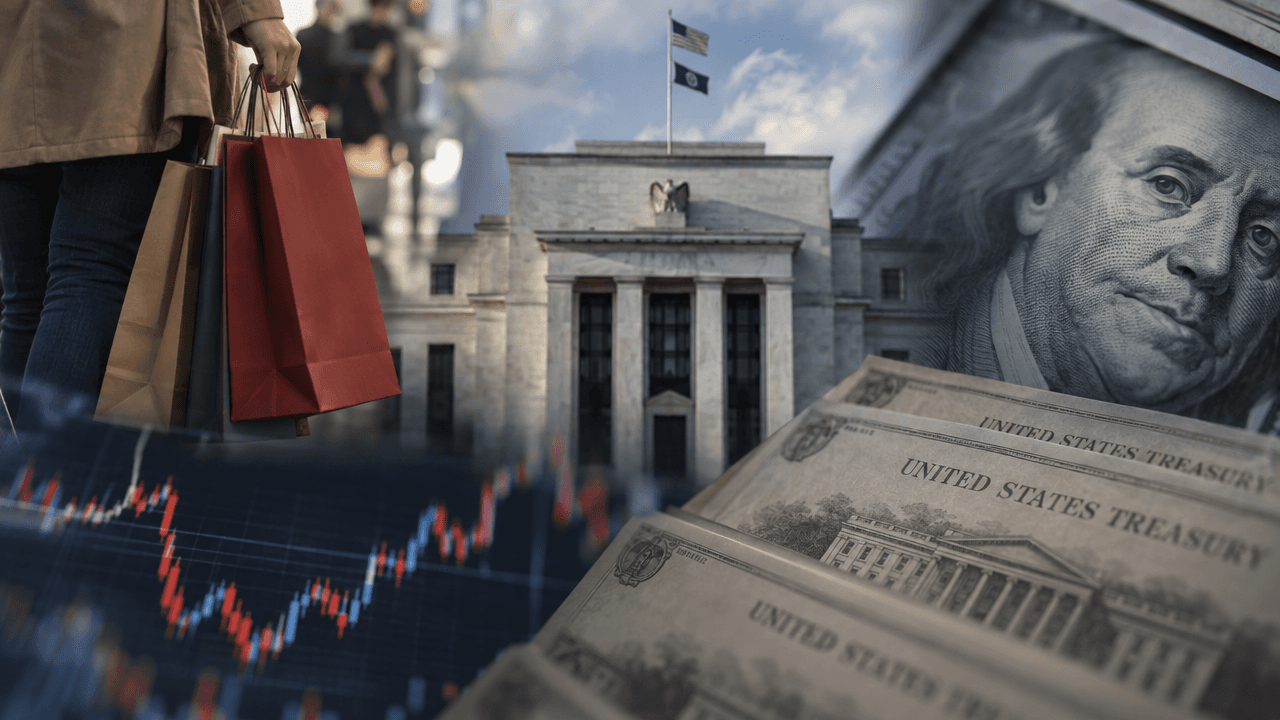
A hotter-than-expected inflation report has put U.S. monetary policy back under the market microscope. Consumer prices increased 0.6% in September, the fastest monthly advance in five months, following a 0.4% rise in August. Annual inflation accelerated to 3.7%, up from 3.4% in August, while core inflation also remained elevated. [2][3]
The timing matters. The Federal Reserve is scheduled to meet on October 27–28, and policymakers must decide whether inflation is cooling enough to pause or whether persistent price pressures justify another rate increase. Strong consumer spending adds another layer of complexity: the economy continues to show momentum even as households face higher prices.
For traders, the central question is no longer simply whether inflation is declining. It is whether inflation is declining quickly enough for the Federal Reserve to ease policy without risking another acceleration.
WHY SEPTEMBER’S DATA MATTERS
The 0.6% monthly increase was higher than many economists expected and represented a clear acceleration from the previous month. Core CPI, which excludes volatile food and energy categories, rose 0.3% from August and 2.6% over the prior year. That suggests the concern is not limited to temporary changes in gasoline or food prices. [4][7]
Energy costs were an important contributor to the headline increase, but persistent core-price growth remains especially important for monetary policy. The Fed typically looks beyond individual volatile categories to determine whether inflation is becoming embedded across goods and services.
Inflation at 3.7% is also well above the Federal Reserve’s 2% target, which is measured using the Personal Consumption Expenditures price index rather than CPI. While the two measures are constructed differently, the latest CPI report still signals that the path toward price stability may be uneven.
Consumer spending has remained supportive of growth, with estimates pointing to continued increases in household outlays. That resilience can be positive for businesses and employment, but it may also make it more difficult for inflation to cool. When consumers continue spending despite higher prices and borrowing costs, companies may retain greater ability to pass costs on to customers.
THE FED’S POLICY DILEMMA
The Federal Reserve is balancing two competing risks. Raising rates could help restrain demand and prevent inflation expectations from becoming entrenched. However, keeping policy restrictive for too long could weaken hiring, investment, and economic growth.
The September inflation report increases pressure on policymakers to maintain a firm stance. Market expectations for an October rate increase rose after the report, although subsequent pricing still pointed to a greater probability of no change at the meeting. [9][12]
This uncertainty is important. A pause would not necessarily mean the Fed is finished raising rates. Policymakers could hold rates steady while waiting for additional information on inflation, employment, wages, and consumer demand. Conversely, another hike would signal that price stability remains the central priority, even if growth has held up better than expected.
Traders should therefore pay close attention not only to the rate decision but also to the language in the policy statement, the economic projections, and officials’ comments during the post-meeting press conference. A decision that matches expectations can still move markets if the Fed’s communication differs from what investors have priced in.
Why Treasury Yields And The Dollar Are Sensitive
Inflation directly affects expectations for interest rates, and interest-rate expectations influence Treasury yields. A stronger inflation reading can push yields higher as investors anticipate that the Fed will keep rates elevated for longer. Shorter-term yields are generally the most sensitive to changes in expectations for the next few policy meetings, while longer-term yields also reflect growth, fiscal policy, and inflation risks.
Higher Treasury yields can support the U.S. dollar by making dollar-denominated assets more attractive relative to investments in other currencies. Following the September CPI report, the dollar reached an 18-month high as traders reassessed the possibility of additional Fed tightening. [13]
The relationship is not automatic. If investors interpret hotter inflation as a threat to economic growth, risk appetite could weaken and market volatility could increase across currencies, equities, and bonds. This is why traders should avoid treating any single market reaction as a guaranteed outcome.
Practical Takeaways For Simfi Traders
The current environment offers several useful lessons for simulated trading.
First, identify the event risk before entering a position. Fed meetings, CPI releases, employment reports, and speeches from central bank officials can produce rapid price movements. Reducing position size or waiting for the initial reaction may be more disciplined than trying to predict every headline.
Second, build scenarios rather than relying on one forecast. A hawkish Fed outcome could support the dollar and push Treasury yields higher. A cautious hold accompanied by concern about growth could produce a different response. Write down both scenarios, including the market instruments most likely to benefit or lose value.
Third, monitor cross-market confirmation. If inflation is genuinely changing rate expectations, Treasury yields, the dollar, and interest-rate-sensitive equities may move together. When those markets send conflicting signals, it may be better to reduce exposure until the picture becomes clearer.
Finally, manage risk around volatility. Use predefined stop levels, avoid excessive leverage, and calculate potential losses before placing a trade. SimFi provides an opportunity to practice these habits without putting real capital at risk, but the psychological discipline should still resemble live-market decision-making.
The Bigger Market Picture
September’s inflation report does not determine the Federal Reserve’s decision by itself. Policymakers will consider a broader set of data and may distinguish between temporary energy-driven price increases and persistent underlying inflation. Still, the report makes near-term easing less likely and keeps the prospect of additional tightening in the conversation.
For traders, the most important takeaway is that inflation remains a market-moving force. Until price growth moves convincingly toward the Fed’s target, every major inflation release can reshape expectations for interest rates, Treasury yields, the dollar, and risk assets.
The best response is not to predict with certainty. It is to prepare for multiple outcomes, control risk, and let incoming data—not emotion—guide the trade.