
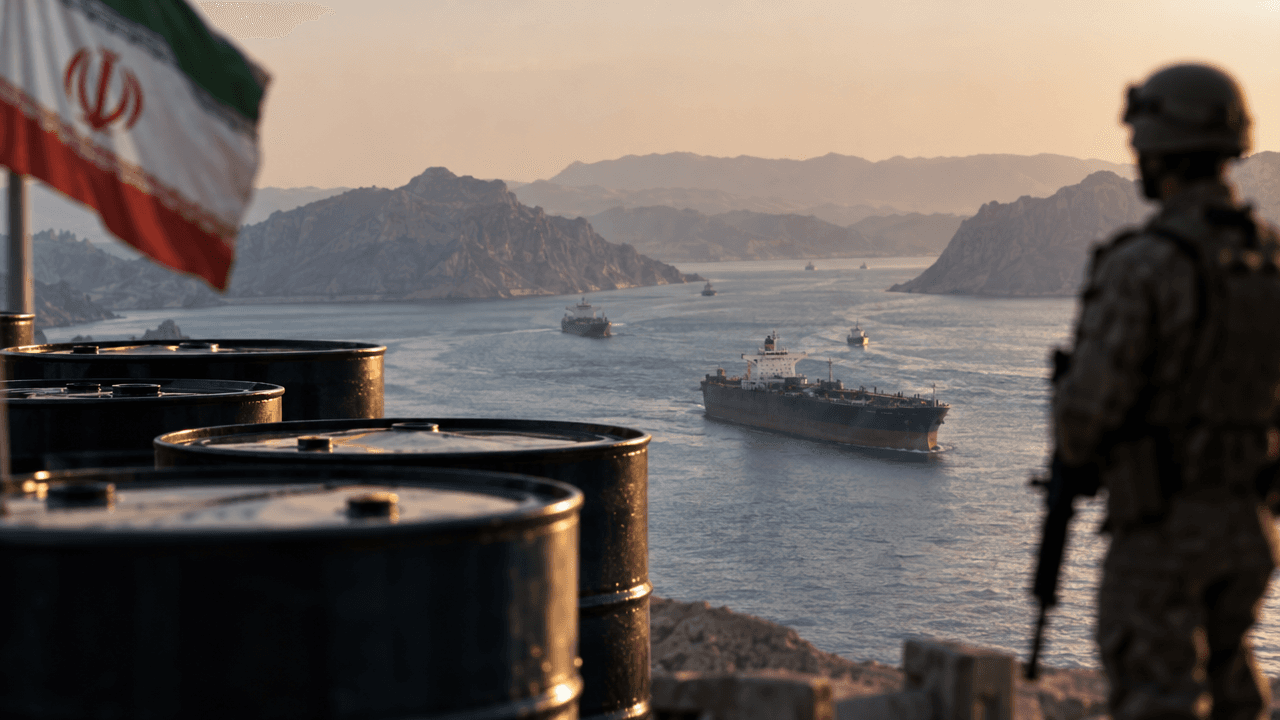
Oil markets are carrying a renewed geopolitical risk premium as U.S.–Iran tensions intensify and vessels face fresh attacks near the Strait of Hormuz. Crude prices have moved higher as traders weigh the possibility that maritime disruptions could reduce the flow of oil from the Persian Gulf, increase shipping costs, and force markets to reassess the balance between supply security and weakening demand.
The immediate price reaction has been measured rather than disorderly. Brent crude settled near $92.57 per barrel on November 20, while December West Texas Intermediate finished close to $83.98. However, analysts noted that repeated tanker incidents were adding a meaningful risk premium even as oil shipments through Hormuz remained below pre-conflict levels. [9]
Why The Strait Of Hormuz Matters
The Strait of Hormuz is one of the most important energy chokepoints in the world. A significant share of global oil exports passes through the narrow waterway, connecting producers in the Persian Gulf with customers in Asia, Europe, and other regions. Even when physical supply has not yet been lost, the possibility of delays, insurance restrictions, or blocked transit can quickly influence futures prices.
That distinction is important. Oil does not need to disappear from the market for prices to rise. Traders also price the risk that it may become harder, slower, or more expensive to deliver. Tankers may avoid the area, shipping companies may charge higher rates, and buyers may compete for alternative supplies. Those costs can be reflected in crude futures before inventories show a clear decline.
Recent reports indicate that attacks on vessels have continued at roughly one incident per day during November. At the same time, regional oil flows have recovered from their lowest levels but remain below pre-conflict volumes, leaving the market vulnerable to another deterioration. [9][15]
Three Scenarios For Oil Prices
The first scenario is continued tension without a complete shutdown. Under this outcome, oil prices may retain a geopolitical premium but remain heavily influenced by inventories, production levels, and expectations for global economic growth. This would create a volatile market rather than a one-directional rally.
The second scenario is a temporary reduction in shipping flows. Fewer tankers moving through Hormuz could lift Brent prices more sharply, particularly if refiners begin building precautionary inventories. The market response would depend on how quickly alternative routes, strategic reserves, or spare production could offset the disruption.
The third and most disruptive scenario is a sustained closure or broad regional escalation. Such an event could produce a much larger supply shock, sending crude, refined products, and freight costs higher at the same time. It could also widen the spread between different grades and delivery locations as buyers compete for immediately available barrels.
Traders should therefore monitor physical flow data alongside price charts. A rally supported by falling shipments has a different foundation from a rally driven mainly by headlines and short covering.
Inflation And Central-bank Pressure
Higher oil prices can affect the economy through several channels. The most visible is gasoline and diesel. Transportation, manufacturing, agriculture, and logistics companies may also face higher operating costs. If businesses pass those costs to customers, inflation expectations can rise.
This creates a difficult policy environment for central banks. A supply-driven energy shock can push inflation higher even while economic activity weakens. Cutting interest rates may support growth but risk allowing inflation expectations to become more persistent. Keeping rates higher may contain inflation but add pressure to households and businesses already dealing with elevated fuel and transportation expenses.
The result is not necessarily an immediate change in policy. Central banks typically distinguish between a temporary energy spike and a broader inflationary process. They will watch wage growth, core inflation, inflation expectations, and evidence that companies are passing higher input costs through to consumers.
For traders, the key takeaway is that oil can influence interest-rate markets indirectly. A sharp crude rally may lift bond yields, strengthen inflation-sensitive assets, and reduce expectations for rapid monetary easing.
Currency And Market Implications
Energy-exporting currencies may receive support when oil prices rise, especially if higher crude revenues improve trade balances and government finances. The Canadian dollar, Norwegian krone, and other commodity-linked currencies can become more resilient during an oil rally, although broader risk sentiment and domestic interest-rate expectations still matter.
Conversely, oil-importing economies may face a less favorable backdrop. Higher energy costs can weaken purchasing power, widen trade deficits, and increase pressure on corporate margins. Equity markets may also become more selective, with energy producers benefiting while airlines, transport companies, and fuel-intensive manufacturers face greater challenges.
In SimFi trading, these relationships are useful for building a structured watchlist. Instead of reacting to one headline, traders can compare crude oil, energy currencies, bond yields, equity volatility, and shipping-related instruments. When several markets confirm the same story, the move may have stronger momentum. When they diverge, caution is warranted.
Practical Takeaways For Traders
First, define the event risk before entering a position. A market can move rapidly when a new attack, diplomatic announcement, or shipping restriction is reported.
Second, avoid treating every oil rally as a guaranteed trend. Current prices are also being shaped by concerns about surplus supply and global demand, which can offset part of the geopolitical premium. [9]
Third, track the curve. A sharp rise in near-term contracts relative to later deliveries may indicate that traders are paying more for immediate supply protection.
Finally, manage position size and leverage. Geopolitical markets can reverse quickly when shipping resumes, negotiations improve, or officials signal that supply routes remain open.
Conclusion
Renewed U.S.–Iran tensions have reminded markets that oil prices reflect risk as much as current production. The Strait of Hormuz remains central to the outlook, and further vessel attacks could amplify the premium already embedded in crude. For traders, the most important task is to separate headline-driven volatility from evidence of lasting physical disruption while watching the consequences for inflation, currencies, interest rates, and global growth.