
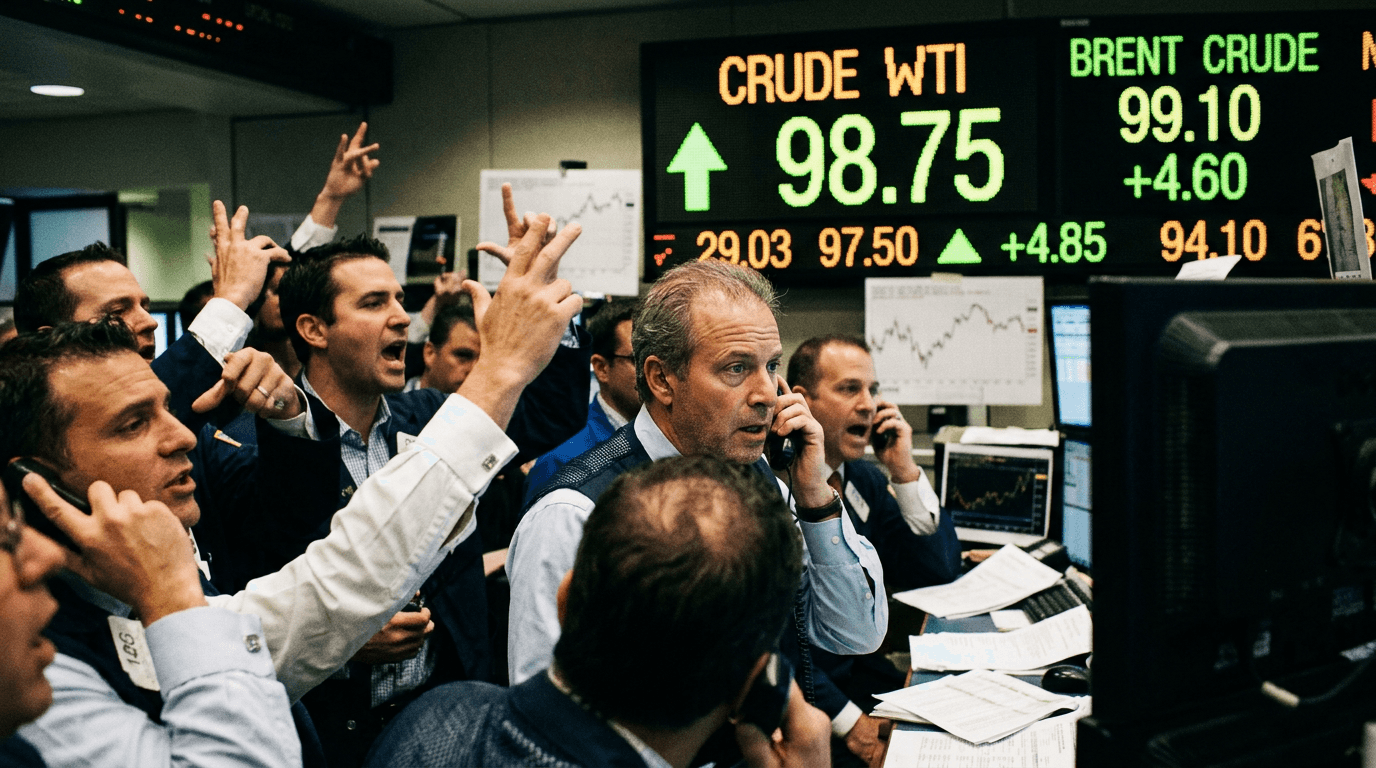
The crude oil market is currently experiencing one of its most turbulent periods in decades. Geopolitical tensions in the Middle East have sent WTI futures on a sharp ascent toward $120 per barrel. This escalation began with military strikes on Iranian oil infrastructure in early March, resulting in a full-scale supply crisis. Iran's subsequent closure of the Strait of Hormuz has dramatically reshaped global energy markets, prompting traders to reassess the world's most vital energy chokepoint and the geopolitical risks now surrounding it.
The Catalyst: Hormuz Blockade Sparks Historic Surge
The catalyst behind this upheaval is crystal clear. On March 9, 2026, Israel conducted strikes on 30 Iranian oil depots, leading Iran to effectively seal off the Strait of Hormuz to commercial tanker traffic. The market response was swift and intense. By March 12, WTI crude had surged past $94.91 per barrel, marking an 8.78% single-day jump and capping off a 17.28% weekly rally—an unprecedented movement in modern crude futures trading history. In just a month, oil prices skyrocketed by 51.65%, climbing from about $57 per barrel at the year's start to the high $90s.
The Strait of Hormuz is not merely a geopolitical concern; it is the world's most crucial oil chokepoint, through which approximately 20 million barrels flow daily under normal conditions. This accounts for about 20% of global oil demand. Any disruption, even partial, prompts the global energy market to reprice within hours, not weeks. The rapidity of this shift highlights the concentrated systemic risk in this single region.
MARKET MECHANICS: THE $120 PROJECTION
By mid-March, WTI had tested highs of $98.42 before retracting amid speculation of potential diplomatic resolutions to reopen the strait. However, the fundamentals still support much higher prices if the blockade persists. Analysts estimate the current geopolitical risk premium in crude prices at $4 to $10 per barrel under normal circumstances. With the Strait of Hormuz effectively closed, the true premium is significantly higher—some projections place it between $20 and $30 above pre-crisis levels.
Should the blockade extend beyond two weeks, WTI is anticipated to test the $110 to $120 range, with some war-premium forecasts reaching as high as $140. Brent crude, the global benchmark, has already hit $108 and remains elevated. The technical indicators reinforce this outlook. WTI's moving averages are positively aligned, momentum is robust, and the 14-day RSI above 80 confirms a strong, albeit extended, uptrend. Near-term resistance lies at the psychological $95 level and the round-number barrier of $100, but the $108 to $120 range is the next major target if the supply disruption intensifies.
SUPPLY DYNAMICS: OPEC+ OUTPUT AND STRATEGIC RESERVES
One moderating factor in this rally has been the International Energy Administration's coordinated strategic petroleum reserve release on March 11, aimed at calming markets. This move briefly pulled prices back intraday, but the market quickly rebounded as traders deemed the SPR release insufficient to offset the Hormuz disruption.
On the supply side, OPEC+ planned an output increase of 206,000 barrels per day starting in April 2026, a measure that would typically temper price rises. However, this increase is negligible compared to the 20 million barrels per day that usually transit Hormuz. No production boost can compensate for a supply route effectively shut down. Meanwhile, Goldman Sachs adjusted its Q2 2026 Brent forecast to $76 and its WTI estimate to $71 per barrel, citing expectations of significant OECD inventory draws and contractions in Middle Eastern production during the disruption period.
The Binary Outcome: Two Clear Paths
This market setup is unusual due to its binary nature. There are only two realistic outcomes: either the Strait of Hormuz reopens, causing oil prices to potentially collapse back to $70-$75 within days, or it remains closed, making $100+ crude a matter of days rather than weeks. The U.S. administration has initiated a multinational naval escort mission to maintain passage through the strait, though NATO allies have yet to formally join the effort.
For traders, this environment presents both opportunity and risk. The conviction behind this move is genuine—the volume profile indicates real institutional participation, not thin-market noise. But the potential downside risk of a ceasefire or diplomatic breakthrough is equally dramatic. Position sizing and risk management are essential in this market.
Takeaway: Staying Informed On Hormuz
The move toward $120 in WTI futures is not speculative excess—it reflects the market's rational repricing of a genuine supply crisis affecting 20% of global oil flows. Traders should closely monitor diplomatic developments, watch for signs of negotiation or military escalation, and be prepared for sharp reversals in either direction. In such a volatile market, disciplined traders who quickly adjust positions as new information emerges will likely prevail.
NEWS IMPACT SCORE: 9