
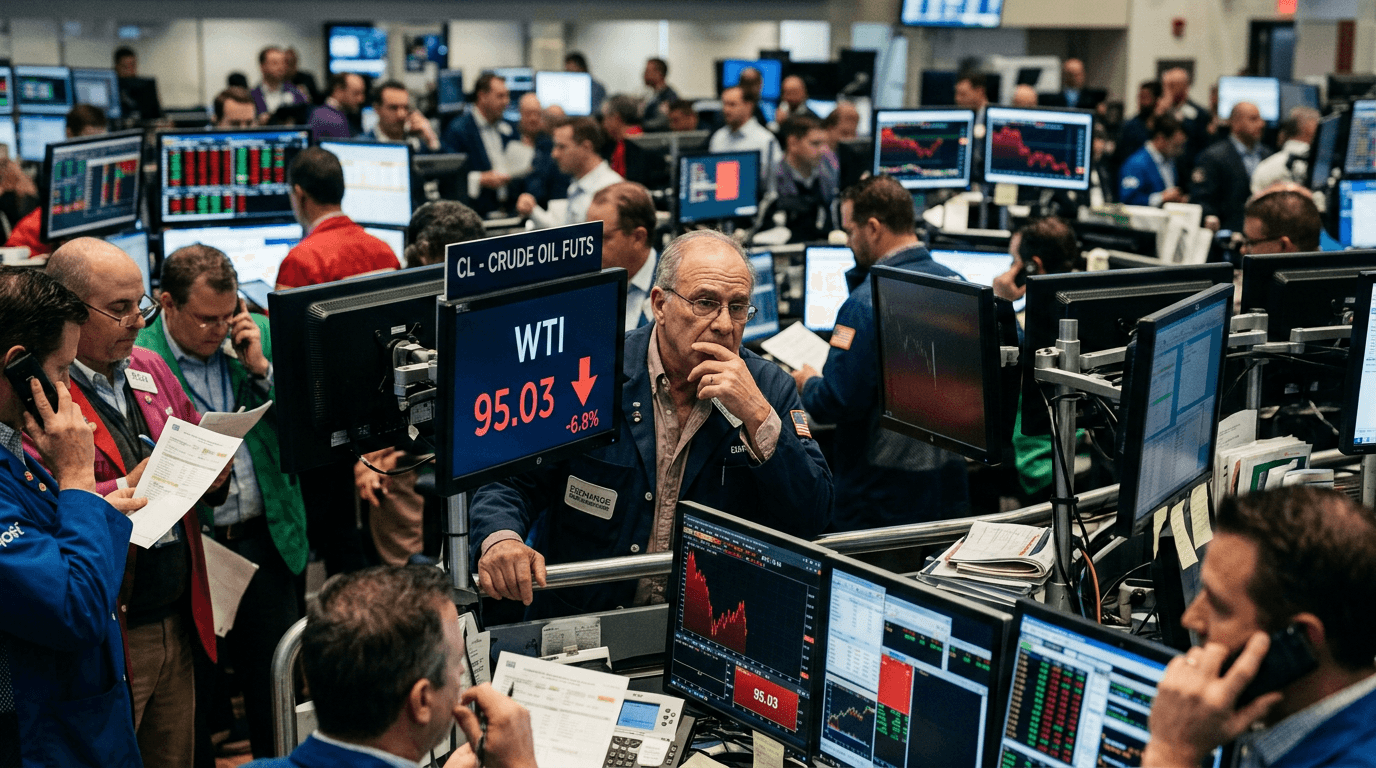
West Texas Intermediate crude oil has retreated significantly this week, settling near $95 per barrel as markets increasingly price in the possibility of a breakthrough in US-Iran negotiations. The decline, which has seen WTI lose over 7% week-to-date, represents a sharp reversal from earlier geopolitical tensions that had pushed prices higher. This pullback reflects a fundamental shift in market sentiment, where hopes for peace are now outweighing the traditional risk premium that Middle East conflicts typically command. Understanding the dynamics driving this retreat is crucial for traders and investors seeking to navigate the volatility ahead.
The Iran Deal Catalyst And Oil Price Dynamics
The primary driver of the recent oil price weakness is optimism surrounding a potential US-Iran peace agreement. According to recent reports, US and Iranian officials have been negotiating a 14-point memorandum of understanding designed to end the ongoing conflict and establish a framework for future diplomatic relations. If finalized, this agreement would represent a major geopolitical breakthrough with significant implications for global energy markets.
The most consequential element of the proposed deal, from an energy perspective, is the potential reopening of the Strait of Hormuz. This waterway is one of the world's most critical oil chokepoints, with roughly 20% of global crude passing through it daily. Currently, concerns about transit restrictions have created a risk premium embedded in oil prices. A functional agreement reopening the strait would immediately eliminate this premium, explaining the downward pressure on WTI.
Under the proposed terms, Iran would commit to a moratorium on nuclear enrichment activities, while the United States would lift existing sanctions and release frozen Iranian assets. This reciprocal arrangement has historical precedent and appears more durable than temporary ceasefires that have characterized recent Middle East developments. Traders are betting that if negotiations succeed within the projected one-week timeframe, the structural reduction in supply risk could drive prices significantly lower.
Market Mechanics And The Rig Count Consideration
While geopolitical factors dominate headlines, underlying supply dynamics are also influencing the oil market's trajectory. Baker Hughes data released this week showed that US drillers added rigs for the third consecutive week, with total rig counts reaching 548. Although this represents growth from recent lows, the rig count remains down 5% compared to the same period last year, suggesting production capacity remains constrained relative to historical levels.
This paradox of rising rigs combined with year-over-year declines reflects the current structural tightness in global oil markets. Even as prices retreat on deal hopes, the underlying supply picture suggests crude inventories remain relatively vulnerable to disruptions. If Iran tensions escalate again or negotiations stall, the modest production capacity growth trajectory means prices could quickly reverse higher.
From a technical perspective, WTI has established key support around the $92-92.50 range, where multiple moving averages cluster. A break below this level would expose the broader rising trendline support near $89, with deeper support around $80.82. The 14-day Relative Strength Index has eased to approximately 48, indicating neutral momentum rather than oversold conditions. This suggests the market remains in consolidation mode, awaiting clarity on whether the Iran deal materializes.
Geopolitical Uncertainty Remains Elevated
Despite optimistic headlines, the path to a lasting agreement remains fraught with complications. Recent reports indicate that Iranian officials have expressed skepticism about certain elements of the US proposal, and renewed clashes between Iranian and US forces have tested the durability of the current ceasefire. President Trump has reinforced that failure to negotiate would result in escalated military action, adding pressure to both sides while maintaining the possibility of rapid escalation.
This fragile backdrop explains why oil volatility persists despite significant price declines. The market is essentially pricing in a base case scenario of a deal, but with meaningful tail risk probability assigned to renewed conflict. If negotiations collapse, the combination of supply constraints and suddenly reinvigorated geopolitical risk could send WTI sharply higher, potentially toward the $100-plus levels that seemed likely just weeks ago.
Traders should monitor several key indicators: statements from US State Department officials regarding negotiation progress, Iranian official commentary on the 14-point memorandum, and any reports of military incidents in the Persian Gulf region. Each of these factors could rapidly shift market positioning.
Key Takeaways For Traders
The retreat in WTI prices reflects a genuine reduction in near-term geopolitical risk premium rather than fundamental demand destruction. If the Iran deal succeeds, the repricing lower could continue, particularly if the Strait of Hormuz reopens fully. Conversely, failed negotiations would likely trigger a sharp reversal.
Positioning for the next week should account for binary outcomes. For risk-averse traders, the consolidation around current levels offers an opportunity to establish positions based on negotiation progress. Technical support levels remain well-defined, providing clear entry points for directional trades. Monitor the timeframe closely: if negotiations extend beyond one week, the market will likely reprice uncertainty higher, potentially triggering a bounce before fundamental resolution.
The intersection of geopolitical developments, technical levels, and the modest underlying production growth trajectory creates a uniquely volatile environment. Successful navigation requires active monitoring and disciplined risk management.